
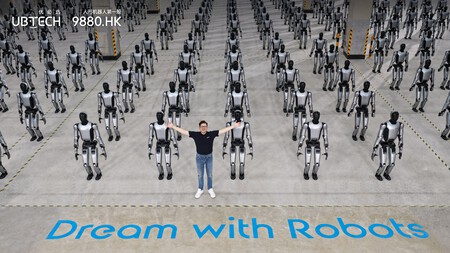
Testing UBTECH’s Advanced Humanoid Robots in Real Environments
In Fangchenggang, where the landscape is punctuated by control windows and cargo trucks at the Vietnam border, an ambitious experiment is underway. Unlike typical lab settings, the deployment of humanoid robots will take place among travelers, customs agents, and logistics personnel. Starting in December, these robots will take on specific roles, including guiding people, supporting logistics, participating in commercial services, and conducting inspections at border crossings and industrial facilities.
An Ambitious Contract
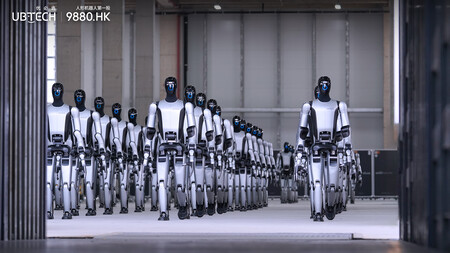
UBTECH Robotics has signed a groundbreaking agreement valued at 264 million yuan (approximately 34 million euros) with a robotics center in Fangchenggang. This contract outlines the deployment of the Walker S2 humanoid model across multiple scenarios such as border crossings, logistics zones, and industrial complexes. According to the company, the robots are expected to manage the flow of people, organize internal transportation tasks, and conduct structured inspections in facilities involved in processing steel, copper, and aluminum.
From Prototypes to Mass Production
UBTECH’s efforts to transition from prototypes to commercially viable products are evidenced by the demand for the Walker series. Anticipated orders are set to reach 800 million yuan by 2025, excluding educational and research units. The company has already begun the initial delivery of the industrial batches, aiming to scale up production significantly. This initiative intends to manufacture thousands of units, thereby reducing costs and integrating humanoids into everyday operational environments more seamlessly.
Robotics in Public Administration
The rollout of UBTECH’s humanoids aligns with a wider movement within the Chinese public sector. For instance, the Zhejiang immigration office has started using robots to assist with daily tasks, including managing people flows and providing information services. Additionally, at Hangzhou airport, robots are available to answer passenger queries, and a multilingual robot was employed at the Shanghai Cooperation Organization to assist with protocol duties.
Strategic State Coordination
The Fangchenggang initiative is a component of the Chinese government’s broader strategy to enhance the humanoid robotics sector. The Ministry of Industry and Information Technology has established a dedicated national committee comprising industry leaders, innovation centers, and technical experts. This initiative includes representatives from UBTech, Unitree, AgiBot, and the Shanghai Innovation Center, aimed at developing industry standards and facilitating the transition from laboratory settings to commercial and administrative applications.
The Importance of the Testing Location
The significance of the humanoid robot trials in a border setting cannot be overstated. A border is a highly regulated space, characterized by the movement of people, goods, and tight operational schedules. Success in this environment will likely pave the way for proposing new applications for humanoid robots in various public contexts. The Fangchenggang Pass serves not just as a testing ground but also as a stage to explore the dynamics of task sharing between robots and human workers.
Images | UBTECH