
Advertising in Google’s AI Mode
Since the beginning of 2023 in the United States and October in Spain, Google has introduced its new AI Mode search system. While it is still in its early stages, the platform is already experimenting with advertising within generative responses, a development that has stirred mixed reactions among users.
Sponsored Content Integration
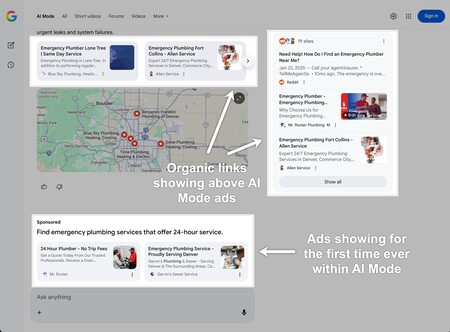
SEO consultant Brodie Clark recently uncovered this feature, sharing a screenshot that highlights sponsored cards labeled “Sponsored.” These cards appear seamlessly at the end of the conversation, marking a significant shift from traditional search methods. Users can see organic results and informative links at the top, while the sponsored content occupies the bottom section of the interaction.
This integration raises questions about user experience and content reliability. The generative responses appear to lack attribution to specific advertising content, which could lead users to confuse organic and paid results.
Testing Phase of Advertising
Currently, Google clarifies that these changes are part of intermittent tests, with no definitive plans for widespread implementation. As reported by 9to5Google, the rollout might be confined to select users in the United States, and it remains unclear whether it will extend to other markets like Spain.
Trends in Other AI Platforms
Google is not alone in navigating the integration of advertising within AI tools. OpenAI’s CFO has acknowledged the potential for ads to appear for free ChatGPT users in the future. Meanwhile, Microsoft is already showcasing advertising in its Copilot in specific markets.
Strategic Implications for Google
Given that Alphabet, Google’s parent company, heavily relies on digital advertising for revenue, this move aligns with its broader business strategy. A Statista report indicates that a substantial portion of Google’s income stems from advertising, suggesting that the integration of ads into AI Mode is a natural evolution for the company.
Challenges and Considerations
AI Mode operates by generating responses from diverse sources, aiming to deliver a conversational interface that understands user intent while maintaining context. However, like any generative AI model, it is not flawless; it can make errors, omit crucial information, or fabricate details.
The introduction of ads within this context complicates the landscape, potentially diminishing the trust users place in the platform. Thus, as Google tests these waters, careful monitoring of user feedback and data will be crucial for any future expansions.
Images | Google | Brodie Clark