
Explosive Growth in Memory Prices
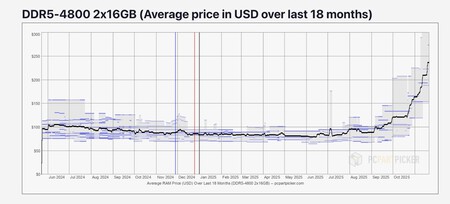
On October 1, 2025, the average price for two 8GB DDR4-3200 memory modules was $60. Fast forward to today, that price has ballooned to $110. The situation is even more dire for DDR5 memory; at the start of September, two 16GB DDR5-4800 modules averaged around $100 but are now nearing $250. This price surge in a matter of months has many pointing fingers at one culprit: artificial intelligence (AI).
What Has Happened?
A perfect storm has formed around the intersection of AI and data centers, creating significant price hikes in NAND and DRAM memories. Experts warned of this scenario, and it has unfortunately unfolded, affecting consumers much more than anticipated.
The average price of DDR5-4800 2x16GB modules has multiplied by 2.5 in less than two months. Source: PC PartPicker
Soaring Prices: The Numbers Don’t Lie
Consulting firm TrendForce has reported an outstanding 307% increase in DDR5 memory prices since September. DDR4 modules, while less severe, have still seen a rise of 158%. For instance, the cost of two 8GB DDR4-3200 modules recently rose from $30.55 to $34.42, a notable increase of 12.67% within just a week.
Extending Crisis to NAND Memory
NAND memory prices are experiencing a similar trajectory, which also contributes to rising SSD prices. This upheaval in the market is a direct result of heightened demand from data centers, resonating through to end consumers, who are left grappling with inflated prices. Khein Seng Pua, CEO of Phison, warns that NAND shortages could persist for a staggering ten years, with recent increases in sales prices of up to 75% being observed across all NAND manufacturers.
A Vicious Circle in Memory Manufacturing
The implications of this crisis are severe for those contemplating hardware upgrades. The upward price trajectory is not expected to ease in the immediate future, fueled largely by AI’s voracious appetite for hardware, particularly demanding AI GPUs and high-bandwidth memory (HBM). As a consequence, traditional RAM production is being deprioritized, leaving consumers caught in a quandary.
Timing your Upgrades: A Double-Edged Sword
For many, this period may feel like a poor time to invest in new PCs or components. However, it could also be the “best of bad times.” The threat of further price increases looms, compelling consumers to weigh their options carefully.
Impact on Consumer Devices
The ripple effects of these component price increases extend beyond computer hardware; they will also influence the costs of smartphones, tablets, and laptops that hit the market. As component prices soar, manufacturers might resort to strategies like “reduflation,” which involves reducing specifications to maintain price points, fundamentally altering consumer perceptions and expectations.
As the landscape of memory manufacturing continues to evolve amidst these challenges, it remains crucial for consumers to stay informed, adapting their purchasing strategies to navigate these turbulent times.
Image Source: Andrey Matveev