
The Shift in Satellite Economics: A New Era in Space
The cost of launching cargo into space was a longstanding limitation for the aerospace industry. NASA documented that throughout the late 20th century, the price for launches was generally between $10,000 and over $20,000 per kilogram, averaging around $18,500/kg for low Earth orbit missions. The high costs stemmed not just from the complexities of launch systems like the space shuttle but also from a model built around disposable components and specialized operations.
SpaceX’s Disruption of the Launch Model
This landscape remained largely unchanged until SpaceX entered the picture, revolutionizing orbital launch economics. By opting for reusable stages and optimizing manufacturing processes, SpaceX demonstrated that launch costs could be significantly reduced. The cost per kilogram plummeted to between $1,500 and $3,000, marking a critical turning point. For the first time, entities—companies, institutions, and governments—could consider mission designs without being constrained by launch costs.
Rethinking Satellite Design
With reduced launch prices, attention began to shift toward satellite economics. Traditionally, the satellite model prioritized singular, highly optimized units designed for longevity and low failure rates, resulting in high costs due to prolonged development cycles. However, this approach was based on an atmosphere where launching was infrequent and costly.
A Shift Towards Scalability
OneWeb emerged as an early innovator in the effort to scale satellite manufacturing. Rather than treating satellites as custom, one-off projects, OneWeb developed a common architecture and partnered with Airbus for production. This strategy embraced standardized processes, allowing the company to produce units rapidly. Their Florida facility, established in 2019, became the world’s first large-scale satellite production plant, designed to output multiple satellites per day.
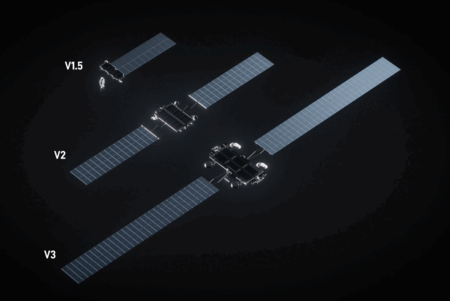
SpaceX further advanced this model through its Starlink initiative, which combined mass-produced satellites with its own Falcon 9 launch capabilities. This integration allowed rapid deployment and development, resulting in an unprecedented growth rate. By mid-2025, SpaceX had launched over 8,000 operational satellites, overshadowing OneWeb’s 648 units.
Creating a New Framework for Space
The industry is taking notice of SpaceX’s achievements and adapting. Companies and public institutions are now launching similar constellation projects, including Amazon with Kuiper and the European Union’s IRIS2 program. These initiatives demonstrate a shift toward accepting that large fleets and ongoing replacements are essential for future space missions.
Transformative Impact on Satellite Operations
Satellites are evolving from isolated units intended to last years into replicable products that can be frequently upgraded or replaced. This change in perspective transforms how satellites are planned, fostering models based on scalability and continuous replacement, akin to other technological infrastructures. In this new paradigm, space is no longer merely a destination; it has become a usable platform.

The Future of the Space Economy
SpaceX has proven that launch costs are not inherently a technical barrier but a model-centric one. As their innovative approach to satellite manufacturing and deployment continues to shape the landscape, the focus is shifting. It’s no longer just about how much it costs to get payloads into space but rather about who can maintain and expand an operational infrastructure in orbit. SpaceX’s influence is proving to be a major force in this ongoing transformation.