
Mazón and the Missed Call: Examining Responsibility During the Dana Tragedy
Background on the Incident
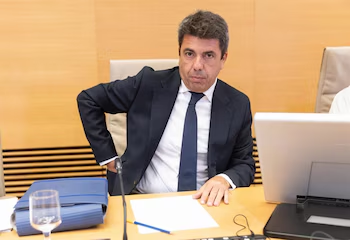
On October 29, 2024, the Valencian community faced a devastating natural disaster known as “dana.” In the aftermath of this tragedy, the acting president of the Generalitat Valenciana, Carlos Mazón, has come under scrutiny regarding his failure to respond to calls from the then Emergency Minister, Salomé Pradas. During a recent Congressional investigation into the disaster’s management, Mazón stated he may not have received Pradas’ call at 7:10 p.m. due to having his cell phone “in his backpack.”
The Acknowledgment in Congress
Mazón’s admission came in response to questions posed by Compromís deputy Àgueda Micó, who pressed him on the lack of response to the emergency communication. Mazón explained that at the time of the call, he was walking away from El Ventorro, and his phone was not readily accessible. This detail raised eyebrows, especially given the immediate need for communication during such a critical time.
The Conflicting Narrative
While Mazón initially suggested that he might not have heard Pradas because of his phone’s location, he later stated that he was making calls at that time. This contradiction has left many questioning whether he genuinely could not take the call due to being engaged with others, or if it was simply a matter of poor preparedness. “Not answering a 20-something call that I made does not mean being incommunicado,” he defended, implying that his actions did not equate to ignoring the emergency.
Response Timeline Concerns
The emergency messaging process has also come under fire. The Es-Alert message, intended to inform the public of the impending danger, was not sent until 8:11 p.m., though it had been prepared well before, at 6:37 p.m. Mazón deflected responsibility for the delay to the operational managers, asserting that Pradas did not hesitate to send the alert, nor did she require his approval to do so.
Expertise vs. Leadership
In an exchange with Podemos leader Ione Belarra, who questioned the president’s effectiveness, Mazón pointed out that there were “technicians with more than 30 years of experience” handling the situation. This statement raises critical discussions about accountability in leadership and the role that trained professionals should play during crises. It suggests a reliance on structured protocols over individual intervention, leading to the question of whether such an approach is adequate in urgent circumstances.
Conclusion
The situation surrounding Mazón’s missed call from Pradas during the dana tragedy illustrates the complexities of crisis management and communication. As investigations continue, the challenges faced by leadership in high-pressure environments are brought to light, prompting a reevaluation of responsibilities, preparedness, and the necessity for clear communication channels in emergency situations. The lessons learned from this incident may shape how such crises are dealt with in the future, reinforcing the importance of both leadership accountability and expert guidance in times of disaster.