
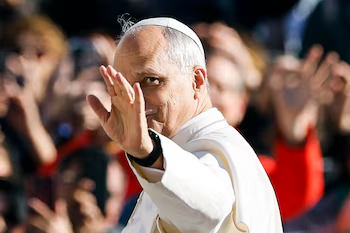
Spanish Episcopal Conference Meets Pope Leo XIV Amid Controversy
On Monday, the Vatican is set to hold a critical audience with the leadership of the Spanish Episcopal Conference (CEE), led by Archbishop Luis Argüello. This meeting carries significant weight as it comes shortly after the opening of an investigation against Bishop Rafael Zorzona of Cádiz and Ceuta for allegations of sexual abuse of a minor. The accusations date back to his time as a seminarian in the 1990s, raising urgent questions about the management of clerical abuse within the Church.
Context of the Meeting
The audience with Pope Leo XIV, a meeting that was requested by the Spanish bishops after his election in May, has been planned since August. The timing, however, is particularly sensitive for the Spanish Church, given that this investigation against Zorzona was made public only a week prior to the meeting. Notably, Argüello expressed his profound concern regarding the implications of this investigation, noting that it lends “credibility to the accusation” while still respecting the presumption of innocence.
The Spanish delegation includes notable figures such as Vice President and Archbishop of Madrid, Jose Cobo, and other archbishops from several dioceses across Spain. The assembly reflects the seriousness with which the Spanish bishops regard the situation, emphasizing the need for a unified response to these troubling developments.
The Zornoza Allegations
Bishop Zornoza’s case has emerged as the first significant public trial of accountability for a bishop in Spain, stirring both concern and hopes for reform within the Church. Argüello acknowledged that the prolonged nature of the investigation—four months since the complaint reached the Vatican—has been poorly managed. This has added to the chaos, leaving Zornoza still in his position while the investigation unfolds.
Church authorities like Argüello indicated that they do not have legal or canonical jurisdiction over bishops, placing responsibility firmly in the hands of the Vatican’s judicial authorities. This raises potential questions about the effectiveness of internal Church mechanisms for handling such allegations.
Vatican’s Response and Conditions for Change
Reports suggest that there is growing “unrest” within the Vatican regarding how the Spanish Church has dealt with clerical abuse, particularly since revelations began surfacing in 2018. The perception that the EEC had the situation under control now appears to be shattered, putting additional pressure on Pope Leo XIV. His commitment to addressing legacy issues will likely shape the forthcoming discussions and decisions surrounding Zornoza’s fate.
Argüello pointed out that Zornoza had previously submitted his resignation 14 to 16 months ago due to health concerns. However, he stressed that the acceptance of such a resignation is not determined by the Spanish bishops, but rather may depend on Vatican discretion or other precautionary measures.
Conclusion: A Pivotal Moment for the Spanish Church
The meeting with Pope Leo XIV represents not only an investigation into individual behavior but is also poised to serve as a turning point for how the Spanish Church navigates future allegations of abuse. With the pressure mounting for transparency and effective action, the outcome of this encounter could redefine the Church’s approach to dealing with such allegations and restoring public trust.
As the dialogue unfolds, it remains imperative for Church officials to come forward with detailed plans on how they will address past complaints effectively, ensuring that victims feel heard and that justice prevails. The weight of expectation is high, and the eyes of many will be on both the Spanish Episcopal Conference and the Vatican in the coming days.