
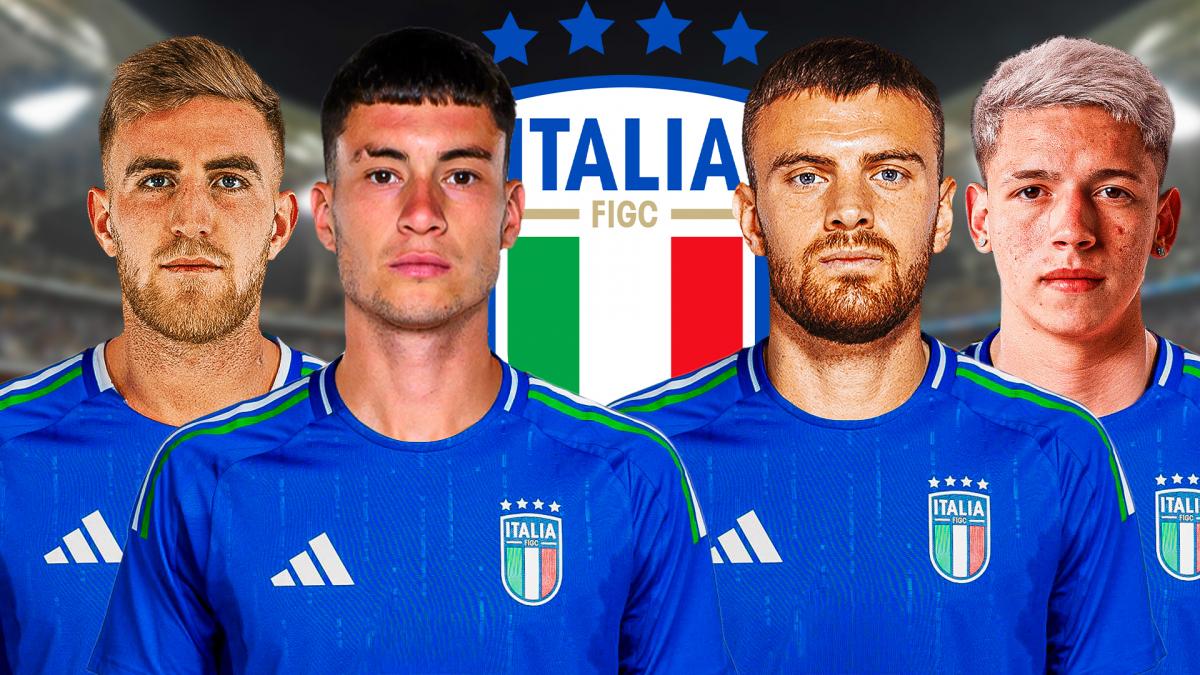
Italy’s Footballing Pivotal Moment
Italy is currently at a crossroads in its football history. Following the heartbreak of missing out on both the 2018 and 2022 World Cups, the national team, affectionately known as the Nazionale, is fighting for its future on the international stage. Gennaro Gattuso has been appointed as head coach to inject new life into the Squadra, but the daunting specter of another qualification miss looms. Since the euphoria of Euro 2021, the nation has faced a downturn in performance, characterized by a lack of offensive identity and dwindling talent.
Seeking New Talent
In light of these challenges, the Italian Football Federation (FIGC) finds itself in a desperate search for talent. Recognizing that domestic resources are limited, the FIGC is turning its gaze southward to South America, where millions of descendants of Italian immigrants reside. These individuals, known as Oriundi—deriving from the Latin word oriundus, meaning “originating from”—offer Italy a unique opportunity for revival. With an estimated 60 to 80 million people of Italian descent worldwide, half of Argentina’s population can trace their roots back to Italy.
The Appeal of South America
The draw of South America is not merely geographical but deeply cultural. Approximately 19.7 million people identify as Italian-Argentinian, making up nearly 47% of Argentina’s total population. Uruguay and Brazil also show significant Italian influence, with around 45% and 13% of their populations, respectively, having Italian roots. This rich diaspora, a product of massive 19th and 20th-century migration, has become a strategic asset for Italy in identifying potential footballing talent.
The Rising Stars
The recent naturalization of Mateo Retegui—an Italian-Argentine striker—has opened doors previously closed to dual nationals. Retegui’s impressive performances have made him a prime candidate for the Nazionale. Similarly, Matías Soulé, a 22-year-old winger now playing for AS Roma, has Italian heritage and is a key focus for the FIGC. While he is still contemplating a commitment to Argentina, his dual roots make him a valuable prospect for Italy.
Defender Nicolás Valentini also presents an exciting option. A former pillar for Boca Juniors, Valentini has yet to play any A matches for Argentina. His loan spell at Hellas Verona has further refined his skills, making him a fitting candidate for Gattuso’s defensive line-up.
Another promising candidate is Lucas Beltrán, a center forward who began his career at River Plate. With no senior caps for Argentina, his work ethic and adaptability in European football position him well to contribute to the Nazionale.
The Next Generation
Italy is keeping a close watch on even younger talents such as Gianluca Prestianni and Tomás Pozzo, both of whom are already making waves in their respective clubs. Each of these players not only possesses a dual cultural identity but also demonstrates the precocious talent required at the highest levels of competition.
A Renewed Hope for Italy
As Gattuso and the FIGC recognize, this pool of talent can be the key to Italy’s resurgence. By harnessing the capabilities of these Oriundi, Italy aims to rekindle the international competitive spirit that once made it a footballing powerhouse. Historically, players like Monti, Orsi, and Sivori have contributed immense talent and success to the Nazionale. Now, a new wave of dual nationals has the potential to write the next illustrious chapter in Italy’s footballing legacy.
In this challenging yet hopeful landscape, the dual nationals could not only rejuvenate Italian football but also unite a nation longing for glory once more. Through this blend of heritage and opportunity, Italy may find the spark needed to ignite its footballing future and rise from a phase of stagnation.