
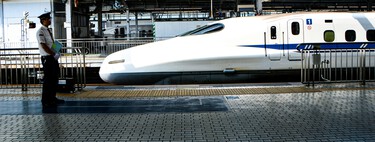
The piston in a four-stroke engine plays a pivotal role in compressing air, facilitating fuel combustion, and propelling exhaust out of the combustion chamber. In essence, it is responsible for moving air either up or down.
Now, envision a train racing into a tunnel at over 300 km/h . As it transitions into the tunnel, it compresses the air within, pushing it toward the tunnel’s far end. This action is comparable to that of a piston. The train moves linearly, while the tunnel acts like a combustion chamber.
At first glance, this might not seem problematic. The air appears to flow seamlessly towards the exit, posing little concern, especially if the high-speed rail lines stretch across a 100-kilometer bridge.
However, if you’re located in a mountainous country that relies heavily on trains to transport millions swiftly across long distances, the situation becomes critical. The piston effect is a fundamental aspect of physics, and addressing it to increase speed is a complex challenge.
A Historical Overview of High-Speed Trains
In 1964, while Spain was gradually opening its borders, Abebe Bikila achieved his second Olympic Marathon win in Tokyo, dramatically sporting Puma Osaka shoes — quite a leap from his barefoot victory in Rome. Was he among those who first boarded the Shinkansen ? That same year marked its debut, revolutionizing rail with trains reaching speeds of 210 km/h , establishing the world’s first high-speed rail line.
Fast forward over six decades, and Japan has lost its title as the leader in high-speed rail. China now dominates, driven by its expansive territory. Spain has also surpassed Japan in high-speed rail mileage. This disparity largely comes from China’s aggressive investment in advancements, including the cutting-edge maglev trains that can reach a breathtaking 896 km/h .
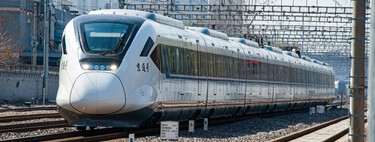
China’s financial resources empower them to construct the longest bridges globally, effectively tackling geographical barriers. Conversely, Japan confronts mountainous terrains, relying on tunnels , which complicates the pursuit of high-speed travel.
Upon entering a tunnel, the piston effect kicks in, preventing further speed increases. This phenomenon manifests in loud explosions, equipment failures, and discomfort for passengers. As trains thunder into tunnels, air compression occurs, creating pressure changes that can be devastating to the human ear. When exiting, shock waves and sound explosions, known as tunnel booms , can be heard from over 400 meters away.

Japan is now wrestling with a legacy problem. While their trains are wider than European ones, their tunnels are narrower, a decision made to reduce infrastructure costs and minimize landslide risks. Initially, this setup didn’t pose issues, but with increasing train speeds, the limitations became glaringly evident.
In contrast, China has opted for wider tunnels, significantly reducing the void effect when trains enter, resulting in a smoother experience for passengers. This design also improves efficiency by lowering resistance and conserving energy.
For Japan, the solution is far from straightforward. Approximately 13% of the Tokaido Shinkansen runs through tunnels, while the Sanyo Shinkansen and the under-construction Hokkaido Shinkansen spend even more time underground.
One effective strategy has been designing trains with elongated, aerodynamic noses, mimicking the beak of a kingfisher, which plunges into water with minimal splash. By enhancing aerodynamics, the pressure wave generated during tunnel entry is mitigated.
Additionally, Japan is exploring options to widen tunnel entrances and implement side openings for air escape. This release alleviates pressure waves and enhances passenger comfort while facilitating higher speeds. Some plans even include developing hermetic trains with controlled interior pressure.
As testing continues, Japan aims for trains capable of reaching speeds of 400 km/h . However, their inherited infrastructure poses significant hurdles in competing with China.
Photo Credit: Rikku Sama
In a competitive world of high-speed rail, innovation and adaptability will determine which country leads the charge in the years to come. Japan is keenly aware of the challenges but continues to strive for advancement to remain relevant in the high-speed rail landscape.