
Italy is currently facing a unique challenge that few nations confront: a war against mass tourism . This battle is not an isolated incident but rather a concerted effort among cities and towns grappling with the repercussions of over-tourism. Authorities are implementing various strategies, such as increased taxes , entrance fees , and even banning key boxes that facilitate tourist access. Recently, a significant part of this movement has concentrated on one particularly controversial group: the foodies .
The solution? Prohibiting the opening of new restaurants in historic centers.
In short, navigating through the historic center of any Italian city resembles stepping into a culinary amusement park . Restaurants abound, with enticing signs promising traditional fare and artisans laboring over fresh pasta, creating an atmosphere akin to a vibrant circus.
As a result, cities such as Rome, Turin, Florence, Palermo, and Bologna have begun to restrict new restaurant openings in their historic zones, aiming to preserve the character of these vital cultural landscapes.
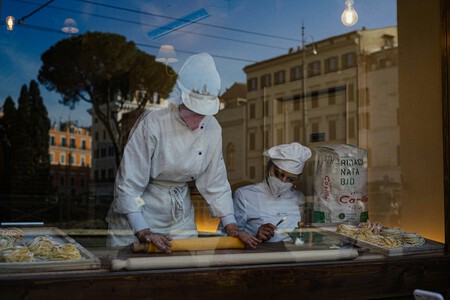
</div>Displacing the population. While Italians have a profound appreciation for their traditional cuisine , the overwhelming influx of tourists has turned their city centers into something resembling theme parks. Streets such as Via Maqueda in Palermo and Via del Pellegrino in Rome have transformed into commercial havens filled with similar establishments.
According to a report by The New York Times, hundreds of new restaurants have sprung up in popular areas over the past decade. These establishments may present themselves as traditional but often cater exclusively to tourist tastes, ultimately forcing local residents away from their homes.
This trend is mirrored globally, where touristification drives up property prices, affecting both rents and local livelihoods. Long-standing businesses struggle as consumer-oriented establishments thrive, disrupting the fabric of local communities.
<img alt="Italy's regulations against mass tourism" width="375" height="142" src="https://i.blogs.es/137c5a/peter-thomas-bv5qzyw0eic-unsplash/375_142.jpeg"/>“We must protect the center”. The overarching goal in Italy is to combat gastronomic gentrification , which seeks to displace historical markets and local stores with tourist-centric businesses. The aim is to safeguard the authenticity of daily life for citizens, while equally preserving traditional culinary practices . Luisa Guidone, the Councilor for Commerce in Bologna, emphasizes that “the center must be protected, maintaining a mix of existing stores that allow citizens to have their daily experience when shopping.”
Everyone makes their war. Notably, the measures taken are not a unified national initiative but vary by municipality. In Palermo, new restaurant licenses are banned in iconic areas like Via Maqueda. Similarly, Florence has restricted openings in over 50 streets, including some peripheral zones.
Bologna’s council has decided to scrutinize new projects intended for the historic center until June 2028. In Rome and Turin, similar restrictions apply, especially in areas surrounding the Vatican. However, certain exceptions exist; for instance, Florence permits new establishments such as art galleries and bookstores, provided they do not primarily cater to tourists.
Not just food. These restrictions extend beyond just food. In Bologna, the measures include a ban on new money exchange stores, call centers, and other similar entities in the historic center until 2028. It aims to discourage businesses that do not contribute positively to the cultural identity of the area.
<img alt="Protests against tourist overcrowding" width="375" height="142" src="https://i.blogs.es/2f74df/playacangas/375_142.jpeg"/>Debate. Promoting these initiatives is undeniably complex, given that tourism constitutes nearly 12% of the Italian economy, with gastronomic tourism serving as a crucial revenue source. Various tourists express their desire to indulge in culinary experiences, focusing on local dishes.
Ultimately, Italy faces a significant problem with mass tourism that is altering the lives of local residents. Traditional businesses are closing, and those that remain are shifting from providing authentic products to catering to tourist demands. Striking a balance between tourism and local needs is proving to be a significant challenge for this culturally rich nation. Images | Anna Church, Maxime Steckle, Matej Buchla In Xataka | “Fodechinchos free”: in a bar in Galicia, tourismphobia is being redirected against Spaniards from other regions