
Canadian airline WestJet has announced a significant policy change, eliminating the ability to recline standard economy seats on 43 aircraft within its fleet. This decision is part of a broader effort to redefine air travel experiences and seeks to charge passengers additional fees for added comfort options. Passengers wishing to recline their seats will now have to pay a premium for access to “extended comfort” seats or premium cabins.
What Exactly Changes? The aircraft affected by this policy change primarily include the Boeing 737-8 MAX and 737-800 , which are part of the carrier’s narrowbody fleet . Approximately a third of WestJet’s narrowbody fleet will be impacted, specifically those acquired from previous airlines, including Swoop, Lynx, and Sunwing. The basic economy seats on these planes will feature a “fixed recline,” meaning there won’t be any option to shift the backrest. The first reconfigured aircraft are set to enter service soon, with the remaining planes expected to be modified by early 2026 .
<img alt="In the midst of the battle between Ryanair and Aena, there is a Spanish airport that is suffering more than any other: Valladolid " width="375" height="142" src="https://i.blogs.es/b948e2/lucas-da-costa-e-silva-tntmlzz0k-q-unsplash/375_142.jpeg"/>The Airline’s Justification. WestJet defends this measure by citing feedback from passengers, revealing that nearly half of those who participated in user tests preferred a fixed backrest, claiming it helps them avoid feeling “invaded” by fellow passengers. The airline aims to create a “cohesive look and feel” in its aircraft with this new configuration, promoting a renewed design that emphasizes a “bright and spacious environment.” However, this change indicates a reduction in personal space between seats.
What If You Want to Recline the Seat? For those travelers who still wish to recline their seats, WestJet is introducing two payment options. The first is the premium cabin , which will feature 12 new seats similar to those on the airline’s Boeing 787-9 Dreamliner. The second option is the “extended comfort” section, offering 36 ergonomically designed seats with added legroom and the ability to recline.
<img alt="The inevitable increase in air travel is leading us to a reality: there are no places, no planes, no planet for so many tourists." width="375" height="142" src="https://i.blogs.es/c893b0/image-from-rawpixel-id-3338088-original/375_142.jpeg"/>Criticisms of the Model. This decision has sparked controversy among aviation experts. John Gradek, a professor of aviation management at McGill University in Montreal, labeled the move as a “strategy to raise more money.” He criticized WestJet for attempting to “create another tier of service” that allows them to charge more for a feature that has historically been considered standard in the Canadian aviation market. Gradek’s statements reflect a broader concern within the industry about the growing trend of monetizing previously included services.
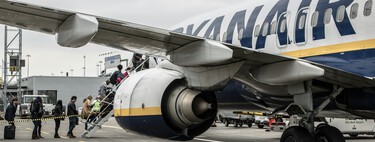
In Europe, It Is Not Surprising. The notion of non-reclining seats is not new to many travelers across Europe. Leading low-cost airlines, such as Ryanair , EasyJet , and Wizz Air , have long operated flights without reclining seats. By removing this feature, WestJet is not just redefining its service but aligning more closely with the pricing and service structures of its European low-cost counterparts.
Low-Cost Canadian. As a pioneer in offering budget-friendly flights to Canadian travelers, WestJet has flights to 19 U.S. states including destinations like Hawaii, Puerto Rico, and Washington, D.C. The airline justifies the removal of reclining seats by framing it as part of a strategy aimed at keeping operational costs in check. Company representatives submitted, “We need to be willing to try new products and see how they work for Canadians,” emphasizing the necessity of innovation in a competitive industry.
This shift in WestJet’s model has raised questions about customer experience and the balance between affordability and comfort in air travel. As more airlines implement cost-cutting measures, passengers may have to rethink what they expect from their flying experience, especially when it comes to basic amenities.