
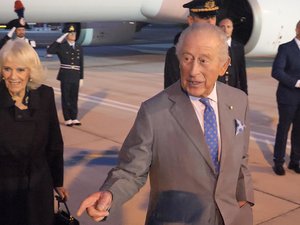
King Charles III arrived in Rome on Wednesday, October 22, for a momentous state visit to the Vatican. This visit is highlighted by an unprecedented meeting with Pope Leo XIV. The meeting will culminate in an ecumenical service planned for Thursday in the Sistine Chapel, marking a historic collaboration between the monarch and the Pope since the Anglican schism nearly 500 years ago. This visit comes amid significant scrutiny of the British monarchy, particularly regarding ongoing revelations about Prince Andrew .
What to Remember
King Charles III’s state visit includes an unprecedented ecumenical service with Pope Leo XIV in the Sistine Chapel, a significant event since the Anglican schism.
The trip symbolizes a crucial turning point for relations between the Church of England and the Catholic Church amid controversies surrounding the Epstein affair affecting Prince Andrew.
During the visit, Charles, who is undergoing cancer treatment, will be honored as a “royal colleague” at the Basilica of Saint Paul Outside the Walls.
The royal couple arrived around 4:30 p.m. local time at Ciampino military airport. This state visit is set against a complex backdrop for the British monarchy, particularly as new allegations regarding Prince Andrew surface, linked to his connections to the late Jeffrey Epstein.
For King Charles III, who serves as Supreme Governor of the Anglican Church , this will be his first meeting with Pope Leo XIV , who took over from Pope Francis earlier this year. Buckingham Palace has characterized this visit as a significant moment for Catholic and Anglican relations .
The Historical Context of Anglicanism
The Anglican Church was established nearly 500 years ago, following a split from the Catholic Church initiated by King Henry VIII , who sought to annul his marriage to Catherine of Aragon. The repercussions of this schism have resounded through history, creating a substantial divide between the two religious institutions.
Notably, Queen Elizabeth II was the first British monarch to visit the Vatican since this historical schism during her trip in 1961. This underscores the importance of King Charles III’s visit, not only as a royal engagement but as a potential bridge between historically divided branches of Christianity.
An ecumenical service in the Sistine Chapel will be a highlight of this visit, with the Pope and the British sovereign set to pray together beneath Michelangelo’s famed frescoes. The theme of the service will focus on environmental protection , a cause deeply cherished by King Charles III.
A Historic Ecumenical Service
This ceremonial service aims to blend Catholic and Anglican traditions. The Sistine Chapel choir will join forces with the choir from St. George’s Chapel in Windsor. “It’s a historic event,” noted William Gibson, a professor of ecclesiastical history at Oxford Brookes University. He emphasized that, under British law, the monarch is required to adhere to Protestantism.
From 1536 until 1914, official diplomatic relations faltered between the United Kingdom and the Holy See . It wasn’t until 1982 that London opened an embassy at the Vatican, highlighting the modern significance of this cordial visit.
The legal restrictions on British royals marrying Catholics were only slightly relaxed in 2013, allowing royals who wed Catholics to maintain their succession status to the throne, a change that had profound implications for royal family dynamics.
King Charles III’s Honors
During their visit, Charles and Camilla are also expected to participate in another ecumenical service at the Basilica of Saint Paul Outside the Walls, further strengthening the ties between the two faiths.
At this gathering, the king will be honored as a “royal colleague,” with a special seat designated for him. This seat will remain within the basilica for future monarchs, symbolizing the unity sought through these efforts.
As Leo XIV and King Charles III celebrate the Jubilee Year—an event that occurs every 25 years and draws millions of pilgrims to the Vatican—they will also spotlight prominent issues, including humanitarian efforts and environmental stewardship .
This state visit comes shortly after the release of Virginia Giuffre’s posthumous memoirs, in which she details her alleged coerced interactions with Prince Andrew. These fresh accusations further complicate the royal family’s reputation, particularly with Charles reportedly pressuring Andrew to renounce his title of Duke of York amid the ongoing controversy.
While navigating these challenging dynamics, King Charles III balances both his personal difficulties—he is undergoing cancer treatment—and his responsibilities as the head of the British monarchy. The weight of his family’s challenges does not diminish the significance of his engagement with Pope Leo XIV, marking what may be a transformative moment not just for the monarchy, but for interfaith dialogue as well.