
The Rising Tension: Venezuela’s Military Capabilities and U.S. Naval Vulnerabilities
The shifting dynamics in the southern Caribbean have sparked concerns in military circles, especially concerning the U.S. and Venezuela. Recent satellite imagery has revealed an unsettling reality: the United States is enhancing its military presence around Venezuela, creating what seems to be a substantial military apparatus prepared for possible engagement. However, amid this growing tension, the greatest threat to American vessels lies not just in numbers, but in the advanced weaponry of the Venezuelan Air Force .
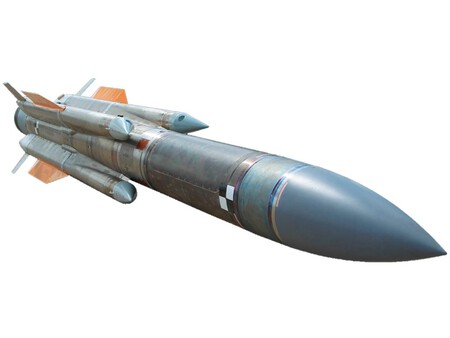
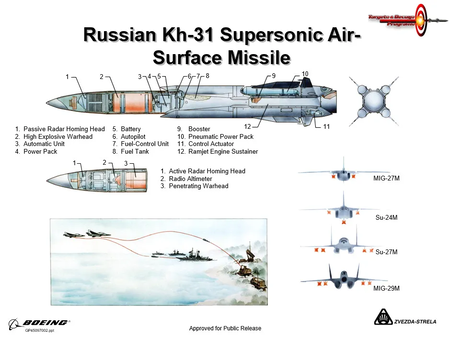
More specifically, Venezuela’s integration of Russian-made supersonic anti-ship missiles , such as the Kh-31A, poses a significant threat to U.S. maritime operations. The Kh-31A, designed originally by the USSR to circumvent Western air defenses, has been adapted for naval warfare. The capabilities of this missile, combined with Sukhoi Su-30MK2V fighters, effectively convert the Venezuelan coastline into a high-risk zone for the U.S. Navy, which operates in close proximity.
Understanding the Kh-31A Missile System
The Kh-31A missile is designed for low-altitude flight over the ocean, making it challenging for radar systems to detect and intercept. It features active tracking guidance , allowing it to home in on targets and execute evasive maneuvers at terminal stages, reaching acceleration levels of up to Mach 3.5 . Such technology complicates defense efforts, especially given that U.S. warships usually operate within relatively short distances, granting limited time for response.
Interestingly, the U.S. Navy has even procured units of the Kh-31 to use as targets (designated MA-31) for testing defense systems. This procurement underscores the missile’s perceived lethality and the seriousness with which the U.S. military approaches this specific technology.
Launch and Attack Capabilities
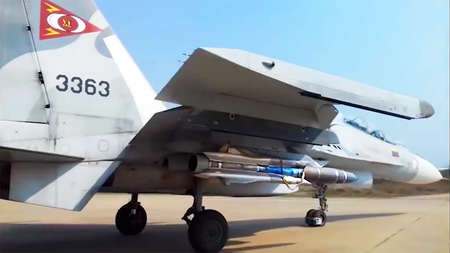
Venezuela operates a fleet of 21 Sukhoi Su-30 Flanker fighters , which have been reported to conduct high-profile exercises, showcasing their capability to launch the Kh-31 off their coasts. Images circulated on social media have demonstrated armed flight drills , clearly aimed at signaling strength to the U.S.
Despite uncertainty about the availability of the Kh-31P variant, which targets naval radars, the aircraft can still close in on U.S. ships before being intercepted. Recent incidents where Venezuelan F-16s approached U.S. naval vessels have further illustrated how close engagements could quickly escalate into conflict.
Defense Dynamics and Implications
The speed and low-profile attack trajectory of the Kh-31A drastically shorten the reaction time for defending naval assets. U.S. ships, particularly when operating close to the coast, find their radar horizon limited and early warning systems compromised. This tactical environment significantly increases the operational risk for U.S. forces.
Analysts emphasize the strategic imbalance created by the Su-30/Kh-31 combination. While Venezuela’s other anti-ship arsenal —including older missiles like Otomat Mk 2 and Sea Killer—pales in comparison, the supersonic Kh-31A changes the calculations for U.S. naval engagements in the region.
The U.S. military’s current deployment includes advanced vessels capable of conducting various operational roles. Assets like Arleigh Burke-class destroyers and the Ticonderoga-class cruisers are designed to offer comprehensive operational capabilities, but their proximity to Venezuelan territory poses inherent vulnerabilities, particularly for unarmed support vessels like the Ocean Trader.
Considering Future Scenarios
The prospect of an outright Venezuelan assault on U.S. forces could potentially spiral into a larger conflict. However, variables like rapid regime changes, operational blunders, or miscommunication during close encounters could position Caracas to make desperate choices. For the U.S. Navy, the Kh-31 presents not just a technical challenge but a pressing political concern as well.
Venezuela’s ability to conduct denial operations effectively means that the U.S. may need to recalibrate its maritime strategy. This includes allocating more resources for maritime escorts and surveillance efforts to ensure safe passage through the Caribbean. Ultimately, the presence of such advanced armament shifts the strategic calculus for U.S. naval operations, implicating a complex interplay of power and potential engagement.