

Battle for Dominance in Spain’s High-Speed Rail Sector
The competition between Ouigo and Renfe in Spanish high-speed rail has reached new heights, as both companies engage in an escalating rivalry that goes beyond ticket prices and service offerings. The latest clash revolves around maintenance workshops , shedding light on the complex dynamics of the rail industry in Spain.
At the heart of the recent conflict is the question of whether Ouigo, a subsidiary of the French railway company SNCF, is exceeding its operational limits in the maintenance of its trains. According to a report by Chain Being, Renfe alleges that Ouigo’s maintenance operations are not aligned with existing agreements and regulations. Renfe utilizes internal documents to substantiate its claim that Ouigo is conducting unauthorized work in its facilities.
This tension points to a larger issue: the nature of maintenance work. Renfe has rented its workshops to Ouigo under an agreement that specifically outlines the kinds of operations permitted. However, the contract prohibits heavy maintenance activities, which Renfe believes Ouigo is currently engaged in.
The distinction between heavy and light maintenance has become a pivotal point in this debate. Renfe insists that Ouigo’s activities constitute heavy maintenance—tasks such as part replacement and wiring changes—which should not be allowed under their agreement. Meanwhile, legislation in the Railway Sector Law stipulates that Renfe must permit access for light maintenance tasks, which include basic cleaning and minor repairs.
This situation has plunged both companies into a murky gray area of railroad regulations. According to the Directive 2012/34/EU , all non-routine activities are classified as heavy maintenance. In contrast, the standard EN 15380-4:2021 contends that heavy maintenance only applies if parts need to be dismantled, complicating the situation further.
Viability is a crucial concern for Ouigo. Reports from Xataka indicate that if Renfe denies Ouigo access to its workshops, the latter’s ability to provide adequate service could be jeopardized. Consequently, Ouigo argues that its two-year viability plan would be at risk. The company maintains that the maintenance work being performed is within regulatory guidelines, focusing on tasks such as greasing and level controls.
Renfe, however, rebuts this argument, advocating that the activities being conducted exceed the limits of light maintenance. The implications of denying Ouigo access are significant; Renfe suggests that the alternative would require Ouigo to conduct maintenance at its own facilities, incurring additional costs and utilizing auxiliary services.
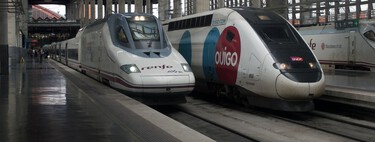
The conflict between Ouigo and Renfe extends beyond mere maintenance practices. The fight affects operational capabilities and financial viability, especially as both companies jostle for market share in Spain. Their rivalry also encompasses the struggle for access to key stations, such as the Atocha station in Madrid, further intensifying the competition.
This rivalry is not confined to Spain alone. Renfe is also attempting to establish a foothold in France, facing resistance that revolves around compliance with technical standards necessary for operating on French railroads. Such regulations and competitive pressures make the landscape ever more challenging for rail operators seeking to expand their reach.
As the battle between these two rail giants unfolds, it becomes evident that the stakes are high, with each side poised to protect its market position through both operational and strategic maneuvers.