
Porsche’s Shifting Electric Strategy: From History to Future
Porsche, a name synonymous with luxury and performance , is currently navigating a tumultuous landscape in the automotive industry. Their recent strategic pivot toward electric vehicles (EVs) has raised eyebrows and concerns among enthusiasts and investors alike. Following significant changes in their approach, it’s clear that Porsche is re-evaluating its relationship with electric cars—a decision that reflects broader trends in consumer preferences and technological advancements.
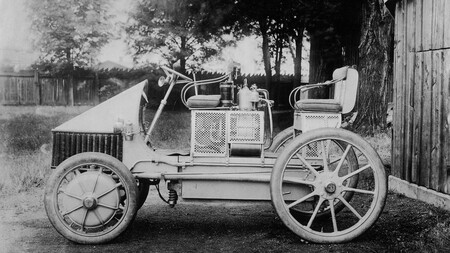
For many, the idea of a Porsche electric car seems contradictory to the brand’s essence. However, what people may not realize is that Porsche has deep-rooted connections to electric vehicle technology that date back to the late 19th century. The very first Porsche vehicle, the Porsche P1 , debuted in 1898, showcasing an “octagonal electric motor” that produced 5 horsepower. This early model boasted a maximum speed of 35 km/h, surpassing many of its contemporaries.
Semper Vivus, the first hybrid car from Porsche and in history
Porsche’s technical innovations didn’t stop with the P1. The Lohner-Porsche system , introduced in 1900, integrated wheel hub motors on the front axle. Each motor generated 2.5 horsepower, and this groundbreaking concept laid the foundation for future advancements in electric propulsion. By the early 20th century, Porsche had produced what is considered the first electric competition vehicle, named “La Toujours Contente,” capable of 14 HP per motor and featuring all-wheel drive.
The Evolution of The Electric Car
Despite the promising beginnings, the electric vehicle was largely overshadowed by the rapid advancements in combustion engines throughout the 20th century. Factors such as the high cost of lead batteries and ongoing maintenance hindered the broader adoption of electric vehicles.
Fast forward to today, and we find ourselves at a new crossroads. The electric car has undergone a renaissance , with cutting-edge vehicles boasting features and capabilities that were unimaginable just a few decades ago. The growing focus on sustainability and environmental considerations is paving the way for a hopeful future for electric vehicles, with forecasts indicating significant improvements in technology and infrastructure over the next decade.

Today, as Porsche navigates these changes, the potential for incorporating wheel hub motors into future EV designs is gaining traction. This technology promises to reduce power losses and enhance control—allowing for quicker, more nimble driving experiences. Manufacturers like Toyota , BMW , and Hyundai are already exploring their versions of this technology, aiming to redefine vehicle dynamics and interior space.
Protean Electric is one such company spearheading innovations in in-wheel motors . They claim that these motors can provide up to 97% efficiency, vastly improving performance and sustainability. As electric vehicles adopt this technology, we may see a significant shift in what defines a modern vehicle, offering both increased interior space and improved performance metrics.
However, with these advancements come challenges. For instance, integrating motors into the wheels increases the unsprung mass , impacting a car’s dynamic behavior and creating potential safety risks. This additional weight influences how a vehicle responds to acceleration, braking, and cornering. As such, manufacturers are also focusing on improving suspension systems to mitigate these challenges and enhance ride comfort.
Moreover, the issue of cooling remains a significant consideration. Electric motors in wheels make it more difficult to manage temperatures effectively, risking a loss in efficiency should overheating occur. Hence, while the promise of improved efficiency is compelling, practical implementations must ensure that cooling remains optimal.
Lastly, we’re faced with the question of cost and repairability . Vehicles using in-wheel motors may initially be a premium offering, and the complexities involved in repairs could make them less accessible to the average consumer. Just as with many innovations in the automotive industry, accessibility will be a critical factor in the widespread adoption of this technology.
Porsche’s journey from its inception with electric vehicles to its current considerations for the future highlights the evolving nature of the automotive market. As the intersection of history and modern technology continues to unfold, it’s clear that the road ahead will be both challenging and exciting for both manufacturers and consumers alike.