
Let’s pay a small tribute to a visual element that we almost never pay attention to, but that is already an integral part of our lives. Let’s talk about rounded corners.
They are everywhere and have taken over technology. We love them. We are full of devices and interfaces dominated by rectangles and squares with rounded corners. They are more elegant, softer to look at, and much less aggressive and strident.
But there is a true psychology behind the way of designing objects and interfaces. For example: since we were little, we always knew that sharp corners were dangerous – today, corner protectors for children are a big deal. These elements facilitate visual perception, and their introduction into the technological world deserves to be remembered.
Steve Jobs Was Right (Again)
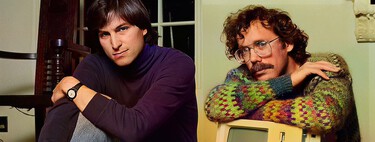
Andy Hertzfeld was one of the members of the team that developed the Apple Macintosh. In May 1981, he shared a curious story, now recovered by the Computer History Museum.
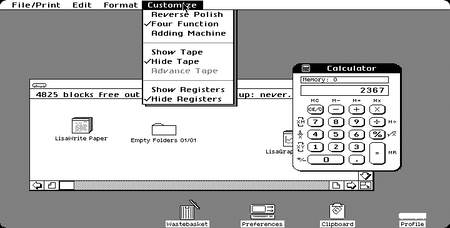
Lisa OS 1.0. Look at the edges of the calculator app. They are rounded!
The protagonist of that story is Bill Atkinson, a legendary Apple engineer and Hertzfeld’s partner on that project. At that time, Atkinson was working on the development of his QuickDraw application – then called LisaGraf – and although he usually worked from home, if he made any significant progress, he would quickly go to the office to showcase the improvement.
That’s what happened that spring. Atkinson approached Apple’s offices in the mythical “Texaco Towers” Cupertino campus and showed how he had added code to be able to draw circles and ovals very easily.
This programming was much more complicated than it seemed because square roots were usually involved. The Motorola 68000 of the Lisa and the Macintosh did not support floating-point operations.
Atkinson managed to solve it with calculations that only used addition and subtraction—likely inspired by the Bresenham algorithm. He began to fill the screen with circles and ovals while his companions probably smiled in astonishment and satisfaction. But there was someone who was neither too amazed nor too satisfied.
That someone was Steve Jobs. Upon seeing the demonstration, Jobs said
—Okay, circles and ovals are fine, but How about drawing rectangles with rounded corners? Can we do that too?
—No, there is no way to do it. “It would actually be really difficult to do, and I don’t really think we need it,” Atkinson replied, probably annoyed that Jobs hadn’t been too impressed with his method for creating circles and ovals.
—Rectangles with corners are everywhere! Look around this room!
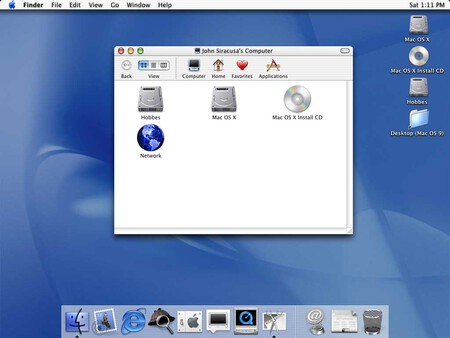
Hello, Mac OS X with rounded corners (2001).
Sure enough, the room had objects like whiteboards and tables with rounded corners, and Jobs insisted that they were everywhere and that he only had to look out the window to notice. Jobs eventually convinced Atkinson to take him around the block and point out all the rectangles with rounded corners they saw. After spotting a no-parking sign that was rectangular with rounded edges, he said:
—Okay, I give up. I’ll see if it’s as difficult as I thought.
And he went home to work on the problem. The next afternoon, he returned to the office with a huge smile: his new demo not only drew rectangles with rounded corners but did so almost as fast as it drew rectangles without them. He added that code and dubbed that primitive “RoundRects.”
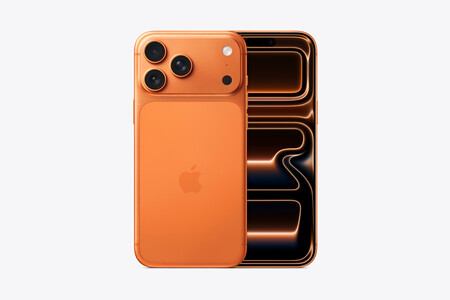
In our pockets, we usually carry a device that makes good use of these rectangles with rounded corners: the iPhone, of course.
That design element soon became an integral and indispensable part of the Macintosh operating system interface. It also ended up being part of the hardware (hello, mobile phones with rounded corners) and software design at both Apple and many other technology companies.
Source: Freepik.
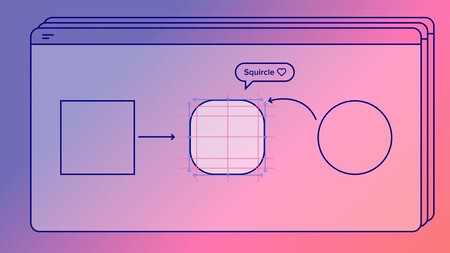
The Cupertino firm fully integrated rounded corners into its iPhones starting in 2013, when iOS 7 and its “squircle” arrived, an even more subtle type of rectangle with rounded corners used in icons and UI elements. It was one more example of the particular relevance of a design element that has completely taken over our screens and the technological world.
Long live the rounded corners!