
The Dutch Government’s Bold Move: Seizing Nexperia and Its Implications for the Semiconductor Industry
The Dutch government has taken a decisive step in the ongoing chip war by seizing control of Nexperia, a semiconductor company based in the Netherlands yet owned by China. This action marks the first utilization of the “Law of Availability of Assets,” setting a precedent that adds a new layer of complexity to the global semiconductor landscape.
What Has Happened
Nexperia, a key player in the semiconductor sector, was initially spun off from the Dutch company NXP Semiconductors. In 2017 , a Chinese state-backed consortium acquired Nexperia for $2.75 billion , and by 2019 , it was majority-owned by Wingtech, a Chinese technology group. Recently, as reported by the Financial Times, the Dutch government unexpectedly intervened, citing “serious deficiencies in governance and actions.” This legal maneuver empowers Dutch Economy Minister Vincent Karremans to take de facto control over Nexperia’s operations.
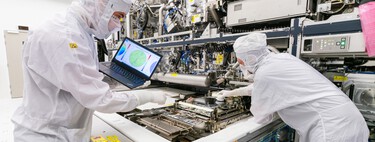
<img alt="The ASML-Mistral alliance reveals the European plan B: if we cannot manufacture chips, at least we will control how they are manufactured" width="375" height="142" src="https://i.blogs.es/7b69d5/1366_2000/375_142.jpeg"/>Objective: Protect Europe’s Chip Supply
This unprecedented action by the Dutch authorities is driven by a commitment to safeguarding crucial technological knowledge and capabilities on Dutch and European soil. Nexperia is integral to the European automotive industry and consumer electronics, producing essential chips for numerous applications. The stakes are extraordinarily high, as Europe navigates its dependence on foreign technology amid geopolitical uncertainties.
Geopolitical Tension Escalates
The situation has rapidly evolved in recent days, reflecting mounting geopolitical tensions. In early October , several court rulings restricted the powers of Nexperia’s Chinese CEO, Zhang Xuezheng. A subsequent court order mandated that a non-Chinese director take charge, wielding decisive voting powers and transferring nearly all shares to custodial management. Wingtech has labeled these decisions as “excessive interference driven by geopolitical bias,” illustrating the polarization of interests between China and the West.
Already on the “Entity List”
The United States had previously categorized Wingtech on its “entity list” in 2024 , accusing it of facilitating China’s access to sensitive semiconductor manufacturing technology. This designation imposed stringent restrictions on U.S. companies wishing to engage with Wingtech, necessitating specific licenses—a process fraught with challenges. Recently implemented trade restrictions further complicated dealings even with subsidiaries like Nexperia, underscoring the growing friction in global trade.
Escalation in the Chip War
This technological intervention by the Dutch government signifies an alarming trend in the geopolitical reconfiguration of the semiconductor industry. We are witnessing a transition from an era characterized by economic globalization to one emphasizing technological sovereignty and national security. Historically, market efficiency led companies to pursue global ownership and production structures, even in critical sectors like semiconductors. The actions taken by the Dutch government signify a definitive shift away from this complacency.
The Netherlands as a Key Player
Historically, the Netherlands has posed challenges to Beijing’s semiconductor ambitions. ASML, a leading technology firm and the world’s premier supplier of advanced photolithography machines, exemplifies this. U.S. sanctions have already restricted ASML from selling its most advanced lithography equipment to China, positioning the Netherlands as a significant adversary in this global contest for chip supremacy. The recent seizure of Nexperia amplifies this adversarial stance.
Rare Earths and Trade Tariffs
The seizure of Nexperia introduces a new chapter in escalating tensions global trade dynamics. Recently, China implemented new export restrictions on *rare earths *, prompting the U.S. government to increase tariffs on Chinese imports by 100% . These developments are not only heightening tensions but threatening to have profound implications for the global economy. Markets are reacting sharply, with notable declines observed in stock indices and the cryptocurrency market alike. The ripple effects of these actions may complicate the landscape for both investors and consumers.
As we delve deeper into this evolving narrative, the strategic importance of semiconductor production becomes ever more apparent amid geopolitical rivalries. The race for technological supremacy is not merely an economic battle but a critical aspect of national security that will shape diplomatic relations and global economic stability in the years to come.