
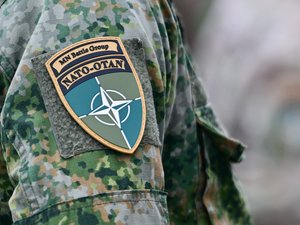
This Monday, October 13, NATO will launch its annual nuclear exercise , “Steadfast Noon,” involving 2,000 soldiers , 71 aircraft , and 14 countries . The operation, regarded as a “routine” event, is set against the backdrop of heightened tensions due to increased incursions by Russian drones and other geopolitical factors.
NATO’s “Steadfast Noon” is an extensive exercise organized annually to ensure the credibility and effectiveness of its nuclear deterrent capabilities. This year’s exercise, designed well in advance, involves substantial participation from NATO allies, but notably does not include the deployment of actual nuclear weapons . This highlights the exercise’s focus on operational readiness and coordination rather than provocation.
During a press briefing from Volkel Air Base in the Netherlands, NATO Secretary General Mark Rutte stated, “We need to do this because it helps us ensure that our nuclear deterrent remains as credible, as safe, as secure, and as effective as possible.” This underscores the alliance’s commitment to maintaining a robust defensive posture amidst evolving security dynamics in Europe.
Further emphasizing the exercise’s routine nature , Jim Stokes, responsible for NATO’s nuclear policy, added, “I would like to emphasize that the exercise is routine. It is not directed against any country, and it is also not linked to any real event.” This statement aims to alleviate concerns regarding the exercise being a reaction to current geopolitical tensions.
NATO’s annual nuclear deterrence exercise – STEADFAST NOON – will start on 13 October. The exercise is an important demonstration of the Alliance’s nuclear deterrent, and sends a clear message to any adversary that NATO can and will protect and defend all Allies 💪 pic.twitter.com/Tbv91mLHfm
— NATO (@NATO) October 10, 2023
The Context of Increased Tensions
This year’s “Steadfast Noon” exercise will be conducted from several military bases, including those in Belgium , the United Kingdom , and Denmark , spanning across the North Sea . The exercise is particularly significant in light of recent events; it follows multiple incursions by Russian drones into NATO airspace, raising concerns over regional security and intelligence gathering.
The frequent incursions have prompted NATO to enhance its surveillance and operational readiness. American Colonel Daniel Bunch , who oversees nuclear operations at NATO, mentioned, “These more frequent incursions are obviously something we are monitoring closely.” The evolving threat landscape, characterized by the increasing use of drones, represents a challenge that NATO is prepared to address.
Colonel Bunch also clarified, “Drones are not a new threat to us. Drones are something we understand.” This acknowledgment signifies NATO’s ongoing efforts to adapt and counter emerging threats while ensuring the safety and security of its member states. The exercise will involve various aircraft, including fighter jets and bombers , which will simulate various nuclear delivery scenarios, ensuring that NATO remains capable of a coordinated response if necessary.
The importance of these exercises goes beyond mere military preparedness; they serve as a demonstration of unity among member states. By conducting “Steadfast Noon,” NATO seeks to reinforce its commitment to collective defense and deter any potential threats. The signal sent to both allies and adversaries is crucial, particularly in a landscape marked by geopolitical instability and uncertainty.
In conclusion, NATO’s “Steadfast Noon” exercise is a critical component of the alliance’s defense strategy. It highlights the importance of maintaining a credible nuclear deterrent while addressing emerging threats. The commitment to routine exercises ensures that NATO remains prepared, unified, and capable of responding to any situation effectively. As tensions persist internationally, the message from NATO is clear: the alliance will not waver in its commitment to protecting its member nations and ensuring collective security.