
The Evolution of the Soccer Ball: From Pig Bladders to Cutting-Edge Technology
The journey of the soccer ball is a fascinating tale that reflects the evolution of sports technology . All soccer balls can trace their lineage back to the humble pig bladder , which was traditionally inflated and tied off to create the first game balls. These primitive versions were later encased in durable leather by skilled craftsmen, leading us to the modern football we know today.
In October 1863, the first official Football Association rules were drafted at the Freemason’s Tavern in London, offering little specification about the ball’s design. The focus was seemingly on the gameplay rather than the equipment. Not until 1872 did regulations standardize the ball’s size—between 27 and 28 inches in circumference—and its weight, required to be 14 to 16 ounces at the start of the match. This was crucial because, on rainy days, the weight of the ball could increase by up to 50%.
The relentless pursuit of waterproofing and perfect spherical shape has marked the evolution of the soccer ball through four distinct stages. The first stage featured balls with stitching; the second began with the 1950 Brazil World Cup, allowing direct access to the inner bladder; the third stage introduced Adidas in the 1970 Mexico World Cup, leading to a series of waterproof designs; finally, the fourth stage, starting with the 2018 Russia World Cup, saw the integration of chips into the ball for data tracking.
Iconic Balls and Their Evolution
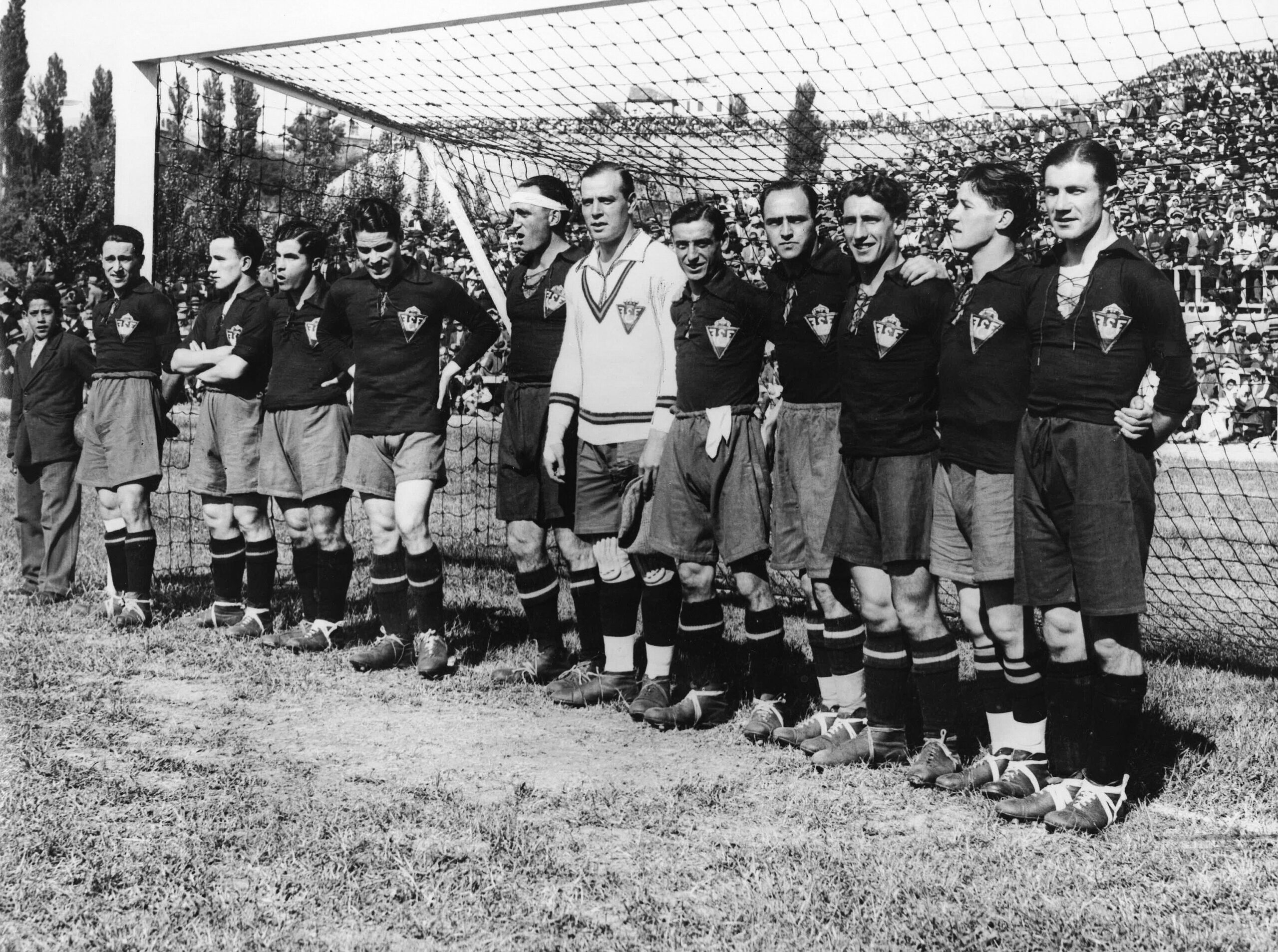
For example, during the first World Cup in Uruguay in 1930, the T-model ball was used, which was already familiar as it had seen action in the 1924 and 1928 Olympics . It consisted of eleven leather panels stitched together, with an opening sealed by a leather cord. This design caused minor injuries, prompting defenders to protect their foreheads with cloth. In a historic showdown, the Uruguayan and Argentine teams debated over which ball to use during the final match, resulting in a compromise where each team played one half with their preferred ball.
The competition continued through decades, with each World Cup introducing innovations. In Italy 1934 , the Federale-102 was used, but its fragility led to the English Zig-Zag ball being used in the final. Then came France 1938 , where the Allen was introduced, flaunting branding for photographic appeal. The 1950 World Cup marked a significant leap forward with a new ball called the Supercall Duplo-T , which was inflatable through a valve in one of its twelve leather panels, eliminating the previous issues with stitching.
Advertising Meets Football
By the 1960s, marketing began to entwine itself with football. The Mister Crack ball showcased design innovation with 16 hexagonal panels, introducing a sense of sphericity . In Mexico 1970 , truly revolutionary changes occurred with the launch of the Telstar . The iconic 32-panel design, featuring 20 hexagons and 12 pentagons, redefined the aesthetic and practical function of the soccer ball. Going forward, Adidas became synonymous with World Cup balls, as witnessed by the Telstar-Durlast in Germany 1974 , incorporating water-resistant technology.
Modern Innovation and Technology
Adidas continued evolving the ball design through the decades, introducing the Brazuca at the 2014 World Cup , which utilized six identical panels to find a balance between playability and performance. It offered dramatic improvements, correcting the unpredictable nature of its predecessor, the Jabulani . In Russia 2018 , the Telstar 18 was launched, featuring pixelated designs reminiscent of the original Telstar, while also incorporating a chip for data collection on match dynamics.
Looking ahead to the upcoming 2026 World Cup across the United States, Mexico, and Canada, the new Trionda is set to make waves. With a built-in sensor that enhances its performance metrics and allows for real-time tracking of play, the Trionda stands as a testament to how far the technology behind soccer has advanced. Its unique design incorporates colors representing the participating nations while ensuring both stability and aerodynamic efficiency.
The story of the soccer ball is a microcosm of advancement across sports, showcasing how technology, marketing, and design can come together to enhance performance and viewer experience. From a pig’s bladder to smart technology , the evolution of the soccer ball continues to inspire not just athletes but fans worldwide. As we prepare for future tournaments, it’s exciting to consider how the next generation of soccer balls will shape the game we love.