
The U-Shaped Curve of Happiness: Myth or Reality?
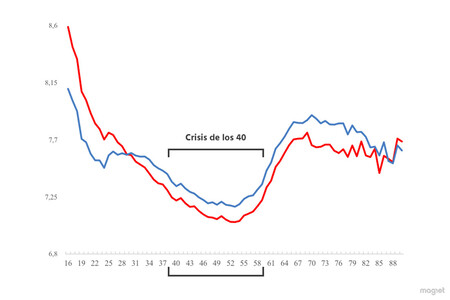
As we journey through life, the narrative surrounding happiness often suggests a compelling twist. It’s widely held that we experience joy and contentment during our adolescence and late youth; however, as the years progress, many of us find ourselves grappling with increasing feelings of dissatisfaction and misery. Most notably, this phenomenon seems to peak during our late 40s to early 50s, a phase often described as the point where happiness hits rock bottom. But does this U-shaped curve of happiness truly reflect our experiences, or is it merely a statistical artifact?
Wonkblog
The assertion that happiness follows a U-shaped trajectory was brought to light in a groundbreaking study by Blanchflower and Oswald in 2008, which analyzed data from over half a million people. The findings indicated that happiness tends to decline with age until it reaches a nadir in middle age, only to rebound toward the levels of youthful exuberance . This has become a widely accepted notion within psychological and sociological circles.
However, researchers Fabian Kratz and Josef Brüderl from the Ludwig Maximilian University of Munich challenged this conventional wisdom. They meticulously scrutinized the available data and raised concerns about a potential methodological flaw in the earlier studies. What if the U-shaped curve doesn’t exist genuinely but is rather an illusion formed by sample biases?
Reevaluating the Data
Kratz, in his extensive research on happiness , suggests that previous studies may not have adequately accounted for confounding variables that distort their results. He argues that some studies indicated a stability in happiness across different age groups, while others pointed to a gradual decline or even an inverted U-shaped trend. This raises significant questions regarding the validity of the widely accepted U-shape model.
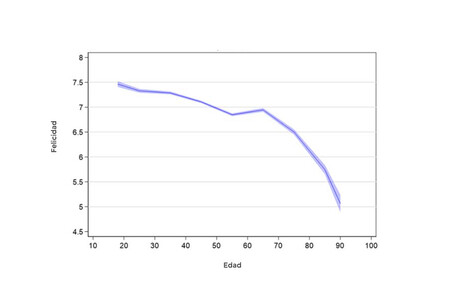
Kratz and Brüderl (2021)
Upon reevaluation, Kratz and Brüderl found evidence suggesting that while happiness may show a degree of stability during the late 50s, it does not consistently rise or reflect a U-shaped trend. This leads us to wonder about the significance of survivor bias: are we only observing happier individuals as the less fortunate among us pass away? This hypothesis could account for the skewed perception of increased happiness in older age groups.
Survivorship Bias and Happiness
According to their findings, individuals who experience greater dissatisfaction or unhappiness tend to have shorter lifespans. Thus, the aging population may appear disproportionately content simply because the unhappiest segments of society have already exited. In essence, the narrative that retirement ushers in a period of fulfilling experiences may be overly simplistic or even fundamentally misleading.
Kratz’s analysis suggests that older adults present a bias in the happiness data; the less happy among us may simply have already died, leaving a more content group represented in studies. Therefore, the idea that life markedly improves after a certain age could be more about survival than any inherent increase in happiness.
The Complexity of Emotions
The crux of Kratz’s research lies in acknowledging the psychological complexities that manifest during middle age. While demographic trends indicate a downturn in happiness, they don’t necessarily articulate the underlying reasons behind it. Indeed, studies highlight that many individuals navigate a range of mental health challenges during this period. Yet, minimal research has sought to understand the connection between these emotional fluctuations and overall quality of life.
Thus, as we observe generational shifts among millennials and subsequent cohorts, it becomes crucial to consider the enduring impacts of unhappiness as well. The understanding that the future could harbor challenges rather than a guaranteed upward trajectory can profoundly influence our perspectives and experiences.
This ongoing dialogue in the realm of happiness research reveals the complexity of human emotions . In the dynamic interplay between age, societal roles, and psychological states, it is essential to recognize that our experiences of happiness may resist simplistic categorizations or conclusions.
The science of happiness is undoubtedly multifaceted, and accepting its complexities may help us navigate the emotional landscapes of our lives with greater clarity. Acknowledging the intricacies of our psychological well-being can arm us with better strategies for resilience and fulfillment as we age.