

“I study musical theater in London, I have been living for two years in Sweden and four years in India, where I also attended an American school” or “I lived for three years in Indonesia and now I am studying a double degree in audiovisual communication and journalism” are the cover letters of some of the contestants of Operation Triumph 2025. As expected, the networks have quickly taken to uncover your memes and make fun of these introductions, accusing the edition of elitism. The truth is, some satire does fit in an edition in which the average contestant is 19 years old and has barely traveled around the world and learned five languages.
@javierpv_26 Average OT2025 Contestant #operaciontriumph #OT2025 #otgala0 #ot
What is quite ironic is that it is mostly Generation Z that caricatures this model of contestant, because this edition, more than ever, has put the post-millennials in front of the mirror, and not precisely because of the challenge that reading a wall clock posed for the participants. If we combine Prime Video’s interest in increasing subscribers with the eagle eye of Noemí Galera, who has been dedicated to casting processes for years, we find a format that considers its greatest asset to attract this generation and turn it into its majority audience.
The members of the millennial generation are still part of the fan base, but they are no longer the focus of interest of the program. Gone are those contestants from the 2000s and that “I was wrong, olé!” of Rosa de España during a performance. Now, the majority of contestants have already been through several musical competitions and they know what they face in the academy. Visits from famous artists and the possibility of embarking on a tour are no longer surprising, and they are more aware than ever of where they stand. The profiles have shifted, eliminating the spontaneous and more “working class” contestants.

The return of ‘Operación Triunfo’ starts exclusively on TikTok: it demonstrates everything that the program owes to the social network
As almost all of Spain knows, Bustamante worked in construction before pursuing his musical dream, as mentioned here; not to mention Vero, who was a hairdressing assistant and aerobics instructor. In 2025, such profiles are almost unthinkable because these trajectories are no longer what casting directors are searching for, instead becoming the discordant note of the edition.
The clearest example this year is Guille Toledano, a head chef who defines himself as an absolute fan of Atlético de Madrid; His presentation during Gala 0 was akin to the closest that humans have been to time travel.
Goodbye bricklayer, hello drama student
That “two-thousand” essence, where profiles like Chenoa stood out for their mettle and experience on stage, has vanished.
The contestants possess more training, but not necessarily extensive experience touring with an orchestra or performing in casino rooms, as was the case with Chenoa. The everyday reality in this new edition is the total crystallization of a process that has been shifting the identification of the public (“I could be that one”) toward a search for hyperformed virtuosos. These contestants often study double degrees, attend musical theater, are tap dancers, or possess degrees in Spanish dance, and have traveled extensively.

Nobody knows what the audience is for ‘Operacion Triunfo’, but Prime Video has gotten what it wanted with the program
We are not saying that these characteristics guarantee the success or popularity of each contestant. In fact, the latest OT winner is Naiara, an orchestra singer; and in this new edition, Guille seems to stand out among the favorites every week. Popularity aside, what stands out is the transformation in the group of contestants—a reflection of a significant part of the generation that OT wants to target in 2025.
We are discussing a young audience, primarily university students; a generation responsible for a record number of registrations in 2024, who also study abroad and know multiple languages. Given this context, how could Tinet Rubira and the entire OT network not design a selection of contestants made tailored for Generation Z?
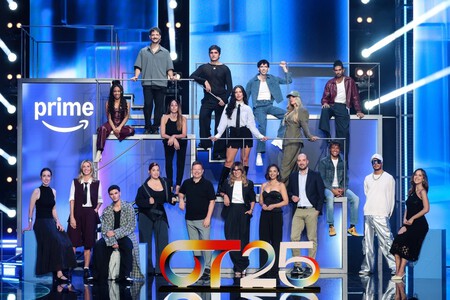
Gone are those early editions of Operación Triunfo where each week contestants had to defend a song in English, often struggling through. While back in 2001 the public empathized with Rosa’s attempts at English during “It’s Raining Men”, this connection is increasingly irrelevant in 2025. Whether elitist or not, OT knows it perfectly: they aim for representation of a modern and well-prepared generation, fluent in standard English and equipped with double the qualifications they will later seek in the job market.
Carlos Lozano giving way to a version of Bad Bunny?
This turn and fine-tuning of the contest is not a new phenomenon.
Although it has become more visible this year, the true transformation of the program began in 2017, adapting to new generational codes. The OT 2017 with its 24-hour channel and engaging YouTube chat revolutionized a generation that had previously not experienced the OT phenomenon. It was just the beginning; OT 2023 emerged via streaming platform Prime Video, suggesting continued evolution of the format.
On a personal level, I miss Capde, an OT professor who left two editions ago, and who seemed uncomfortable helping contestants with certain urban rhythms. However, it is true that Operación Triunfo has reinvented itself beyond the casting. Young, talented instructors like Pablo Lluch and Vic Mirallas now form the faculty, allowing students to unleash their creativity.

These new teachers assist their students in interpreting daring lyrics like “I want to eat your butt, I didn’t have breakfast today.” The Amorphous by María Escarmiento was striking in 2018, but in this edition, covering Bad Bunny’s hits is hardly surprising at Gala 0.
While changing styles, voting methods, creating apps, or updating the jury can rejuvenate the format and enhance viewership, the ultimate key lies in the contestants. Youth desires to feel seen in these contests, and that perceived “elitism” correlates with increased education and, consequently, greater interest in all that pertains to music. Early editions featured mere interpreters; now, contestants aspire to be musicians.

Some OT contestants did not know how to read clock hands. Science has clues as to why it is becoming more common
There is a noticeable increase in contestants interested in musical production, composition, and instrumental skills aimed at infusing their unique touch into covers of well-known songs. Participants like Natalia Lacunza, Alba Reche, and Paul Thin exemplify this shift in profile. This edition sees even more hopefuls striving to leave their mark, whether through musical theater or reinterpreting the pieces of a musical giant like “The Place of My Recreation” (as performed by Claudia during her nomination at Gala 2).
Only time will tell if any of these contestants will possess the star power required to host their own listening parties at 16 euros like Aitana. What remains evident is that Operación Triunfo has transitioned from being the “American dream” for shower singers to a selection process filled with highly-educated youth. This raises questions about whether the program truly reflects young Spanish society.