
Understanding DANAs: A Shift in Meteorological Communication
As meteorological phenomena increasingly impact our daily lives, it is important to understand how they are communicated to the public. This fall and winter, the spotlight will be on names like Marta , Samuel , and Claudia . These are not merely characters from a new television series; they are among the first names assigned to significant weather events, known as DANAs (Isolated High-Level Cold Drops). The AEMET (the Spanish meteorological agency) has announced that high-impact DANAs will now receive distinct names, a practice similar to how storms are named. This initiative raises intriguing questions about marketing and public awareness in meteorology.
The Announcement and Collaboration
The launch of this naming system was made public through AEMET’s official channels and is set to work in coordination with meteorological services from neighboring countries, including Portugal (IPMA), France (Météo-France), Belgium (IRM), and Luxembourg (MeteoLux). The first-ever named DANA will be called ‘Alice’, marking a new chapter in meteorological communication.
Do We Really Need This System?
While this naming initiative may seem innovative, it raises a critical question: Do we really need names to understand the threat posed by these weather events? The term “cold drop,” or “gota fría,” is already well established and evokes a sense of urgency and alarm. The prior terminology was a well-understood concept that signaled apocalyptic skies, torrential rains , and potential flooding across regions, especially in the Mediterranean arc.
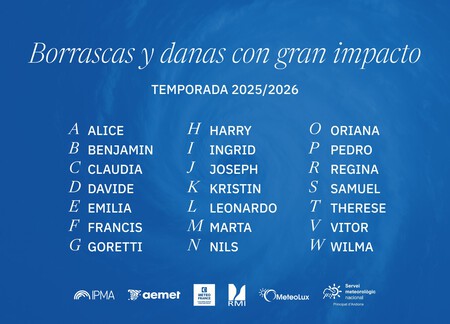
<span>List of names that will receive the DANAs with a great impact in Spain.</span>DANA vs. Cold Drop: Understanding the Differences
For years, meteorologists from AEMET have fought a pedagogical battle for people to distinguish between DANA (Isolated High-Level Cold Air) and the colloquially used “cold drop.” ‘DANA’ is the more technical term that refers to a pocket of cold air high in the atmosphere. This phenomenon is relatively common and doesn’t always result in devastating storms or flooding.
However, the general public has found the technical term DANA to be less evocative compared to the more familiar “cold drop.” The latter evokes vivid imagery of severe weather conditions that everyone recognizes. As a result, many people were left confused by the technical terminology.
The Problem of Terminology
The AEMET acknowledged that the use of “DANA” in media and public discussions has created significant confusion. Their website states that naming impactful DANAs may help prevent them from being mistakenly associated with normal or expected atmospheric conditions.
In effect, AEMET seeks to create a new category for significant weather events: a “named DANA,” equivalent to the once-feared cold drop, while reserving the term “DANA” for cases with lighter impacts.
A Marketing Strategy: The Humanization of Weather
Naming DANAs provides a fantastic communication strategy . When a weather event has a proper name, it transforms it into a more relatable entity, making it easier to track and discuss on social media platforms. For instance, stating “DANA ‘Benjamin’ is approaching the coast” captures the attention much more effectively than saying “A low-pressure system associated with a DANA will cause instability.”
<img alt="Gabrielle Illustrating Extratropical Transition" width="375" height="142" src="https://i.blogs.es/728b3f/gabrielle-ecmwf/375_142.png"/>This approach has already proven successful with past storms. Historical events like ‘Filomena’ have been ingrained into collective memory and have been clearly associated with their impacts. Now, AEMET aims to replicate this effect with a phenomenon that is set to become increasingly common.
What We May Lose
In pursuing this strategy, one must wonder if we are sacrificing part of our meteorological culture . The term “cold drop” is steeped in history and experience, serving as a familial warning passed through generations. Now, this rich tradition may be overshadowed by a more clinical, standardized naming system that lacks emotional resonance.
The First Named DANA Under This New System
Shortly after the announcement of this initiative, AEMET warned of heavy rain in eastern regions of the peninsula and the Balearic Islands, naming the incoming DANA ‘Alice’. This new naming system is already proving operationally significant, as it brings attention to the risks of flooding and severe weather impacting communities.