

Unveiling the Mysteries of the Endurance
The Endurance , the legendary ship of Ernest Shackleton , has long been regarded as a symbol of resilience and heroism after its fateful sinking in the icy waters of the Weddell Sea in 1915. This maritime saga, steeped in myth for over a century, recently took a new turn as scientific investigations revealed that the truth surrounding its demise is more complex and, in many aspects, unsettling. Contrary to popular belief, the Endurance was not fully equipped to withstand the harsh Antarctic environment it encountered.
The Myth vs. Reality
For more than 110 years, the narrative of Shackleton and his crew’s heroic attempts to conquer the Antarctic was accompanied by the impression that the Endurance was the sturdy ship of its era, tragically succumbing to an ice-induced blow. Yet, recent research dismantles that interpretation. A detailed examination of the shipwreck, discovered in 2022, indicates that the Endurance was vulnerable from the outset. It did not sink due to a singular impact but rather succumbed to a series of compressive forces that ultimately overwhelmed its fragile structure. Interestingly, Shackleton was likely aware of these inadequacies when he set sail.
The Trapped Expedition
The Endurance embarked on its ill-fated journey in 1914, aiming to cross Antarctica on foot . Unfortunately, by early 1915, the ship became ensnared in a solid expanse of ice. For ten grueling months, the crew persevered on board as ice pressures began to warp and damage the ship. Their journals capture the agonizing sounds of groaning wood as the structural integrity of the Endurance deteriorated. By October 27, 1915, Shackleton was compelled to command the crew to abandon ship, only for the hull to sink weeks later after enduring a succession of pressure attacks that compromised its form.
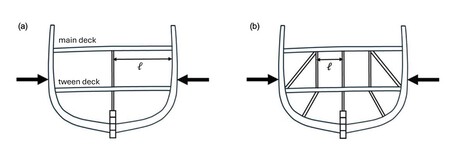
Idealized cross sections of early Antarctic ships, showcasing the Endurance’s weak structure.
A Fortress with Feet of Clay
The Endurance was not the invulnerable vessel of legend; it was originally designed for polar tourism, lacking essential reinforcements for survival in extreme conditions. Its structure did not incorporate diagonal beams to stabilize the hull, nor did it possess a robust framework to support the engine room—the ship’s most frail area. Eyewitness accounts describe worrying distortions and warping. The rudder and keel’s failure was a consequence, not the root cause of its downfall.
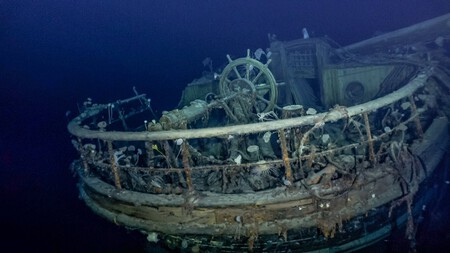
Wreck discovered in 2022, providing new insights into its structural vulnerabilities.
Shackleton’s Awareness
One of the most critical aspects of this revelation is that Shackleton wasn’t oblivious to the ship’s deficiencies. Having participated in the rescues of other ice-stricken vessels, he had firsthand experience of the enduring fight against nature’s extremes. Despite admitting in a letter to his wife that the Endurance lacked the strength of his previous vessel, he opted to use it due to his financial pressures and the competitive pressure of the time to achieve Antarctic glory .
Rewriting History
Recent studies highlight that the Endurance was not merely an unfortunate incident but rather an inadequate design for its formidable environment. This does not diminish Shackleton’s legacy but offers a more nuanced understanding of his leadership. Despite the ship’s shortcomings, Shackleton remarkably saved his entire crew, showcasing human resilience amidst technological failure. The wreck of the Endurance serves as a poignant reminder that even the strongest materials yield under immense pressure, yet the human spirit perseveres.

A Shared Destiny
The saga of the Endurance is not an isolated chapter in maritime history. Similar incidents, such as the sinking of American whalers in 1876 due to inadequate structural reinforcement, highlight a consistent theme: the polar ice does not tolerate compromises. In stark contrast, the story of the ship Deutschland illustrates how simple design modifications could yield safety and survival. Shackleton’s expedition, while ultimately a tragic narrative for his ship, serves as a testament to true leadership, risking everything yet safeguarding his men amid the unforgiving reality of the frozen continent.
As we reflect on the findings regarding the Endurance, it becomes evident that history often requires revision to align with truth. The revelation of its structural inadequacies does not overshadow Shackleton’s courageous leadership but instead enriches our understanding of his monumental journey in the face of adversity.