
An Extraordinary Astronomical Discovery: The Case of Cha J11070768-7626326
An international team of astronomers has witnessed an extraordinary event : a celestial object, with a mass of just 5 to 10 times that of Jupiter , has entered a violent and prolonged growth burst . Utilizing the combined power of the James Webb Space Telescope (JWST) and the Very Large Telescope (VLT) of the Southern European Observatory, researchers have observed how this object, known as Cha J11070768-7626326, drastically increases its brightness and its “food” rhythm, behaving akin to a miniature star.
The Importance of the Discovery
This discovery represents the first time that an outbreak of accretion —a phenomenon traditionally associated with young stars —has been observed in a body of planetary mass . This finding not only marks a significant milestone in astronomical observation but also begins to blur the borders between what we consider a giant planet and a small star .
Understanding the Mystery
Cha J11070768-7626326 is not a planet in the conventional sense; it does not orbit any star and is located 620 light-years from Earth. This object is categorized as a Free-floating Planetary Mass Object (FFPMO) . The existence of such lonely bodies raises fundamental questions in astronomy: Are they giant planets that have been expelled from their solar systems, or do they represent smaller stars that can exist in isolation?
To solve the enigma surrounding Cha J11070768-7626326, scientists must analyze the gas and dust disc that surrounds the object, as well as its material accumulation process. The fact that it has an accretion disc and feeds on it suggests that its origin may resemble that of a star.
A Cosmic Feast
Astronomers initially observed Cha J11070768-7626326 in a state of calm during April and May 2025 . However, by June, something had changed drastically: the object entered a period of ” indulgence ,” ramping up its “food” rhythm. This led to an astonishing mass increase rate of 10^-7 times that of Jupiter per year—the highest ever measured in a planetary mass object.
As a result of this feeding frenzy, Cha J11070768-7626326 became 1.5 to 2 magnitudes brighter in visible light, with its optical flow increasing by 3 to 6 times . This outburst remained active for at least two months, persisting until observations concluded in August 2026 .
The most astonishing outcome of this event was the growth speed itself. Observations made with the VLT revealed an aggressive growth rate, with the object devouring an astonishing 6,600 million tons of dust and gas per second.
Unveiling Great Footprints
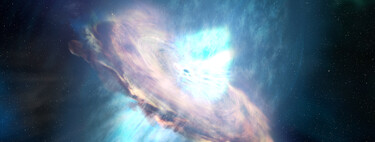
Beyond the brightness increase, telescopes captured detailed physical changes that unveil the nature of this cosmic event. An emission line of hydrogen , referred to as Hα , developed a ” double peak ” profile with red-shifted absorption . According to the study’s authors, this profile is a “distinctive mark” of magnetospheric accretion , a process typically seen in young stars.
The most surprising discovery was the change in the chemistry of the disc . Initially, changes in the emission lines of hydrocarbon molecules were noted during the outburst. However, water vapor began to appear with characteristic emissions around 6.6 µm , a phenomenon never before observed in correlation with an increase in accretion.
Relevance of the Event
This significant event categorizes Cha J11070768-7626326 as the first “exor” of known planetary mass. Exor outbursts are critical accretion events considered key episodes in the early evolution of stars, fundamentally influencing the structure and chemical composition of protoplanetary discs. Observations of such a process in a small object demonstrate that the violent mechanisms driving star formation are equally effective at planetary scales . Consequently, this study provides unprecedented insights into accretion in low-mass celestial bodies, offering a fresh perspective on how both smaller stars and larger planets are formed.
In conclusion, the discovery of Cha J11070768-7626326 opens new avenues for understanding cosmic phenomena and challenges existing paradigms regarding the nature of planetary and stellar formation.