

Ukraine’s Drone Warfare: The Rise of Affordable Interceptors in Defense Against Shahed Drones
As the war in Ukraine continues to escalate, the utilization of Shahed drones by Russia has become a pivotal part of their military strategy. These drones, characterized by their remarkable affordability and scalability, serve as a tool to deplete Ukrainian defenses. In the initial stages, they were deployed in small clusters; however, as the conflict progressed, they began launching in larger waves, heightening the challenge for Ukraine. The fundamental dilemma for Kyiv is managing to neutralize these drone swarms without employing extremely expensive missile systems . Each intercepted Shahed drone necessitates the deployment of costly missiles, creating a financial burden that could prove disastrous in the long run. This cost disparity propelled Ukraine into an aggressive innovation timeline, resulting in the development of a new air defense paradigm.
The Birth of the Sting
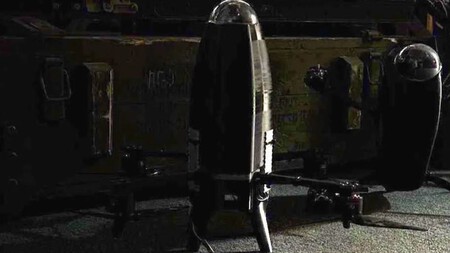
In response to these challenges, a novel weapon has emerged in Ukraine’s skies: low-cost interceptors designed specifically to counter the relentless onslaught of Shahed drones. Among these, the standout is The Sting , a projectile quadcopter featuring an astonishing speed of over 315 km/h . Designed to intercept and destroy Shahed and Geran-2 drones mid-air, The Sting’s compact design and agility starkly contrast the larger traditional anti-aircraft systems.
The initial success of The Sting—claiming hundreds of enemy drones in a matter of months—demonstrates a feasible method for neutralizing mass threats using fast and economical solutions . Collaborations between companies such as Wild Hornets and government initiatives like Brave1 have transformed rapid innovation into a cornerstone of Ukraine’s aerial survival strategy.
The Cost War
The key challenge is not merely technical; it is fundamentally economic . A single Shahed drone costs approximately $35,000 , while contemporary missile systems like the AIM-9X that take them down can exceed $1 million per unit. This financial imbalance places Ukraine and its allies at a significant disadvantage, with each interception costing many multiples of the actual Russian attack.
In stark contrast, The Sting is priced at just $2,100 , functioning effectively as a suicide drone that ensures its destruction of the target upon impact. The implications of these costs are staggering; for the same expenditure as a single AIM-9X, nearly 500 Stings could be manufactured. This ratio underscores why Kyiv views the large-scale deployment of The Sting as crucial to withstand aerial assaults involving up to 800 drones in a single night .
Accelerated Innovation
Ukraine’s advantage lies not only in the unit cost of these drones but also in their rapid adaptation . Each new model emerges as a direct response to Russian tactics, be it Shaheds operating at greater altitudes or in more numerous swarms. Engineers are transitioning from ground-based interceptors with cannons and machine guns to semi-autonomous systems, and even experiments with fully automated drones capable of detecting, tracking, and neutralizing threats without human intervention. This agile approach has transformed Ukraine into an unparalleled testbed for air warfare technology .
Europe and the Lesson
The recent incursion of 21 Russian drones in Poland saw F-35s deployed, which required expensive missiles to take down just four targets. This incident has sparked a renewed interest across Europe in Ukrainian solutions , which offer a more efficient and scalable approach to drone defense. Companies in Germany and beyond are already testing interceptors influenced by Kyiv designs, acknowledging that existing defenses are ill-equipped for the wave-based assaults characteristic of modern warfare.
New Paradigm
The introduction of interceptors like The Sting signifies a paradigm shift in military strategy. Instead of relying on costly static systems, the emphasis has pivoted towards flexible and economical solutions . Pressured by the urgency of the conflict, Ukraine is pioneering a defense model where cost efficiency, speed of deployment, and constant innovation are just as crucial as technological sophistication. Should Ukraine successfully deploy thousands of these interceptors daily, it will not only solidify its immediate defense but also lay the groundwork for a revolutionary military approach that compels NATO to rethink its strategies against an adversary increasingly focused on saturation tactics.