
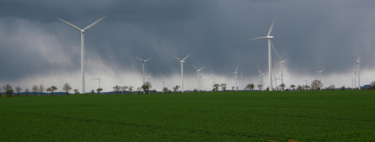
The North Sea: A New Frontier for Green Hydrogen Production
For decades, the North Sea was synonymous with oil and gas , playing a pivotal role in the European economy and energy supply. Today, as Europe transitions towards renewable energy , that very sea is emerging as the site for a groundbreaking era: the potential production of 45,000 tons of green hydrogen annually.
Is this possible? Media outlets have eagerly reported the discovery of a natural hydrogen site in the North Sea. However, the reality paints a different picture. Recent announcements from TotalEnergies and Air Liquide reveal two innovative projects involving electrolysis in the Netherlands and Belgium. These projects, when combined, have the potential to produce the stated amount of green hydrogen annually through renewable electricity generated in the Oranjewind marine wind park.
In essence, there is no hidden hydrogen deposit beneath the waves; rather, there is significant production potential utilizing offshore wind turbines. These turbines power electrolyzers designed to split water into oxygen and hydrogen. Through a process called electrolysis that applies electricity (preferably from renewable sources) to treated water, this process provides an environmentally friendly approach to hydrogen production. The resulting hydrogen is then compressed or transported via pipelines for various industrial and energy applications.
There are many plans in sight. The aforementioned projects include a 250 MW electrolyzer in Zeeland, expected to generate up to 30,000 tons of hydrogen per year by 2029. Additionally, the “Tolling” project in Maasvlakte, featuring the Elygator electrolyzer, aims for 15,000 tons per year for the Antwerp Refinery and is scheduled to be operational within two years. Under this scheme, TotalEnergies will supply renewable electricity to Air Liquide, which will then convert it into hydrogen, with TotalEnergies compensating Air Liquide for production capacity.
Moreover, initiatives like Hope (Hydrogen Offshore Production for Europe), coordinated by French company Lhyfe, are underway in Europe. This project plans to install a 10 MW electrolyzer off the Belgian coast, with the goal of producing its first four tons of hydrogen daily by 2026, demonstrating the feasibility of generating hydrogen directly at sea.
But is there anything in motion? Pilot projects like Sealhyfe have been testing the waters for three years, producing initial quantities of green hydrogen from a small offshore plant operated by Lhyfe. However, scaling up production faces several significant challenges:
- High Costs: Developing a single electrolyzer, like the one in Zeeland, requires an investment of around 600 million euros .
- Technical Challenges: Marine conditions pose risks such as corrosion, storms, and maintenance difficulties.
- Environmental Impact: Offshore wind farms can disrupt marine biodiversity, impact fishing communities, and increase the risk of bird collisions with turbines.
- Fragmented Regulation: Each country surrounding the North Sea has its regulations, causing delays in collaborative projects.
A Strategic Sea. The European Union aims to bolster renewable hydrogen production to decarbonize hard-to-electrify sectors such as steel, cement, and heavy transport, all while reducing reliance on fossil fuels. By 2030, the EU plans to have numerous gigawatt-scale electrolyzers installed. Concurrently, its strategy for offshore renewable energy envisions up to 300 GW of marine wind capacity by 2050 , much of which is expected to rise in the North Sea.
It’s crucial to note that the North Sea does not belong collectively to the EU. It is divided into exclusive economic zones (EEZ) pertaining to various countries, including the Netherlands, Belgium, Germany, Denmark, the United Kingdom, and Norway. Consequently, every project must conform to the regulations of the respective country within whose EEZ it is situated. To address this fragmentation and scale up the energy transition, Brussels is advocating for cross-border cooperation initiatives like the North Seas Energy Cooperation, which seeks to harmonize regulations and interconnect projects among neighboring nations.
Goodbye Gas and Oil. The North Sea has long represented European reliance on fossil fuels , chiefly symbolized by oil and gas extraction. However, with the shift towards renewables, it stands on the brink of becoming a laboratory for the energy transition . The potential “treasure” lying beneath is not a hidden cash cow, but a monumental challenge necessitating substantial investments, political unity, and technological advancements. Only by overcoming these hurdles can the projected figures transform from mere headlines into a tangible energy revolution .
Image | Freepik
Xataka | A graphic representation of how much electricity each country generates from renewable sources.