
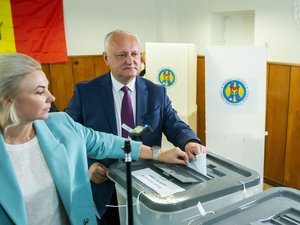
The recent legislative elections in Moldova marked a significant turning point in the country’s political landscape, underscoring its pro-European alignment amidst escalating geopolitical tensions. The Action and Solidarity Party (PAS), led by President Maia Sandu , emerged victorious, securing nearly 50% of the votes according to the quasi-definitive results. This outcome is not merely a win for PAS; it symbolizes Moldova’s unwavering commitment to European integration, a crucial aspect of Sandu’s governance.
Election Outcomes and Implications
In the elections held on Sunday, the PAS garnered an impressive 49.99% of the votes, comfortably outpacing the pro-Russian Patriotic Block, which received 24.28% . The importance of this majority in the 101-seat parliament is paramount, as it allows the PAS to maintain control and minimize the potential of coalition negotiations. Such coalitions could destabilize the already fragile governance structures in one of the poorest countries in Europe, especially in light of the ongoing conflict in neighboring Ukraine .
With this electoral victory, the PAS secures a pathway towards further European projects, a manifestation of President Sandu’s vision for Moldova. Historically, Moldova has oscillated between pro-European and pro-Russian sentiments, and this election reflects a decisive moment in its quest for alignment with the European community .
Geopolitical Context and Russian Interference
The election process did not unfold without controversy. President Sandu characterized the election as an existential test for Moldova, underscoring the threat of Russian interference . This interference was not just a matter of speculation but was a central concern for many voters, especially given the socially and economically turbulent context marked by inflation , job losses, and challenges in governmental reforms.
A substantial portion of Moldova, particularly the territory of Transnistria , is controlled by a pro-Russian separatist administration and is home to a small Russian military garrison. This geopolitical reality complicates Moldova’s pursuit of closer ties with the EU and adds a layer of complexity to its domestic politics.
In the lead-up to the elections, there were rampant accusations against the opposition parties for allegedly leveraging voter sentiment by highlighting economic grievances exacerbated by a slow pace of reforms. These frustrations were skillfully capitalized upon by the Patriotic Block, which aimed to direct discontent towards the government, portraying it as inefficacious. Moreover, authorities conducted a series of operations targeting illegal funding purportedly backing foreign-influenced parties, seeking to dismantle networks that might incite unrest around the voting period.
In response to these claims, the Kremlin denied any allegations of interference, suggesting instead that the PAS government was engaging in anti-Russian hysteria to galvanize support. Yet, the accusations persist, raising questions about the integrity of Moldova’s electoral processes and the degree of external influence affecting its sovereignty.
Economic Concerns and Public Sentiment
While the election showcased a clear preference for European alignment, many voters remain apprehensive about the implications of such a geopolitical shift for Moldova’s economy. As a country heavily reliant on agriculture , concerns mount regarding how potential EU integration could affect local markets and livelihoods. Discussions surrounding this issue have been poignant as citizens weigh the pros and cons of deeper integration with Europe.
Even as the PAS advocates for closer ties with the EU, critics highlight the need for pragmatic reforms that focus on immediate economic stability and growth. The paradox remains: many Moldovans desire better living standards but are wary of risks associated with losing traditional ties to Russia . This sentiment underscores the complexity of Moldova’s political landscape, where national identity , economic strategy, and foreign policy intermingle.
The outcome of these elections, marked by a solid mandate for the PAS, reflects the hopes of a significant part of the Moldovan electorate for a more prosperous future connected to Europe. However, it is critical for Maldova to navigate its path carefully, ensuring that in its pursuit of European integration, it remains responsive to the economic and social needs of its citizens, thus fostering a truly democratic environment.