
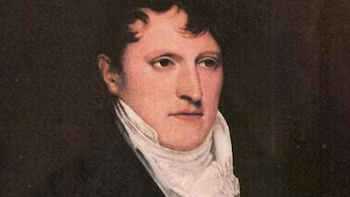
The Emotional Farewell of Manuel Belgrano
A Final Adieu
On September 11, 1819, Manuel Belgrano experienced one of the most poignant moments of his life as he relinquished command of his army to General Francisco Fernández Cruz. This bittersweet transition allowed him to embark on a journey to Tucumán to visit his young daughter, Manuela Mónica. As he passed through Córdoba, Governor Manuel Antonio Castro and military leaders greeted him, and in a heartfelt gesture, soldiers dismounted to bid farewell. “Farewell our general: May God restore Your Excellency’s health,” they exclaimed. This display of affection marked the last moment of acclaim for Belgrano, who was emotionally moved, as the weight of abandonment loomed over him.
A Legacy of Sacrifice
Having dedicated his life to the creation of the Argentine flag, Belgrano felt the sting of ingratitude during his imprisonment in Tucumán, where he was wrongfully detained in a political mutiny. At 49, he chose to return to Buenos Aires, resolutely aware that his years were waning. His financial troubles were severe; the state owed him 18 salaries. Belgrano had selflessly donated a fortune of 40,000 pesos for educational institutions, driven by his vision for future generations. Ultimately, a loan from a friend allowed him to embark on a prolonged and taxing journey towards Buenos Aires.
Travel in Discomfort
Faced with debilitating dropsy, Belgrano could hardly endure the journey, needing to be carried on a litter. His arrival in March 1820 came with additional health issues including heart and kidney problems. Despite his struggles, he settled in his childhood home, where he was attended by the dedicated Dr. Joseph Redhead and his colleague, John Sullivan.
A Decline Marked by Loneliness
As Belgrano’s health deteriorated, he found himself increasingly isolated, with only a handful of visitors. Reports from friends lamented his abandonment during this difficult time. He often sat in an armchair, as lying down made it difficult for him to breathe. Reflecting on his life, Belgrano seemed to ponder his legacy and the land he would leave behind.
The Silent Passing
On June 20, 1820, at the age of 50, Belgrano succumbed to his ailments in a Buenos Aires riddled with civil strife. A mere five days later, news of his death barely registered, with no official acknowledgment in the press. Following a brief autopsy performed by Dr. Sullivan, it was revealed that Belgrano’s health had significantly declined, characterized by a variety of internal ailments.
A Dignified Yet Forgotten Funeral
Only in late July did the government finally recognize Belgrano’s contributions with a proper funeral. The procession reflected respect, draping mourning attire over uniforms and symbols, while cannons fired and church bells tolled throughout the day.
A Legacy Reclaimed
Over the years, efforts were made to honor Belgrano, culminating in the inauguration of a mausoleum at Santo Domingo. Yet, controversy lingered around the treatment of his remains. As rumors of “the dental ministers” surfaced, it became evident that the legacy of this once-revered leader had been neglected.
Manuel Belgrano’s story is one of sacrifice, devotion, and ultimately, a tragic farewell that speaks volumes about the complexities of legacy and remembrance. Despite the initial indifference surrounding his death, the eventual acknowledgment reveals a deep-seated respect for a pioneering figure in Argentina’s history.