
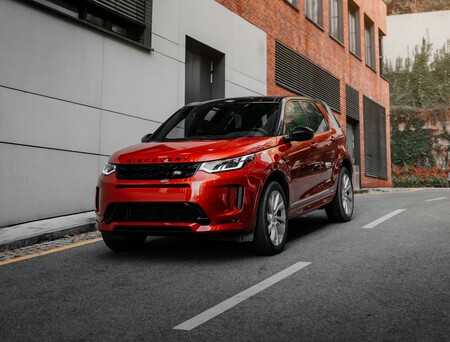
Jaguar Land Rover Faces Major Setback Amid Cyber Attack
In Solihull, near Liverpool, and its plant in Slovakia, observers are accustomed to witnessing the continuous flow of top vehicles from the acclaimed British manufacturer, Jaguar Land Rover (JLR). However, the assembly lines are currently silent , not due to a lack of parts or demand, but because of a significant computer attack that has forced the company to halt production, putting the automotive giant in a precarious position. This situation highlights the vulnerabilities that plague even the most advanced sectors of the economy.
Understanding the gravity of this incident requires a look at the timeline. On August 31, Jaguar Land Rover temporarily ceased operations in British factories as a preventive measure , according to a report by the Financial Times. Subsequently, the company acknowledged that restoring its systems would take longer than initially anticipated, pushing back the timeline to October 1. Various reports, however, suggest that the downtime could extend for months —a scenario that leaves the future of the assembly lines hanging in the balance.
Details of the Cyber Attack
What have we learned about this attack? As confirmed by the company, their systems were compromised, resulting in affected data. Fortunately, they claim there is currently no evidence to suggest that customer information was stolen. Intriguingly, a Telegram channel claimed responsibility for the breach, linking it to groups known as Lapsus $, Shinyhunters, and Scattered Spider, asserting that they had accessed the company’s source code. However, such claims need to be viewed with skepticism.
According to specialists cited by The Wall Street Journal, this production halt can cost approximately seven million dollars in lost sales every day. To alleviate the impact on its workforce, Jaguar Land Rover has opted to continue paying employees, a move that, while reducing immediate clinical pressures , exacerbates financial burdens on the company.
The Ripple Effect on the Industry
The consequences of the cyber attack extend beyond the assembly lines. The disruption impacts workshops and suppliers connected to Jaguar Land Rover—an extensive network involving around 100,000 workers . Each day without production complicates the operations of small to medium enterprises that rely heavily on the automotive giant for their livelihood.
According to Reuters, Jaguar Land Rover did not have a policy in place to cover losses incurred from such a *cyber incident*, having previously worked with Lockton, a global insurance broker. This lack of specific coverage signifies a susceptibility to losses, further complicating the recovery process.
Government Intervention and Future Outlook
The British government is now entangled in the crisis. Two ministers convened at JLR to strategize on reactivating production. Interestingly, the government is considering an unconventional approach— purchasing components from suppliers to shore up their financial base, which would then be retreated to the market when production resumes. Industry insiders question the viability of this strategy, including how to determine which parts to buy and where to store them, leaving the initiative in a preliminary stage.
The question on everyone’s mind remains: will all the lost sales be recouped? Despite the shutdowns, Jaguar Land Rover’s dealers in the U.S. reportedly possess an inventory equivalent to 113 days of sales, sufficient to buffer some of the immediate impact. However, should the halt extend into November, the company could face losses amounting to 3.5 billion pounds (approximately 4 billion euros ) in revenue.

Jaguar Land Rover’s crisis transcends the immediate factors surrounding the production stoppage. It lays bare the dependence of modern automotive manufacturing on digital systems that remain invisible until failure. In an industry meticulously focused on every second of production, disruptions like this not only halt factories and suppliers but also bring to light the urgent need for greater resilience against threats that now emerge not just from traditional competitions or market fluctuations, but from the digital realm itself.
Images | Loris Marie | Martin Katler