

The scene took place several weeks ago, but Ukrainian soldiers continue to remember it because they can’t believe what they witnessed. A drone had spotted two Russian soldiers trapped in a shelter. As one of them dashed frantically towards the drone, he emerged at the entrance of their hiding place and wrote a message in blue Cyrillic letters on an improvised white poster: “We surrendered.” Soon after, a scene unfolded in which the drone guided them to Ukrainian forces, demonstrating the evolving dynamics of warfare.
Because drones now do much of what soldiers used to handle manually, the conflict in Ukraine has witnessed a profound transformation.
General Panorama and Accelerated Advance
The drone war in Ukraine has evolved from being a tactical novelty into the central element of the conflict. What started as isolated tests and tactical operations has matured into a system that fundamentally alters how the front lines are maintained and how rear areas are protected.
The concrete example mentioned earlier illustrates this shift. When a drone’s aerial reconnaissance detected the Russian soldiers entrenched in their post, a land vehicle equipped with explosives was deployed to force their surrender. This operation marked a significant milestone: it involved no direct human contact, relying instead on robotic technology. This shift underscores the speed and depth of technological and doctrinal change unfolding in the Ukrainian theater .
Innovations and Expansion of the “Lethal Zone”
Compact but cost-effective aerial munitions (FPV Kamikazes) and ground robots have extended the so-called “lethal zone” far beyond traditional rifle and mortar ranges. Today, soldiers and military equipment can be effectively engaged from distances of six, nine, and even tens of kilometers from the front line.
This expansion has significantly altered combat dynamics. Traditional large formations are becoming increasingly vulnerable, leading to a preference for light, dispersed units that effectively minimize troop losses. The human cost is brutal: populations in cities near the front lines are collapsing, and logistical routes have become insecure, making routine missions such as supply and evacuation heavily reliant on unmanned platforms.
Logistics Robots and More
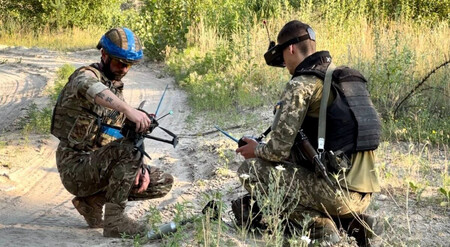
The proliferation of unmanned ground vehicles (UGVs) and cargo drones has transformed logistics into an integral part of military operations. From 2K Targans that can evacuate soldiers to swarms that distribute ammunition, the aim is to preserve human lives by automating high-risk tasks. Many brigades have turned to civil donations to finance and acquire these systems. In fact, the Ukrainian Ministry of Defense plans to mass produce tens of thousands of robots .
On another front, the offensive capabilities of ground robotics (involving assault missions, enemy material retrieval, mining, and remote demining ) have escalated, enabling operations that previously required specialized human teams to be executed primarily by machines.
The Role of Elite Units
Specialized regiments focusing on unmanned systems have emerged as pivotal components in the conflict. They are primary targets of Russian attacks yet play a crucial role in maintaining or disrupting local fronts. Their commanders conduct operations designed to dismantle the enemy’s “view” (pilots and surveillance capabilities), “sting” (attack drones), and logistics (storage facilities and workshops), implementing a comprehensive strategy aimed at stifling Russia’s operational capacity.

Production, Scale, and Career
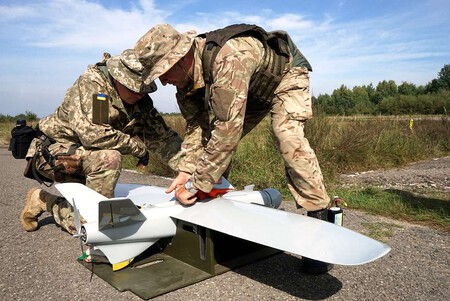
As previously discussed, the war has revealed that the advantage in this conflict is not solely tactical but also industrial. By 2025, both Ukraine and Russia are expected to mass-produce substantial numbers of FPV drones. The logistical requirements to support a sustained offensive rhythm are staggering, with estimates suggesting hundreds of thousands of units per month.
The Kremlin has undertaken a major industrial ramp-up strategy. Concurrently, Ukraine aims to multiply its manufacturing capacity and is appealing for civil-military industrialization to achieve parity in drone production. This mass competition has positioned drones as new vectors of strategic attrition, determining that those who produce more and maintain resilient supply chains will gain a significant advantage over time.
Disruptive Technologies
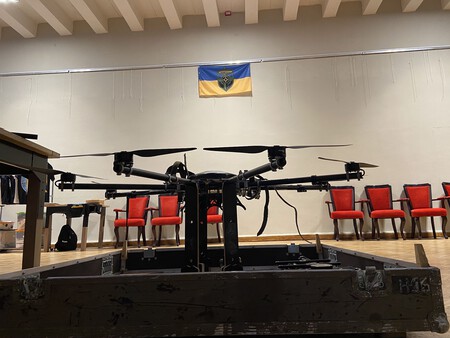
Two major technological advancements have marked a turning point in modern warfare. Firstly, tethered drones connected via fiber optics are impervious to radio interference and can only be neutralized through direct fire, thereby becoming lethal and psychologically impactful for infantry forces.
Secondly, the integration of artificial intelligence in drones allows for guided and semi-autonomous operations, enabling drones to complete their missions even if the link with their operator is severed. This enhances precision and decreases dependence on human control, especially in environments dominated by electronic warfare. Furthermore, experiments with chains of repeaters and transmitters are underway to extend control ranges up to 40 kilometers, fundamentally shifting the operational boundaries of air systems.
Limits and Human Dependence
Despite the technological revolution, there remain clear limitations . Weather conditions, terrain hardness, and electronic warfare still favor traditional systems such as artillery for specific missions. Artillery continues to play an irreplaceable role in adverse conditions.
Moreover, remote operators face their own risks; when detected, they become prime targets and can suffer counterattacks using both conventional and unconventional methods. Human capital remains essential in warfare, including technicians, analysts, and gunners, although the profiles and exposure of these roles are evolving.
Moral and Strategic Impact
Shifting lethal responsibilities to machines raises both moral and practical dilemmas. Actions such as prisoner captures driven by machines, UGVs seizing weapons, and automating mine clearance challenge existing combat rules and necessitate new doctrines, legal procedures, and accountability systems.
Strategically, the surge in drone use has contributed to stagnant Russian advances across various fronts and led to notable Ukrainian operational victories. Yet this shift has also incited escalation in offensive activities, including mass bombings and drone launches, maintaining an asymmetric and devastating character in the conflict.

Future Perspective
Most analysts agree that if production can ramp up and AI is increasingly integrated, warfare will not only become more robotic but also more decentralized and unpredictable. We may witness frequent deep strikes, launches covered by mother ships, and coordinated tasks involving diverse types of unmanned aerial systems (UAS) and unmanned ground vehicles (UGV).
However, experts in the Ukrainian field caution that drones will not entirely replace infantry or artillery in adverse weather conditions. Rather, they are tools that, when effectively utilized, can save lives. Conversely, improper management or overvaluation of these technologies can result in severe criticisms of operational strategies. Ultimately, the drone war in Ukraine signifies not only a technological revolution but also a reminder that material superiority and industrial capacity, coupled with human courage and adaptability, will truly dictate who can endure the pressures of this ongoing conflict—played increasingly on battlefield screens rather than in trenches.
Image | Ministry of Defense of Ukraine, Аinform, Picryl, Trydence
In Xataka | The threat of Russia is no longer drones; they are now combat airplanes violating airspace. And Europe has taken their fighters.
In Xataka | Russia and Ukraine have reached the same and strange conclusion due to the drones: continue the fight underground.