
Goal has made significant strides in the realm of connected glasses with its latest offering, the Goal Ray-Ban Display . This innovative product introduces a remarkable feature: a monocular screen that enhances the user’s experience in ways that seem almost magical.
The monocular screen is designed in such a way that it primarily focuses on the wearer, allowing for a more immersive experience while minimizing what they observe around them. Additionally, Goal has incorporated a neural bracelet that enables users to control the glasses through gestures, replacing the conventional voice commands. Let’s explore the exciting features of the Goal Ray-Ban Display.
TECHNICAL SHEET OF RAY-BAN DISPLAY
Goal Ray-Ban Display | |
|---|---|
Screen | Monocular screen, 600×600 px, 90 Hz Right lens FOV 20 30-5,000 nits |
Dimensions | Hinge hinge: 144-150 mm Height of the lenses: 40 mm Lens width: 47-50 mm Bridge width: 23 mm Temple length: 129-135 mm |
Weight | Frame: 69-70 g Charging case: 169 g Neural Band: 42 g |
Audio | 2 speakers tailored to the open ear, 76.1db 6 microphone system |
Camera | 12 MP with ultra wide-angle 3,024 x 4,032 pixels Video: 1,440 x 1,920 at 30 fps 3x digital zoom |
Battery | Ray-Ban Display: 960 mWh (248 mAh) Up to 6 hours of mixed use Up to 24 hours additional with fully charged case Neural Band: 148 mAh, up to 18 hours of use |
Water resistance | Ray-Ban Display: IPX4 Neural Band: IPX7 |
Memory | 2 GB LPDDR4X |
Storage | 32 GB Over 500 photos and more than 100 videos of 30 seconds each |
Connectivity | Wi-Fi 6 Bluetooth 5.3 (5.2 for Neural Band) |
Others | Available prescription from -4.00 to +4.00 |
Price | $799 |
A Private Screen to Enhance Your View
The recent Goal Connect event showcased not only the Ray-Ban Meta (Gen 2) but also the striking Oakley Meta Vanguard. While both models fall into the basic category of connected glasses with AI and cameras, user interaction still relies on voice commands.
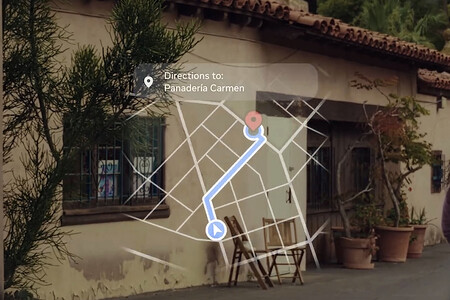
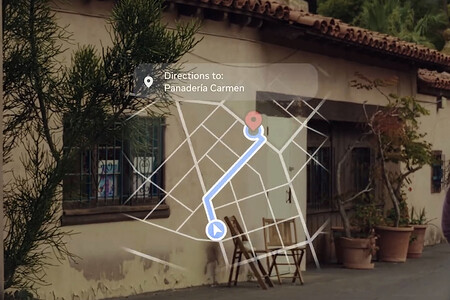
We can see a small projected map on the real image to easily navigate to our destination.
With the Goal Ray-Ban Display , the company enhances user interaction by offering a screen developed specifically for the right lens. The screen boasts a resolution of 600×600 pixels and brightness reaching 5,000 nits , ensuring visibility even in direct sunlight.
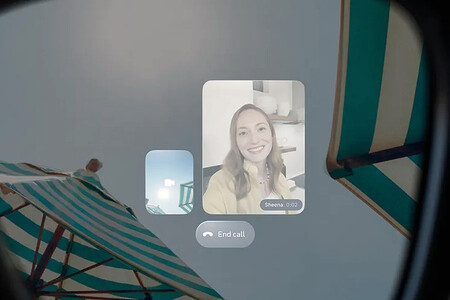
Video calls on screen.
All types of information can be projected on this screen, adding a visual layer that proves invaluable in various scenarios. Users can project maps, follow recipes, or conduct video calls while viewing the other person directly on the screen.
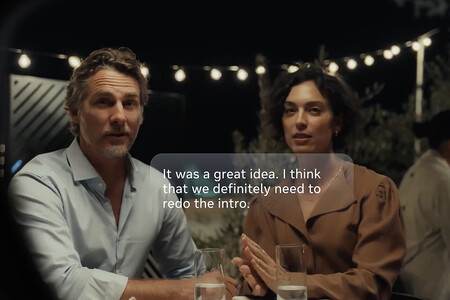
Automatic subtitle generation in conversations, a boon for real-time translation and hearing-impaired individuals.
The private screen also allows users to read text messages, check WhatsApp, view short videos, and interact with content by replying directly to friends. Sharing visual experiences with family and friends through these glasses is also possible.
The display and camera features enhance the capability of taking photos and videos, as users can preview captures on the screen, zooming in on subjects as necessary.
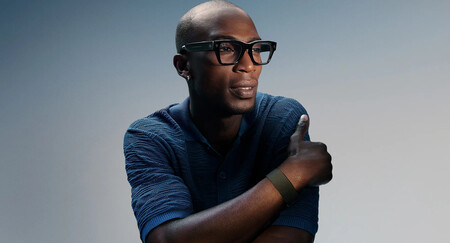
Another striking feature of the Ray-Ban Display is real-time subtitle generation, particularly beneficial for hearing-impaired users. The technology called Focus Conversation can “subtitle” only the speech of the person the wearer is facing, filtering out background noise and chatter.
The glasses also support real-time translation—a feature previously demonstrated by Mark Zuckerberg . Users can enjoy music while viewing artist information and navigate the music player interface using voice commands or gestures.
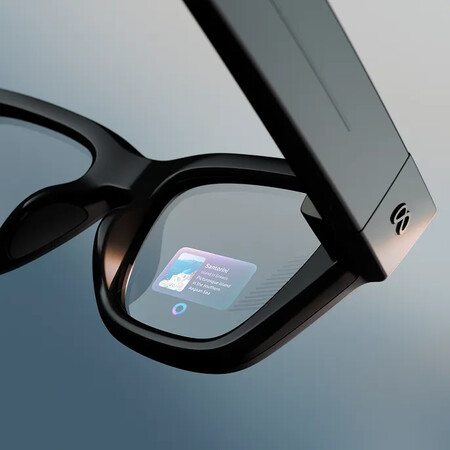
The glasses house a battery with up to six hours of autonomy with mixed use; coupled with a charging case, this extends to 24 hours . Additionally, the charging case conveniently folds for easy portability.
Interaction with the glasses is enhanced by the Goal app , which provides detailed information about what’s being looked at, facilitating voice interactions with the integrated AI model, allowing users to ask questions at any time.
Gesture Control with the Meta Neural Bracelet
The standout feature of the Goal Ray-Ban Display is the innovative Neural Bracelet (Neural Band), utilizing EMG technology (electromyography) developed by the company over the years. This technology captures the electrical activity of the muscles through electrodes, translating muscle contractions into commands for the glasses.
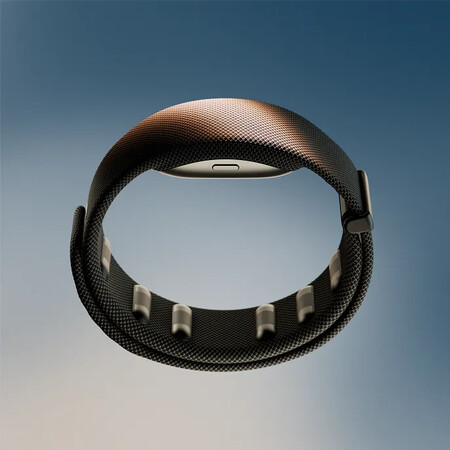
Neural Band goal
Users can control glasses using simple hand gestures—by pinching their thumb and index finger together to select an option, or pinching fully to go back. This functionality replaces the traditional touch interface, making interactions more intuitive.
With this technology, users don’t have to keep their hands visible for the glasses to respond. The Neural Pen captures impulses even if hands are tucked in or placed behind the body, enhancing ease of use.

The Neural Band boasts an autonomy of 18 hours , making it practical for all-day use without frequent recharging. Crafted from durable materials like Vectran , the same material utilized for Mars Rover collision protectors, the band is designed for longevity.
Versions and Pricing of the Goal Ray-Ban Display
The Goal Ray-Ban Display will first be available in the United States starting September 30 in colors black and sand. The price for the glasses, which includes the neural bracelet, is $799 . Following this launch, the glasses will reach Canada , France , Italy , and the United Kingdom in early 2026. These glasses will be sold in specialized stores to ensure the proper fit for both glasses and the bracelet.
For more information, visit Goal.