
Caffeine Consumption: A Global Perspective
Caffeine is one of the most widely consumed substances around the globe, with approximately 80% of the world’s population ingesting caffeine daily. While coffee is a significant source, caffeine is also found in diverse products such as tea , maté , cocoa , and the kola nut . Additionally, synthetic caffeine is added to soft drinks , energy drinks , and various supplements, broadening its reach well beyond traditional beverages.
According to a graph prepared by Visual Capitalist, the caffeine content in drinks we commonly consume varies significantly.
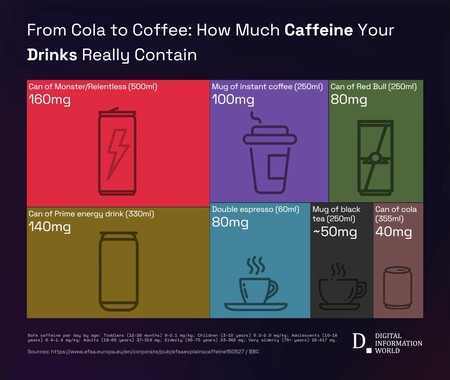
The graph, based on data from EFSA (The European Food Safety Authority), showcases findings from surveys conducted with over 66,500 individuals across 22 European countries . This insightful visualization highlights specific caffeine levels found in various commercial beverages including Monster , Red Bull , and Prime , a drink co-created by the controversial figure, Logan Paul .
Interestingly, the graph also helps consumers calculate caffeine intake based on the volume of caffeinated drinks consumed. For instance, while Monster has the highest caffeine concentration, it’s notable that Prime is a close contender, with 140 mg of caffeine in a smaller serving size of 330 ml . Interestingly, a can of Red Bull contains about the same amount of caffeine— 80 mg —as a double espresso.
The Composition of Energy Drinks
However, it’s crucial to note that caffeine isn’t the only stimulant present in energy drinks. As indicated by EFSA, these beverages may contain a variety of ingredients, such as taurine and D-glucuronolactone . Taurine is known for its role in regulating cellular calcium levels and assisting with cardiac function, which can improve athletic endurance by delaying fatigue.
D-glucuronolactone is a metabolite that aids in vitamin C synthesis, while both ingredients are generally considered safe due to their rapid metabolism. However, they can induce digestive discomfort when consumed in excess, especially when combined with the high sugar content often found in energy drinks.
Caffeine Consumption Across Age Groups
EFSA has created a comprehensive table that outlines caffeine intake based on different age groups:
Age Range | Daily Consumption |
|---|---|
75 years and older | 22-417 mg |
65-75 years | 23-362 mg |
18-65 years | 37-319 mg |
10-18 years | 0.4-1.4 mg/kg |
3-10 years | 0.2-2.0 mg/kg |
12-36 months | 0-2.1 mg/kg |
Among adults, coffee remains the most significant source of caffeine, accounting for 40% to 94% of total daily intake. In countries like Ireland and the United Kingdom , tea emerges as the primary source, contributing approximately 59% and 57% of caffeine consumption, respectively. For teenagers, chocolate—be it in bars or beverages—takes precedence, followed by coffee, energy drinks, and tea. In younger children, coffee is virtually absent from their diets, with chocolate leading, followed by tea and soft drinks.
Is Caffeine Safe?
The question of how much caffeine is considered safe continues to be a topic of concern. A commonly accepted threshold for healthy adults is 400 mg per day, but individual factors can significantly influence this measure. For example, while doses up to 200 mg are generally safe for healthy adults, pregnant women should limit their intake to 200 mg spread throughout the day. High caffeine consumption prior to sleep can disrupt sleep patterns, although this does not apply universally.
It’s essential to consider that the term “healthy population” is crucial in determining caffeine safety. Various studies indicate a potential negative impact of caffeine during periods of chronic sleep deprivation , and while caffeine is often used to enhance athletic performance, its benefits vary depending on the sport and the individual’s unique circumstances.