
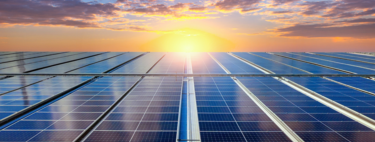
The Solar Challenge: Dust and Heat from the Sahara Impacting Mediterranean Energy Production
The Mediterranean has long been celebrated as an ideal region for solar energy production, boasting rich sunlight, vast land, and a firm commitment to renewable energy sources. However, emerging environmental challenges brought about by climate change are putting this advantageous positioning at risk. Notably, the encroaching dust storms from the Sahara and rising temperatures present formidable obstacles to sustainable solar energy generation.
The Short Story: A new study reveals that Saharan dust can diminish solar energy output in southern Europe by as much as 50% . Research published in the esteemed *Renewable Energy* magazine by the Hun-Ren Research Center of Astronomy and Earth Sciences in Hungary examines occurrences from 2019 to 2023 across Portugal, Spain, France, Italy, and Greece .
The Deeper Dive: To arrive at these alarming conclusions, scientists employed a vast array of data. They utilized forecasts from the European Network of Transport Systems Operators (ETSO-E) , NASA’s MERRA-2 reanalysis , the Copernicus Cams V4.6 database, as well as satellite imagery to analyze cloud and aerosol movements. This comprehensive analysis enabled researchers to evaluate daily fluctuations in how dust impacts solar irradiance , ultimately affecting the capability of solar panels to produce electricity.
The research uncovered another critical issue: current photovoltaic forecasts often fail to accurately predict energy losses. In Spain and Portugal, these models tend to underestimate energy losses by approximately 15% , while in Italy and Greece, the predictions are typically inflated, leading to overestimations of up to 10% .
A Growing Problem: While Saharan dust is not a new phenomenon, the prevalence of climate change is exacerbating both its frequency and impact. Research from the Polytechnic University of Catalonia indicates that Spain has emerged as a “hot point” concerning European warming trends . Over the past 50 years , temperatures in the Iberian Peninsula and the Balearic Islands have risen by 3.27ºC —a figure more than double the average for the Mediterranean region.
Summer seasons have lengthened by an astonishing 36 days , while rainfall has decreased by almost 20% . Regions like Murcia, Almería, and Alicante are witnessing increasing rates of desertification . Projections for 2050 predict that Spain could face scenarios akin to a semi-arid or desert climate across large swaths of its territory. Should this occur, dust storms are expected to become more frequent, further jeopardizing solar energy production.
Is There a Solution?: Historically, conventional solar panels faced challenges from both dust and heat. As previously discussed, traditional panels can lose between 0.05% and 0.34% efficiency for every degree above 25ºC . This can translate to efficiency drops of 10% to 25% on particularly hot days.
However, new research from the University of Loughborough offers promising solutions: photoelectrochemical flow cells (PEC) . This innovative technology does not just tolerate heat; it thrives in it, optimizing performance at temperatures around 45ºC . Additionally, PEC systems eliminate the need for active cooling, potentially lowering both installation and maintenance costs.
In parallel, startups like the Australian company Coolsheet are developing passive cooling hybrid systems. These innovations can both cool solar panels and simultaneously heat water for domestic or industrial use. Notably, every 10ºC reduction in panel temperature can yield a 4% increase in electrical efficiency.
Looking Beyond the Numbers: The focus of this research transcends merely boosting solar panel quantities. There’s an urgent need for more comprehensive forecasts that consider the effects of dust, enhanced real-time monitoring systems, and the design of technologies that adapt to extreme conditions , turning challenges into advantages rather than liabilities.
The Mediterranean region stands on the precipice of a future where solar energy becomes both more plentiful and more challenging to harness. Thus, the way forward requires a nuanced approach that integrates scientific research, technological innovation, and political planning. The objective is to ensure that the sun, once considered a limitless resource, continues to be part of the renewable energy solution rather than evolving into a greater obstacle caused by climate change .
Image | Eduardo Milla and Unspash
Xataka | We believed that the Sahara was going to “eat” Almería and Murcia in the future. Some researchers believe that it will reach Mallorca.