
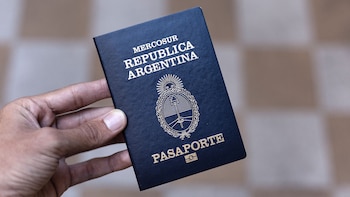
Failure in Argentine Passports: A Cause for Concern
Recent reports indicate significant failures in the manufacturing of thousands of Argentine passports, raising security concerns among citizens. The national government has formally requested individuals in possession of these passports, whether residing at home or abroad, to return them immediately. Sources indicate that between 5,000 and 6,000 documents are affected, and as a precaution, the government is scrutinizing over 200,000 passports in total.
The affected passports belong to specific sequences in the AAL series, with numbers ranging from AAL314778 to AAL346228 , AAL400000 to AAL607599 , and AAL616000 to AAL620088 . A notification from the Argentine consulate in San Pablo, Brazil, outlined these sequences, highlighting the potential risks intricately linked to these faulty documents.
The notification elaborated that while not every passport in the affected series is necessarily compromised, they can be randomly flawed. However, the National Registry of Persons (Renaper) has not discerned which specific documents hold these imperfections. To mitigate risks, the government has urged all holders of these suspect passports to return them either to Renaper or to their respective consulates.
Cause of the Passport Failures
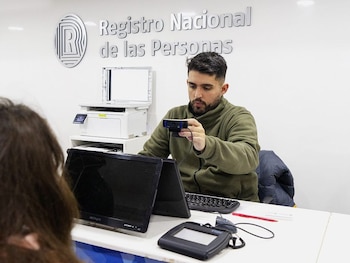
According to credible sources from Casa Rosada , the issue was attributed to black safety ink provided by a German supplier who has been the exclusive producer for the Argentine passport for the past 12 years. This flaw is described as invisible to the naked eye but detectable via specialized reading equipment used at migration checks. Authorities have reassured the public that protocols were swiftly initiated once the flawed passports were identified.
The Argentine government has clarified that fewer than 6,000 passports worldwide are currently problematic and have noted that no particular area has shown a higher number of affected documents. In coordination with various departments, Renaper is focusing efforts on reinstating the validity of compromised passports, ensuring that affected individuals are notified and can receive replacements as needed.
Political Reactions and Next Steps

The political ramifications of this incident are significant. Argentine journalist Bruno Bimbi , who resides in Brazil, was among the first to trumpet the issue publicly after receiving a notice from the consulate. In response, Socialist Party deputies Esteban Paulón and Mónica Fein have called for an official report from the government, demanding clarity on how this manufacturing anomaly occurred and what steps will be taken to avoid it in the future. Their inquiries sought to elucidate risks faced by affected citizens, especially expatriates, and how the government plans to address their documentation needs.
Paulón pointed out that many affected individuals rely exclusively on their Argentine passports, thus depriving them of legal documentation during the replacement period. He called for urgent explanations from the government, questioning why a supplier was permitted to produce such a vital document without stringent quality controls. Bimbi, who faced significant inconveniences due to this failure, underscored the need for a valid passport to ensure free movement across borders.

Authorities have communicated that in case an affected citizen needs to travel urgently, a special “emergency” version of the passport can be issued without any fees. This aims to reduce the disruptions caused by the recall as well as the potential difficulties stemming from having a flawed passport detected by immigration authorities in other countries.
Despite assurances that no one is effectively left without a passport, affected individuals will face considerable disruptions, not to mention the economic costs associated with such matters. As investigations continue, clarity on both the immediate and long-term measures to rectify this situation remains crucial for the impacted citizens.