

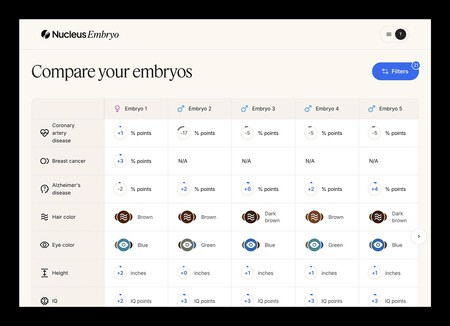
Choosing the features of a baby as if they were video game characters is a concept frequently explored in science fiction . Films like The Sixth Day and Gattaca illustrate the manipulation of genetic elements, showcasing the possibilities of human cloning. This science fiction narrative is increasingly becoming a reality , as evidenced by recent developments in genetic technology. A few weeks ago, Nucleus Genomics launched Embryo , an innovative software platform designed to help parents compare different embryos by analyzing their genetic data.
The platform not only examines the likelihood of developing certain diseases , but also analyzes traits such as hair color , height , and even intelligence . This raises intriguing ethical questions but promises a future where parental choice becomes a serious consideration in assisted reproductive technology.
Understanding Embryo
Embryo is a sophisticated platform that allows users to load DNA data from up to 20 embryos to create detailed genetic profiles . It does not conduct sequencing directly; instead, it obtains this information from files provided by in vitro fertilization (IVF) clinics. The software employs polygenic prediction models , which analyze genetic variations to estimate the chances of developing physical traits or diseases. Parents can receive comprehensive reports that evaluate both health risks and desirable features.
Eliminating Genetic Risks
According to Nucleus, Embryo can screen for over 900 hereditary diseases along with more than 40 additional traits, including chronic illnesses. This allows parents to compare and select the best embryos based on comprehensive genetic profiles, potentially eliminating genetic risks before proceeding with IVF.
The company claims to be “the first genetic optimization software ,” boasting an intuitive interface that enables users to quickly access a wealth of genetic information. With this easy navigation, parents can filter embryos based on the traits they find most attractive or concerning, facilitating a fast and informed decision-making process.
Personalization at Its Core
The data processed by Embryo includes not just medical information but also physical traits such as eye color , hair texture , and even risks for conditions like obesity. Below are several categories that parents can explore:
- Appearance: Eye color, hair type, and height.
- Body and Physical Health: Body mass index, chronic pain conditions, and arthritis.
- Women’s Health: Endometriosis and polycystic ovary syndrome.
- Nutrition and Metabolic Conditions: Celiac disease and type 2 diabetes.
- Cardiac Health: Heart disease and hypertension.
- Cancers: Various cancers including breast, ovarian, and prostate cancer.
- Neurological and Mental Health: Conditions like ADHD, anxiety, and depression.
- Hereditary Disorders: Screening for over 900 hereditary diseases.
- Other Conditions: Asthma and allergies.
Ethical Controversies
Despite the revolutionary potential of Embryo, it has sparked complex ethical debates. Advocates argue that the technology could greatly enhance disease prevention, while detractors highlight concerns regarding the selection of non-medical traits such as aesthetic qualities or intelligence. Such selections could pave the way for a market of “designer babies.”
CEO Kian Sadeghi has responded strongly to the criticism, asserting that the choice of utilizing Embryo is ultimately a parental right . He emphasizes in a recent press release that this technology aims to empower families and change their lives.
The Financial Commitment
Currently, Nucleus is operating in the United States, with plans for international expansion . For those interested in accessing the Embryo service, it comes with a price tag of $5,999 . While this high cost aims to provide unparalleled insights into genetic health and traits, it also raises questions about accessibility and equity in reproductive technology.

Although technology is advancing rapidly, it does not guarantee perfect outcomes. Nucleus emphasizes that while genetics can be a useful tool in embryo selection, it does not define a child’s entire future. Environmental factors and lifestyle choices play significant roles in an individual’s development. Thus, even though Embyo represents a forward leap in assisted reproduction , it is important to approach this new frontier cautiously.