

Environmental Interventions: The Cost of Conservation
In recent years, conservation efforts have increasingly become a double-edged sword. Governments often find themselves in a position where they must make decisions that prioritize certain species at the expense of others. This dilemma is conspicuous in the case of Amami ōshima , an island in Japan, which witnesses a remarkable example of intervention gone astray. Here, a well-intentioned project to save an endangered species became an ecological nightmare, demonstrating that even the most calculated plans can sometimes yield unintended consequences.
The Rediscovery of Amami’s Rabbit
The saga begins in 1979 , when the Amami rabbit (Pentalagus furnessi), considered a “living fossil,” was rediscovered in the lush forests of Amami ōshima, Kagoshima Prefecture. This endemic species was thought to be on the brink of extinction due to habitat loss and hunting. The rediscovery brought renewed hope, underscoring the island’s unique biodiversity and the urgent need for conservation efforts. Local wildlife authorities recognized that protecting the rabbit’s natural habitat was pivotal for its survival.
Unfortunately, mere protection was not enough. The Habu snake (Trimeresurus flavoviridis), a highly venomous indigenous predator, posed a significant threat to Amami’s rabbits and the broader ecosystem. Authorities implemented measures to both control the snake population and safeguard various endemic species. This plan included efforts to eradicate or control the snake population, marking the start of a complex ecological challenge.
The Introduction of Non-Native Predators
With this backdrop, a radical solution emerged. In a bid to control the Habu population, Japanese authorities decided to introduce about 30 mongooses to the island, believing that these animals would naturally prey on the Habu snakes. This approach was aimed at restoring ecological balance on the island. However, introducing a non-native species can greatly upset the local ecosystem, and in this case, things would unravel quickly.
As anticipated, the mongooses did not effectively target the nocturnal Habu snakes, but instead began to prey on various native species during the day. This unanticipated behavior wreaked havoc on Amami’s delicate ecosystem , leading to significant declines in many endemic populations, including the very rabbits that had sparked the initial conservation endeavors. This situation illustrates the complexities of ecological interrelations and the dire consequences of ill-conceived species introductions.
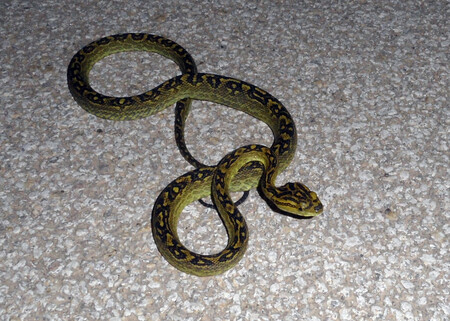
<span>A specimen of trimeresurus flavoviridis</span>The Rise of Mongooses
By the year 2000 , the mongoose population swelled to an alarming 10,000 individuals—far beyond what conservationists had anticipated. Efforts to control their numbers through traps and monitoring groups like the Amami Mongoose Busters were implemented. Local residents contributed significantly to capturing thousands of mongooses, but the impact on the native species had already been catastrophic.
The Road to Eradication
In 2018 , the last mongoose was officially captured. Since then, a thorough assessment showed eradication rates between 98.8% and 99.8% . In February 2024, experts proclaimed that the mongoose population was effectively eliminated from the island. This conclusion was confirmed by the Japanese Ministry of the Environment on September 3, 2024 , marking an incredible victory for conservationists. However, the story serves as a poignant reminder about the risks associated with introducing non-native species.

Lessons Learned
This remarkable instance of ecological management serves as both a victory and a cautionary tale. The Japanese government has announced that while traps will be removed, camera monitoring will persist to avert any resurgence of mongooses. The complexities of ecological systems necessitate a careful, methodical approach to species management, emphasizing the need for thorough research and planning before intervention. After all, the potential risks of an environmental intervention can pose threats to native species that endure long after the interactions of humans and wildlife subside.