
The Strategic Implications of the Chancay Megaport
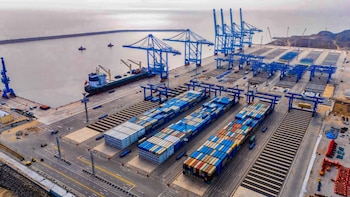
The advance of Chinese investments in port infrastructure across Latin America has stirred increasing strategic debate. In Peru, the Chancay port project, spearheaded by the Chinese state company COSCO SHIPPING PORTS, alongside local partners, has raised concerns about its implications beyond the commercial sphere.
According to Evan Ellis, an esteemed researcher at the United States Army War College, the Chancay project must be thoroughly evaluated within the context of hemispheric security. During a conversation with RPP, he emphasized that the Chancay project should not merely be perceived as a logistics megaproject but also as a potential vulnerability amid global tensions, especially related to China’s influence in the Pacific region.
In 2019, COSCO acquired a 60% stake in the Chancay project, granting it operational and legal control of the port while local company Minera Volcán retained only minority ownership. Ellis noted that such exclusive control over a critical infrastructure element was unprecedented in Peru. He argued that this shift in local regulations is indicative of how promises of development can morph into concessions to Beijing’s interests.
Despite presenting the Chancay project as an opportunity to reduce logistics costs and transform Peru into a regional trade hub, Ellis contends that China’s firms will reap the primary benefits. A reduction in shipping costs would primarily strengthen COSCO’s routes in other countries, leaving Peru’s gains more ambiguous than anticipated.
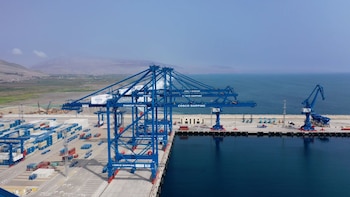
The establishment of a special economic zone within the port has also generated unrealistic expectations. While Peruvian authorities perceive it as a mechanism to enhance local commerce, Ellis emphasizes that it primarily fulfills the demands of the Chinese company for tax benefits. Furthermore, he highlighted ambitious plans to connect the Chancay port with Brazil via a bioceanic corridor, projecting investments exceeding USD 12 billion. Such endeavors, while marketed as regional development initiatives, seem to predominantly strengthen the strategic foothold of Chinese operators.
Beyond commercial implications, Ellis urges a military perspective regarding the port. Drawing on his extensive collaboration with the Peruvian armed forces, he recognizes their commitment to national sovereignty but cautions that frequent political changes in Peru could lead to precarious scenarios. He warns that, in the event of conflict in the Indo-Pacific, American forces must consider the risk of Chinese-controlled infrastructure in Latin America being leveraged for strategic advantage. “If the Chinese accessed the port of Chancay, they could potentially use it to resupply their warships,” Ellis cautions, representing a significant vulnerability for Washington along the South American Pacific coastline.

Ellis emphasizes that his perspective is not intended to induce alarmism but to foster dialogue with the Peruvian authorities to mitigate risks. He points to initiatives like installing reliable cargo scanners as a step towards enhanced security. “It’s about collaborative efforts to ensure that a concerning commercial presence does not escalate into a strategic risk during conflict,” he states.
He concludes that heightened engagement from American investment in Peru’s infrastructure projects could rebalance the current dynamics. The gap left by the United States has enabled China to cement its leadership in Chancay. The essential task now lies in enhancing bilateral collaborations so that the port’s development yields genuine benefits for Peru while ensuring hemispheric security remains intact.
The construction and operation of the Chancay megaport have significantly altered the coastal environment. Dredging and filling activities have disrupted marine ecosystems and adjacent wetlands, reportedly affecting spaces vital for migratory birds and diminishing local fish stocks critical for local fishermen.
Moreover, serious questions have emerged regarding compliance with standards. Investigative reports have highlighted various technical issues—ranging from structural integrity concerns to insufficient permits—prompting authorities to launch investigations and audits. Such controversies have fueled distrust among local communities, which demand greater transparency and stringent mitigation measures before the large-scale operations commence.
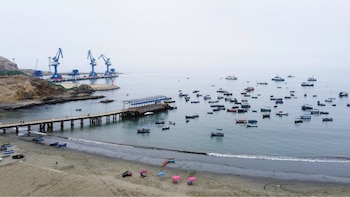
In summary, while authorities focus on the economic potential associated with the Chancay project, numerous experts remind us that without addressing environmental concerns and social responsibilities, the long-term benefits may be compromised. Ensuring ecological recovery, repairing fisheries, and fostering meaningful communication with local populations are essential prerequisites for the project to thrive sustainably.
The National Port Authority has recently endorsed the Technical Viability of the upcoming Corío Maritime Terminal in Arequipa, a decision made on August 8, following the resolution of 25 observations that had previously stymied progress. This initiative, driven by the HUB CORIO MEGAPUERTO, incorporates architectural and engineering partners without necessitating state funds.
With the natural depth reaching 28 meters, Corío emerges as a competitive alternative compared to the 17.9-meter depth at Chancay, allowing access to larger vessels, including those capable of transporting over 20,000 TEU.
The Chancay port was officially inaugurated on November 14, 2024, during the APEC summit in Lima, where high-profile leaders participated via video conference. Built by COSCO Shipping Ports alongside Minera Volcán, this mega-infrastructure represents an initial investment of approximately USD 1.3 billion, purportedly aimed at transforming Peru into a premier logistics hub enhancing trade with Asia.