
Brussels has launched a resounding notice to the technology industry: 2,950 million euros fine to Google for abusing its position in the digital advertising market, as announced today by the European Commission. The investigation points to self-preference practices that reinforced their dominance in the Adtech chain and harmed competitors, advertisers, and editors. The Community Executive suggests that the solution could involve divesting parts of their advertising business. This move not only raises pressure on large technology companies but also reinforces the regulatory role of the European Union.
The case has a long history in Brussels. The European Commission started its inquiry in 2021, focusing on Google’s extensive influence in the digital advertising sector after detecting indications of abusive dominance. In 2023, specifications were issued that Google responded to at the end of that year. The research scrutinized Google’s activities in strategic markets, such as DFP advertisements, Google Ads, and DV360 programmatic purchase tools, which have a significant presence throughout the European economic space.
What Brussels Has Ordered and What’s at Stake for Google
The core decision revolves around self-preference. The Commission argues that since at least 2014, Google has exploited its dominance in DFP advertisements and through Google Ads and DV360 to grant advantages to its own platform, ADX. It allegedly alerted DFP to the value of rival offers and prioritized participating in its platform. This behavior has diminished competition and solidified Google’s power within the advertising chain. For Brussels, this dynamic is a design to reinforce Google’s position and enhance its ability to levy high rates.
The assessment of the fine, totaling 2,950 million euros, is based on the EU’s 2006 standards for anti-competitive penalties. The calculation considered various elements, including the duration and severity of the violation and ADX’s business volume in the EEA. The Commission asserts that this amount is proportionate to the infringement and necessary to deter future self-preference practices. Therefore, this case stands out as one of the most significant in the realm of digital competition in Europe, emphasizing the regulatory authority of the EU.
The Commission has granted Google 60 days to propose a plan that resolves the identified conflicts of interest within the advertising chain. Once received, Brussels will assess whether the measures effectively eliminate these practices. In advance, the agency indicated its preliminary stance: only a partial divestment of advertising services would adequately address the root problem. Should Google’s proposed plan fail to meet the expectations, the European regulator may impose structural remedies.
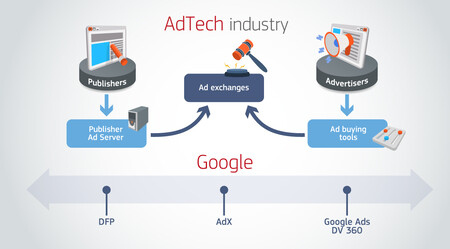
General diagram of the adtech chain shared by the European Commission
Brussels is intensifying its scrutiny of technology while political dialogue in Washington heats up. Just last month, Donald Trump criticized laws and regulations concerning digital platforms, suggesting that they “are designed to harm or discriminate against U.S. technology companies.” He signaled that tariffs and restrictions might be on the way for countries maintaining such policies. While he didn’t specifically mention the European Union, the sentiment against regulations affecting firms like Google, Meta, or X is clear.
The implications of this sanction extend beyond just Google. Brussels aims to reduce the dependency of publishers and advertisers on a single intermediary, potentially enhancing competition in digital advertising services. A mandatory divestiture would create room for competitors in critical areas such as advertisements and programmatic buying platforms. The sector, which has primarily functioned under the control of a few tech giants, may undergo shifts in pricing, access to commercial data, and overall operational conditions. This further solidifies the EU’s role as a regulator in pivotal digital markets.
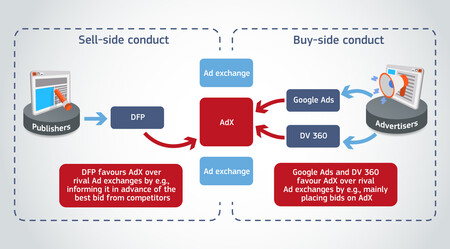
Scheme of the behaviors shared by the European Commission
“Today’s decision illustrates that Google has abused its dominant position in advertising technology, to the detriment of publishers, advertisers, and consumers. Such conduct is illegal under EU antitrust laws. Google is now required to present a serious solution to tackle their conflicts of interest; otherwise, we will not hesitate to enforce stringent measures,” stated Teresa Ribera, the Spanish commissioner responsible for the competition policies of the EU.
Beyond the economic penalties, Brussels’ ruling enables those affected to seek redress. European regulations classify Commission decisions as conclusive evidence of infractions, facilitating the process for companies and individuals to obtain compensation. This case aims not only to correct market dynamics but also to reimburse those adversely affected by practices that entrenched Google’s dominance in digital advertising.
Recently, Google managed to dodge a potential sell-off of Chrome in the United States. However, Europe is charting a new path: potentially obligating Google to divest parts of its advertising operations. The viability of the plan that the company submits to Brussels will be pivotal in determining the outcome. If the proposal is unconvincing, the European case could surpass the American one in terms of its long-term consequences, establishing a precedent that would reverberate across the technology sector.
In a statement issued via email, Google asserted that it will appeal the decision. “The European Commission’s ruling concerning our advertising technology services is erroneous and unjustified. The mandated changes could adversely impact thousands of European businesses by complicating regulatory affairs for them.”
Images | Alex Doubt
In Xataka | Apple’s most lucrative agreement has just improved: Google will pay without being able to prevent Microsoft from doing the same.