

Ryanair’s Bold Decision: Over One Million Seats Cut from Regional Airports
Ryanair has made headlines again, this time for its controversial decision to cut more than one million seats from regional airports, as confirmed on September 3 . The airline’s move, which represents a 41% reduction in its operations at these airports, has left many astounded and concerned. Not only will regional hubs be impacted, but approximately 10% of operations in the Canary Islands will also be affected.
This drastic decision has sparked a wave of indignation among Spanish institutions, many of which are crying foul. Some have labeled these moves as forms of blackmail or extortion , while Ryanair defends its position by citing increased airport fees from Aena, the Spanish airport authority, as being incompatible with their operational standards at these smaller airports.
The implications of Ryanair’s decision underline the vulnerability of regional airports, many of which have leaned heavily on the airline for their operational viability. A growing emphasis on rail transportation has further complicated the situation, making life increasingly difficult for regional airports that may no longer compete effectively against train services.
Interestingly, Ryanair is shifting its focus to larger airports. This strategic pivot raises questions about the future of small airports that have depended on Ryanair’s routes for survival.
The Controversy Surrounding Ryanair’s Cuts
As noted, Ryanair plans to cut 400,000 seats in the Canary Islands during the winter season, impacting this region the most. In total, a staggering 36 connections will be canceled. It remains to be seen whether other airlines will step in to fill the void left by Ryanair. One instance is the Binter expansion , which has recently ramped up its routes between mainland Spain and the islands.
Additionally, Ryanair is set to close its operations in Santiago de Compostela and entirely suspend flights to Vigo starting January 1, 2026. Operations at smaller airports such as in Valladolid and Jerez de la Frontera will also be terminated, while there will be notable reductions in Zaragoza (-45%), Santander (-38%), Asturias (-16%), and Vitoria (-2%).
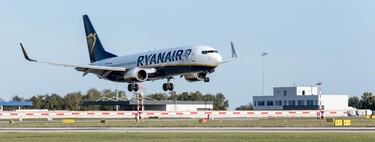
Ryanair’s critique is aimed directly at Aena and the Spanish government, accusing them of neglecting the regions and claiming that nearly 70% of these airports are currently underutilized. In response, Aena has labeled Ryanair’s communication strategies as driven by ” pharisaical behavior, bad manners, and blackmail ,” accusing the airline of distorting the truth.
The rise in Aena’s rates has been cited as the primary reason behind Ryanair’s drastic cuts. These fees are necessary for essential airport services such as cleaning and security . While some fees have been frozen, they could increase if approved by the National Commission on Markets and Competition (CNMC) . Ryanair argues that countries like Italy, Morocco, and Croatia have lowered prices to attract tourists, and they caution that Spain is closing its doors on tourism as a result of these increases.
According to Aena, the fee hike amounts to just 68 euro cents per passenger, yet Ryanair asserts that their operational costs have escalated by 21% in the last year. These claims highlight the tension between competitive pricing and operational sustainability in the airline industry.
The issue isn’t isolated to Spain as Ryanair also pulled more than 700,000 seats from French regional airports. Furthermore, it has been noted that the airline’s routes to Morocco frequently travel with low occupancy rates. The combination of air and rail travel changes the landscape for airlines like Ryanair, which must now compete harder for passengers.
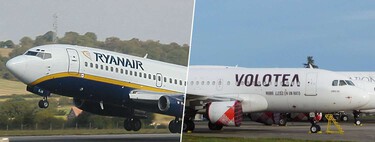
Ryanair has leveraged institutional advertising as a means to maintain profitability on routes that might not be otherwise sustainable. This tactic adds another layer of complexity to understanding the airline’s operational decisions.
Ryanair’s Strategy: A Reflection of Industry Trends
The situation with Ryanair highlights broader issues affecting regional airports . Their recent operational cuts signify a growing trend where airports are becoming less competitive. The airline’s withdrawal from Santiago and reductions in Vigo occur as both cities are beginning to benefit from high-speed rail connections, making it easier and quicker to travel by train from Madrid to these regions.
With high-speed rail travel evolving, many cities are noticing a shift in travel patterns. For instance, in Asturias , while not fully operational, new rail connections are quickly approaching. The trend suggests that train travel will increasingly compete with air travel, presenting a new challenge to airlines like Ryanair.

In Zaragoza , the introduction of new rail options, including Ouigo and Iroyo , has intensified competition. These services now can link Zaragoza to Galicia in as little as four hours , making air travel less appealing for many travelers.
Additionally, without viable air connections to major Spanish cities, commuters may inevitably shift towards rail travel , as train networks become more competitive. Regional airports are facing tough times as a result of these changes. The reality is that Ryanair is merely shifting its fleet to airports where it can command higher prices , resulting in financial gains. While regional airports see their operations dwindle, the larger airports thrive, attracting a higher volume of travelers.
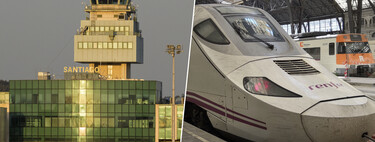
With the loss of significant routes in Santiago and Vigo , travelers looking to reach cities like London may find themselves inconvenience. The contract between Vigo City Council and Ryanair has ended, further complicating the situation as less favored connections become less profitable.
It is essential to note that while flying remains quicker, many cities restore high-speed connections that can rival the convenience of air travel. With reduced routes from regional locations, urban centers will witness increased train traffic as travel options narrow down to direct connections.
The shifts caused by Ryanair’s cuts demonstrate changing travel dynamics across Spain. Regional areas with limited attractions or proximity to high-speed train services will find it increasingly difficult to compete for air traffic. Observers must keep a close eye on both the airline’s strategies and the infrastructure developments that could alter regional connectivity.
In conclusion, the consequences of Ryanair’s decisions are far-reaching, affecting not only airline operations but also the broader landscape of travel within Spain. The rise of high-speed trains and the accompanying shift in traveler preferences will continue to challenge the viability of regional airports, potentially reshaping the Spanish travel industry for years to come.