

Two years ago, a massive wildfire threatened Portbou, a town on the Mediterranean border between Spain and France. As firefighters scrambled to the scene, another group was also making its way toward the town: the runners. The 300 participants of the Costa Brava Stage Run were progressing toward their finish line, unaware of the flames lurking nearby. What should be done to ensure their safety?
“It was a dicey situation ,” recalls Jordi Vissi , one of the organizers from BiFree , a prominent race organizing company in Spain. “The fire started while we were underway, and we had to assess options with the firefighters, police, and the Civil Guard. We could have stopped the race, but we needed to get those 300 runners to safety. Ultimately, we agreed with the authorities that it was best to let them finish the course and organize from there.” Behind the nervous moments at the start and the joy at the finish, there’s typically someone like Vissi resolving the myriad issues that occur around organizing events.
“In another of our races, the Pyrenees Stage Run , a runner broke his leg while exiting Andorra , in an area without mobile network coverage, and it put our team to the test. The helicopter arrived in 15 minutes , showing that we had a great team prepared for any contingency,” he adds. Together with his partner Tomás Llorens , Vissi decided to take on the challenge a decade ago. They wanted to more than just organize a single race; they sought to orchestrate multi-day events spanning up to a week.
GUILLEM CASANOVA
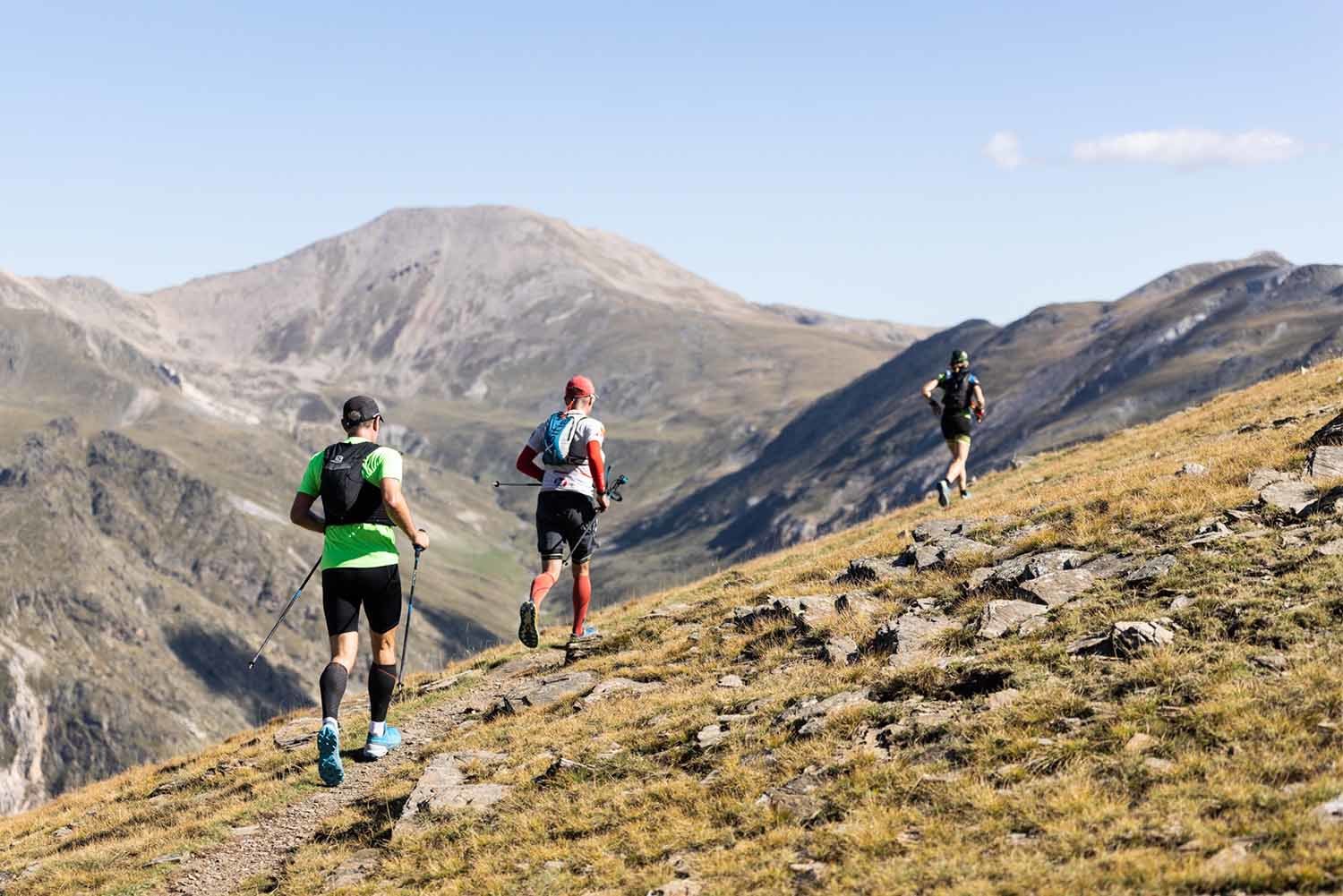
For instance, from Sunday, August 31 to September 6 , 150 participants in the Pyrenees Stage Run will trek across 240 kilometers and over 15,000 meters of elevation gain from Ribes de Freser near Ripoll to Salardú in the Aran Valley. Vissi, Llorens, and their team not only manage the course and supply stations but also the dinners and hotels for the participants; everything is included.
Why Organize a Race?
- What motivates anyone to take on the challenge of organizing a race?
- Vissi: Our parents founded a running club in our hometown of Blanes, and that’s where we met. We started helping out with local races, eventually realizing we needed a change. I had completed a dual degree in Business and Economics and was working in the family office. When my parents wanted to retire, I decided I didn’t want to continue in that business; I wanted to focus on sports.
Llorens: I’ve always been a mountain enthusiast. After finishing my Biotechnology degree, I had a chance to work on a study about lakes. I thought I could combine my passion and profession in the Pyrenees , but I spent four years with a lot of office work. I needed to get outside, and alongside Jordi, I saw an opportunity.
The Early Setbacks
In 2015, they endeavored to emulate the widely acclaimed Transalpine Run , one of the most famous stage races in the world. Despite the promising concept, the launch of the Pyrenees Stage Run encountered a significant setback: nobody signed up. “The first edition was a complete disaster; it was a nightmare we hadn’t anticipated. We had 150 places available but only 23 runners showed up. We lost a lot of money. We had bet everything on the project because it seemed so clear, but it took a long time to gain traction,” Vissi explains. The event only filled to capacity in 2019, followed by the pandemic, which further complicated matters. Fortunately, things have changed. This year, registrations for the Pyrenees sold out within an hour and a half, with two additional races already in the works.
PAULA PADILLA
“We would love to have more local participants, but we can’t grow beyond our current capacity. Since the first edition, we have limited it to 150 runners due to hotel capacity in some towns we visit. It’s already a challenge to distribute all participants among various businesses. Now our challenge has shifted to ensuring that people don’t feel frustrated when they fail to secure a spot,” shares Llorens, one of the many brave individuals dedicated to organizing races in Spain.