
Trial of Jair Bolsonaro: Unfolding the Alleged Democratic Breakdown
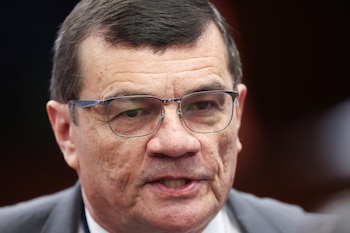
The situation surrounding Brazil’s former president Jair Bolsonaro has taken a dramatic turn. In the most recent hearing on September 2, 2025, the defense of Paulo Sérgio Nogueira, the former Minister of Defense, shocked many by acknowledging discussions within the government about a potential breakdown of democratic order following the contentious 2022 elections. This surprising admission, however, was coupled with an emphasis on Nogueira’s alleged efforts to combat such discussions.
Lawyer Andrew Fernandes, representing Nogueira, stated that his client “actively acted against attempts at a democratic breakup ” discussed during the transitional period. After Bolsonaro’s electoral defeat to Luiz Inácio Lula da Silva, the defense claims that Nogueira persuaded Bolsonaro not to pursue any radical actions aimed at overturning the election.
The case has emerged as a pivotal moment in Brazilian democracy, focusing on the alleged conspiratorial maneuvers by Bolsonaro and his associates to reverse the results of the October 2022 elections. Brazilian Attorney General Paulo Gonet characterized the situation as a “frightening and dark panorama,” presenting evidence that ties former officials to plots against democratic institutions and the assault on Brazil’s Supreme Federal Court (STF) on January 8, 2023.
Evidence brought forward by the prosecution includes WhatsApp messages exchanged between military personnel and advisors, drafts of a controversial decree known as the “Green and Yellow Dagger”—which suggested intervention in Brazil’s Superior Electoral Court—and testimonies from key figures such as Mauro Cid, a former aide to Bolsonaro, who provided critical insights into the coup preparations.
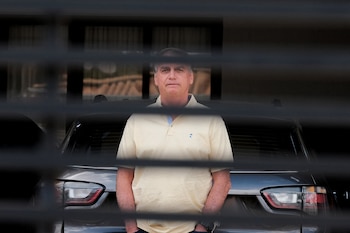
During the trial, Cid’s defense mentioned his willingness to provide clues regarding acts of “extreme relevance” that played a significant role in revealing the alleged coup plot aimed at maintaining Bolsonaro’s presidency post-2022 elections.
Nogueira, a retired army general with ties to Bolsonaro since the 1970s, served as Minister of Defense from April 2022. He allegedly incited the establishment of camps outside military barracks, where thousands of Bolsonaro supporters demanded military intervention. He had once derogatorily labeled the Electoral Court as “the enemy” during a ministerial meeting in June 2022, although he later issued public apologies.
The defense argues that the discussions concerning coup plans did not translate into concrete actions, asserting that both Bolsonaro and the Armed Forces dismissed these ideas. Fernandes insisted: “Those coup plans did not materialize at any time and were merely discussions promoted by radical sectors.” He called for the acquittal of all defendants involved in this case.
In stark contrast, prosecutors maintained that these discussions had real consequences . They claim the conversations undermined confidence in the electoral system, paving the way for the January insurrection and leaving a trail of documentary evidence that implicates Bolsonaro. “There is no doubt that Mr. Jair Bolsonaro tried to overthrow Brazilian democracy,” said Gonet during his opening statements.
Echoing these sentiments, Bolsonaro has consistently denied the accusations, labeling them as a political witch hunt. His defense team asserts, “There is no single test that linked me to a coup ,” expressing frustrations regarding the court’s expedited proceedings that supposedly infringe on defense rights. If found guilty of the five charges against him, Bolsonaro could face up to 40 years in prison .
As September 9, 10, and 12 draw near, the STF has scheduled deliberation and sentencing sessions, marking a historic precedent: it will be the first time in Brazil’s democratic history that a former president is judged for conspiring against the very system that enabled him to rise to power. Judge Alexandre de Moraes, noted for his vigorous pursuit of justice in this case, has stressed that the Court intends to remain independent, notwithstanding the international scrutiny—including criticisms from U.S. President Donald Trump.
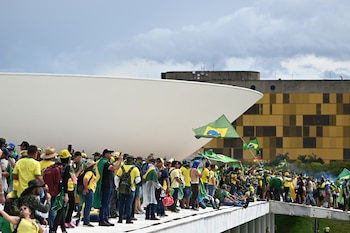
This situation bears a striking resemblance to the storming of the United States Capitol in 2021, a moment which galvanized similar radical movements in Brazil. On January 8, 2023, thousands of Bolsonaro supporters stormed Congress, the Planalto Palace, and the Supreme Court in a chilling display of political unrest.
The outcomes of this trial hold significant implications for Brazil’s political landscape. President Lula, who assumed office in January 2023, has emphasized the importance of the trial, framing it as a critical precedent against any attempts aimed at undermining democracy. “Brazil will never tolerate authoritarian adventures,” he declared in a recent address in São Paulo.
If the jury finds Bolsonaro guilty, his political career may effectively be over, especially as he is already facing an eight-year disqualification from public office owing to a separate conviction for electoral misconduct. The possibility of Bolsonaro returning to power dims significantly if the STF rules against him in this unprecedented trial.