
The Diplomatic Arrival of Kim Jong-un in Beijing
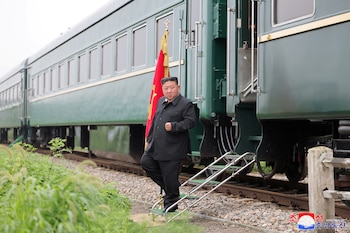
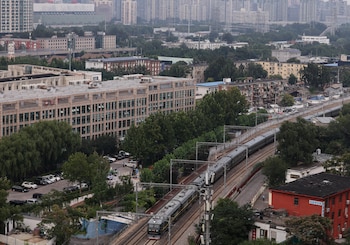
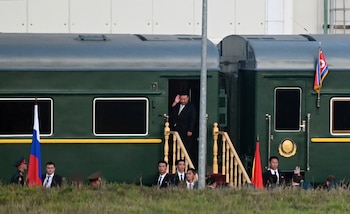
The North Korean leader, Kim Jong-un, arrived in Beijing aboard his distinctive green armored train on Tuesday. This train, a longstanding symbol of his family’s dynastic rule, has been utilized for various trips abroad, marking a significant step in breaking North Korea’s diplomatic isolation. Kim joins an elite assembly of 26 heads of state who will be in attendance for the celebrations commemorating the 80th anniversary of Japan’s capitulation in World War II and the resilience of Chinese resistance against Japanese aggression.
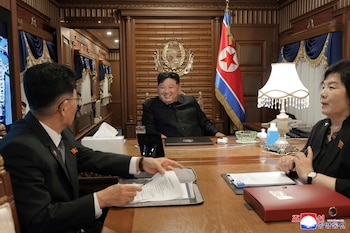
North Korean state media released a photo of Kim smiling widely as he conversed with Foreign Minister Choe Son-hui during one of the luxurious onboard meetings, which featured elegant furnishings including yellowish-brown desks and leather chairs with golden-trimmed curtains. Another photograph depicted him taking a moment to smoke a cigarette outside the train, showcasing a moment of familiarity reminiscent of his 2019 summit with then-U.S. President Donald Trump, albeit without his sister holding an ashtray this time.
Upon his arrival in Beijing, Kim was noted to be dressed impeccably in a black suit complemented by a red tie. Reports from KCNA indicated that he departed from Pyongyang on Monday with other high-ranking officials, including his chancellor, Choe Sun-hui. South Korean authorities confirmed that the train reached the Chinese border city of Dandong on Monday night before entering Chinese territory on Tuesday morning.
A Groundbreaking Diplomatic Engagement
This event marks a significant moment for Kim, as it represents his first participation in a multilateral gathering of considerable global significance during his 14-year tenure. The upcoming parade will also symbolize the first occasion where Xi Jinping, Vladimir Putin, and Kim will gather in a shared international forum, although a private trilateral meeting has not yet been confirmed.
Russian President Putin had arrived in China by Sunday to participate in both the Shanghai Cooperation Organization (SCO) based in Tianjin and the parade. Kremlin representatives indicated that a potential bilateral meeting between Putin and Kim is being “considered,” yet nothing has been confirmed.
Geopolitical analysts, like Soo Kim, have pointed out that Kim’s participation serves to formalize the trilateral relationship between China, Russia, and North Korea, particularly as all three leaders position themselves as critics of Western influence—especially against the backdrop of increasing tensions with the United States.
International observers have noted the significance of potential bilateral meetings, particularly between Kim and Xi, given that North Korea is eager to bolster its ties with China—its primary economic partner—after a recent dip in their relationship. Conversely, North Korea’s interactions with Russia have intensified, notably including the supply of military material to aid Russia’s campaign in Ukraine in exchange for both economic and military support, as reported by various news agencies.
Before his departure, Kim visited a missile research institute where he reviewed advancements in developing a new rocket engine made from carbon fiber compounds, intended for future intercontinental ballistic missiles. In recent years, North Korea has unveiled several missile models aimed at reaching continental U.S. territory during flight tests, according to KCNA.
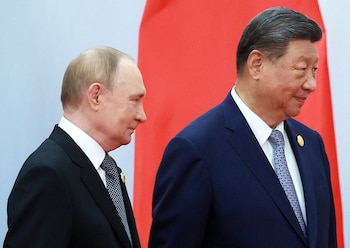
While the United States and South Korea have expressed a renewed willingness to resume nuclear discussions, North Korea has consistently refused to engage since the breakdown of Kim’s meeting with former President Trump in Hanoi in 2019. In the broader international context, North Korea has been amplifying its participation by issuing statements on conflicts in regions such as the Middle East and the Taiwan Strait, thereby positioning itself as part of a united front alongside China and Russia against Washington. Experts suggest that Kim’s visit to Beijing aims to solidify alliances with closely related countries, fortifying his strategic posture amid incoming global challenges.
(With information from AFP and AP)