
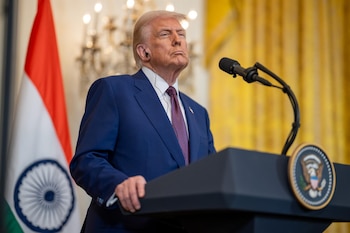
USA activated since midnight on Wednesday additional 25% tariffs on products from India added to a previous 25% stretch applied on August 7, so that the total tax burden on these goods reaches the 50%.
This decision of the administration of Donald Trump aims to sanction New Delhi for maintaining your purchases of Russian oil activity that Washington considers a threat to its national security objectives.
The new tariff level places India among countries with the highest commercial barriers against Washington since Trump’s return to the White House in January. Although exemptions in sensitive sectors such as pharmaceuticals, semiconductors, and smartphones exist, exporters of textiles, shellfish, and jewelry reported the cancellation of orders in the United States and losses against competitors such as Bangladesh and Vietnam.
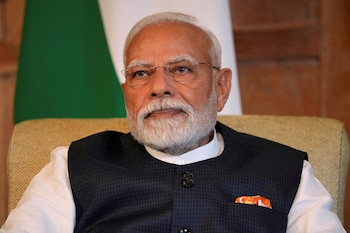
New Delhi reacted sharply, qualifying the decision as “unfair, unjustified and unreasonable.” The Prime Minister Narendra Modi promised measures to cushion the impact, including internal tax reductions, and reiterated its commitment to economic self-sufficiency.
India also defended its energy policy. In 2024, 36% of the country’s crude oil imports came from Russia, which allowed saving billions of dollars and keeping domestic fuel prices stable.
The Ministry of Foreign Affairs recalled that Washington previously encouraged the purchase of Russian crude when European nations diverted their acquisitions to other suppliers after the invasion of Ukraine.
Despite these arguments, the Trump administration proceeded with the measure. Trade advisor Peter Navarro accused India of “not recognizing its role in bloodshed” and stated that New Delhi “is approaching Xi Jinping,” in reference to the leader of the Chinese regime.
Tariffs apply generally, although sectors such as steel, aluminum, and the automotive industry were excluded for the time being. However, ongoing investigations could lead to additional taxes against Indian products in those areas.
Experts warn of an abrupt deterioration in bilateral relations. “One of the most concerning developments in the Trump tariffs saga is how India went from being a promising candidate for an early commercial agreement to a country that faces among the highest tariffs by the US,” stated Wendy Cutler, vice president of the Asia Society Policy Institute and a former American trade official.
“The high tariffs have quickly eroded confidence between the two countries, which could take years to rebuild,” he added.
In 2024, the United States was the main destination of Indian exports with sales reaching 87.3 billion dollars. The new policy threatens to drastically reduce that figure.
Trump has used tariffs as a political tool against allies and competitors, arguing the need to correct commercial imbalances and punish perceived unfair practices. This month, Washington applied similar measures against Brazil, also imposing 50% tariffs on multiple products, while expanding sanctions to economies from the European Union to Indonesia.
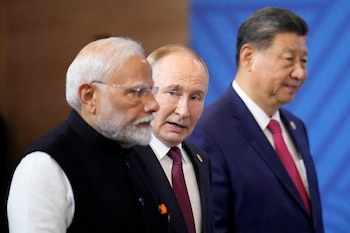
With this decision, Washington intensifies the pressure on New Delhi and opens a scenario of growing tensions in the bilateral relationship, while India evaluates strengthening its cooperation with Moscow and Beijing in a global context marked by strategic rivalry and the fragility of international trade.
(With AFP information)