
Liberalization of Spain’s Vicinity Rail Services: A Necessity or a Delay Tactic?
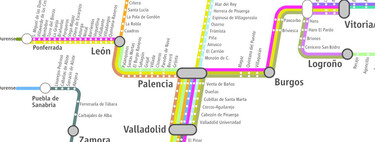
Spain faces a significant challenge regarding the liberalization of its vicinity rail services, a requirement stemming from European mandates established in the Fourth Railway Package approved in 2016 . Despite this obligation, the Spanish government has been reluctant to embrace the changes, with the CNMC (National Commission on Markets and Competition) reiterating the need for liberalization once again.
Obligations of the Spanish Government
Spain is under obligation to provide liberalized services by December 25, 2023 . By this date, all vicinity rail services should be tendered through a public auction, with contracts expected to be awarded by 2024 . However, past deadlines have not been met, prompting concerns over potential delays in implementing this comprehensive reform. According to the CNMC, a public consultation was launched to gather relevant data on public transport services , including both near and medium-distance rail services, paving the way for this upcoming tender process.
Potential Delays to Liberalization
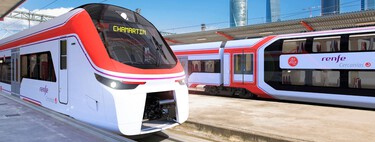
Interestingly, some reports indicate that a contract extension has been signed between the government and Renfe, the state-owned railway corporation, which may push the first steps of liberalization to 2028 . The initial contract was set to last from 2018 to 2027 , with 3% of the value of the Renfe contract related to Cercanías services supposed to be exposed to public bidding by 2026. By delaying, the government aims to maintain the monopoly that Renfe holds, which has an estimated value exceeding 1 billion euros .
Timeline for Liberalization
The intention is for liberalization to commence with a pilot test in 2028 , expected to last until 2033 , after which the changes would become definitive . This is significant, as it indicates a shift in the Spanish rail landscape, yet questions have been raised about the effectiveness of the government’s commitment to these reforms, given their history of delays .
Government Relations with Renfe
Minister of Transportation, Óscar Puente , has often found himself in the crosshairs of these debates. He has criticized the monopoly that Renfe currently enjoys, noting the challenges that arise in maintaining a public service obligation while facing competition from newer entrants such as Ouigo and Iryo . These companies can strategize around the most profitable corridors , whereas Renfe has to operate in areas that may not yield the same financial returns.
Impact of New Competitors
Interestingly, the introduction of competition has already started to reshape the rail market in Spain. The entry of Ouigo and Iryo has disrupted the once stable pricing environment for high-speed trains. With more competition, ticket prices have dropped significantly, allowing for unprecedented passenger movement between popular routes. This dynamic illustrates how market forces can lead to broader benefits for consumers.
European Context for Liberalization
Spain is not the first nation to liberalize its rail services; several countries in Europe have already taken significant steps in this direction. For example, the Berlin S-Bahn system in Germany was awarded through public tender in 2021 , challenging the monopoly held by Deutsche Bahn, its national operator. On the other hand, countries like the UK have grappled with their liberalized system for decades but are now reconsidering the effectiveness of such strategies and potentially shifting back toward a monopoly for more effective public service.

As other European nations have paved the way for successful competition in the rail sector, Spain must address the unique challenges it faces in ensuring a smooth transition to liberalization. The timing, effectiveness, and implications of this transformation will be critical in determining whether it will ultimately benefit Spanish consumers.
Spain’s struggle to embrace these liberalization efforts, despite EU mandates, reveals a broader tension between maintaining a national railway’s monopoly and adopting competitive practices for public benefit. Stakeholders will be closely watching to see how these developments unfold and impact the future of Spain’s rail services.