

Bill Gates, the Microsoft co-founder, is not only one of the wealthiest individuals in the world but also a true automotive enthusiast . His passion for supercars , particularly those manufactured by Porsche , is well documented. In fact, Gates went to great lengths for over a decade to persuade the U.S. government to modify a law that would enable him to legally drive his beloved Porsche 959 on the streets of Seattle.
Thanks to Gates’ relentless pursuit, today’s millionaires—such as Elon Musk and Larry Ellison —can fill their garages with exotic, limited-edition hypercars and enjoy the thrill of driving them without legal hurdles.
The Story of a Porsche 959 Parked in Customs
In 1987, Bill Gates, captivated by the cutting-edge technology and engineering of the Porsche 959 , decided to commission this groundbreaking vehicle. At that time, the Porsche 959 was hailed as one of the most advanced supercars , featuring one of the first bi-turbo engines , all-wheel drive , and an innovative electronic control system.
The six-cylinder, 2.8-liter engine of the Porsche 959 was capable of delivering an astonishing 450 horsepower , allowing it to reach a top speed of 317 km/h. For a young and already successful entrepreneur like Bill Gates, the allure of driving such a technological masterpiece was irresistible.
However, when his Porsche 959 arrived in the United States, it was unexpectedly held at customs in Seattle. The strict crash test requirements imposed by U.S. laws had not been met, thereby barring him from driving it on public roads.
Initially, Porsche had developed the 959 as a technological marvel of the late 1980s but chose not to subject it to the U.S. crash test requirements due to the high developmental costs that would outweigh potential profits from sales. This decision left the Porsche 959 caught in a regulatory mire, unable to circulate legally.
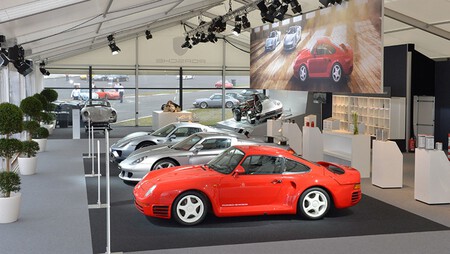
Gates’ passion for this particular model resulted in a unique situation that left his prized Porsche—one of only 337 units manufactured—trapped in customs for a staggering 13 years . Throughout this extended period, Gates paid a daily fee of $28 to the Port Authority for the car’s storage, accumulating a total of over $138,000 for keeping it parked in customs.
Such was his obsession with the 959 that Gates was not willing to accept defeat. He consulted with top lawyers and launched a relentless legal battle against federal authorities in a bid to permit the legal use of his car.
The Law “Show and Display”
Gates’ perseverance led to significant changes in U.S. law. He advocated for over seven years to persuade Washington to modify legislation, advocating for exemptions related to rare and collectible cars that were not officially sold within the country. This initiative ultimately paved the way for U.S. millionaires and collectors to acquire exotic automobiles, even if they did not meet all legal traffic requirements.
Finally, in 1999 , President Bill Clinton signed the “Show and Display” Law , which enabled certain historically or technologically significant vehicles to be imported and driven under special conditions. This law primarily targeted cars with fewer than 500 units manufactured, limiting their use to 2,500 miles per year (roughly 4,023 kilometers ). This limitation underscored that the intent of the law was to allow entry for collectible pieces rather than everyday vehicles.
Thanks to this groundbreaking law, Bill Gates’ Porsche 959 was finally released from its limitations in customs, allowing him to drive it freely on U.S. roads, a triumph for both the car enthusiast and the cause he fought for fervently.
Image | Porsche, Flickr (Government Tom Wolf)