

The world has engaged in the electrification of the transport network. It is a vital part of the emission reduction plan, and although cars play an important role, there is a sector that cannot be overlooked: that of ships . The majority of global trade moves over oceans, and we have witnessed forward-thinking projects such as the Yara Birkeland and the Ferris ship aimed at connecting ports. Maritime electrification is especially vital in China.
Decarbonizing is a fundamental part of China’s short-term strategies. Although we have been seeing results for years, these efforts have been insufficient. As the country that leads globally in battery production and automobile electrification, taking on maritime transport was the next logical step . China has multiple projects underway, with one of the most notable being the first fully electric cleaning ship .
This innovative vessel is owned by the China Three Gorges Corporation , which manages the massive Three Gorges Dam and also undertakes renewable technology research. The ship is designed for a dual mission : to clean floating waste from rivers and to serve as a transport ship along the Yangtze River during flood seasons. Learn more about this initiative.
Some standout characteristics of this ship include:
- Length: 82 meters.
- Batteries: 4,000 kWh, providing a speed of 18 km/h.
- Autonomy: 150 kilometers per charge.
- Estimated annual savings: 253.4 tons of diesel.
- Projected CO₂ emissions reduction: 842.4 tons annually, totaling 25,300 tons over its lifespan.
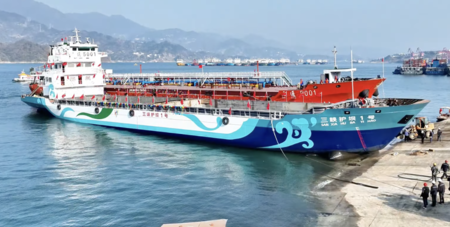
China Three Gorges Corporation (CTG) estimates a useful life of 20 years for this electric cleaning ship. In addition to substantial emission savings, the ship is expected to save 20 million yuan annually (approximately 2.8 million dollars) in fuel costs. Following its launch in December last year and a successful inaugural trip, it is now set to fulfill its essential mission.
China Embraces Maritime Electrification
Beyond just the cleaning ship, China’s ambitions include a broader initiative, where transport policies aim to yield results in the short term. In these efforts, aside from providing incentives for shipyards and companies adopting these technologies, there has been an overhaul of recharging infrastructure in strategic ports.
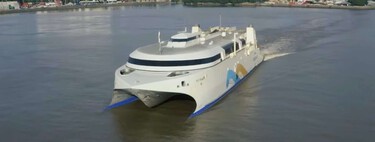
Two critical factors are at play: First, the batteries must provide extended operating time at sea ; second, ports need the capability to rapidly recharge these batteries while the ships are undergoing maintenance.
The result of this strategy has led to upcoming projects like two electric vessels, expected to begin service next year. These ships, measuring about 130 meters, can carry between 10,000 to 13,000 tons and feature an autonomy of around 500 kilometers, enabling efficient routes along China’s port roads.
Moreover, enhancing connections between major ports is another focus of China’s electrification efforts. Container vessels will be equipped with up to ten batteries with a combined power of 1,900 kW.
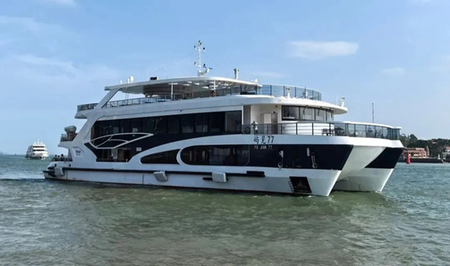
Yujian 77
Recent weeks have seen the launch of the Yujian 77 , the first entirely electric passenger ship in China. Spanning 49 meters, it can accommodate 358 passengers and is intended for tourist routes in coastal areas.
Looking ahead, China is also developing the Future , an advanced research ship aimed at studying the oceans and testing green technologies . This vessel will be 110.8 meters long, capable of housing 80 crew members and is designed to operate for 60 consecutive days on electric power alone.
While China’s significant entrance into the electric ship market emphasizes its maritime importance, the global maritime industry also advances in this direction. Nearby, the Norwegian Viking Line has introduced the world’s largest electric ferry, a robust 200-meter vessel capable of transporting 650 cars.
The maritime sector is keen to move forward and is not waiting for the advent of solid-state batteries. It will be interesting to see how this technology evolves and if it can accommodate much larger vessels, such as grand cruise ships and other substantial maritime crafts.
Images | Gorgeous Yichang (2)
In summary, as the shift toward electrification continues, both China and other countries are making significant strides in creating a more sustainable maritime industry, setting the stage for a cleaner and greener future at sea.