
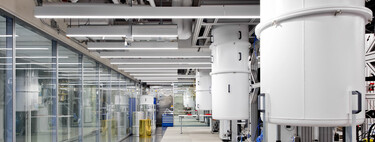
The Experimental Nuclear Fusion Reactor JT-60SA resides in Naka, a small city not far from Tokyo, Japan. Its construction began in January 2013, utilizing components from its predecessor, the original JT-60 reactor , which was operational from 1985 and has achieved significant milestones in the field of fusion energy . The assembly of JT-60SA concluded in early 2020, and it is now set to commence its first plasma tests in late 2023.
This machine is a Tokamak , similar to the ITER project, employing magnetic confinement to manage the ionized plasma comprising deuterium and tritium nuclei necessary for inducing nuclear fusion reactions. Its size is nothing short of impressive, standing at a height of 15.4 meters with a diameter of 13.7 meters . The specifications provide insight into its extraordinary capabilities.
The reactor can confine a plasma volume of 130 m³ , generate a 2.25 teslas toroidal magnetic field, and maintain a stunning current of 5.5 million amps within the plasma. These astounding figures highlight the potential for groundbreaking advancements in nuclear fusion, paving the way for future experiments and developments in energy production.
JT-60SA: A State-of-the-Art Diagnostic System
On April 22, engineers from Japan and Europe received the final components crucial for assembling the Thomson scattering diagnostic system at the JT-60SA facility. To conduct experiments effectively, researchers must accurately measure the temperature and density of the plasma electrons.
The components of the Thomson Dispersion Measurement Team have been designed and manufactured in Italy, Romania, and Japan.
Obtaining direct measurements is not feasible due to the extreme conditions required for deuterium and tritium fusion. The plasma must reach a temperature of at least 150 million degrees Celsius , which would destroy any sensor that comes into contact with it. Thus, engineers have developed a highly sophisticated diagnostic system for the JT-60SA reactor.
The components of the Thomson dispersion measurement team have been designed and manufactured in Italy , Romania , and Japan . The system measures temperature and density by analyzing the light emitted from the plasma, which is illuminated by a high-power laser beam . This interaction allows for indirect calculations of these critical parameters.
JT-60SA will feature two Thomson scattering diagnostic systems: one for the core plasma developed in Japan and another for the plasma edge designed in Europe. These installations are currently underway, aiming to equip the machine with one of the most advanced diagnostic and measurement systems available within the next few months. While fundamental physics of nuclear fusion no longer poses significant challenges, no commercial fusion energy reactors exist due to engineering hurdles that must still be addressed. The tuning and integration of diagnostic systems like Thomson scattering represent key challenges in this quest.
Image | QST
For more information, visit Eurofusion.
In related news, the JET reactor has successfully completed its final tests with deuterium and tritium, marking a crucial milestone for nuclear fusion.