
Recent Anti-Terror Operation in Nigeria Claims Lives of 35 Jihadists
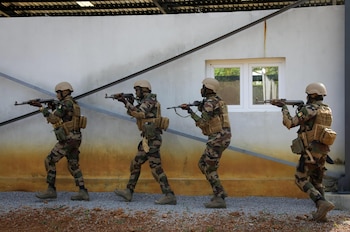
The Nigerian Air Forces have confirmed the death of at least 35 jihadists in an anti-terrorism operation near the border with Cameroon, specifically in Borno State, located in the northeastern part of the country. This operation highlights the ongoing efforts of the Nigerian military to combat terrorism, especially in a region plagued by extremist groups.
According to military reports collected by the Nigerian television network TVC News , the targeted terrorists were planning an attack on Nigerian troops. Intelligence services had intercepted communications and identified four separate meeting points that were critical to the operation’s success.
Following the airstrikes, communication with ground troops was restored, confirming that the situation around their location had stabilized. “After the operation, communication with the terrestrial troops was restored, who confirmed that the situation around their location had stabilized,” stated Nigerian Air Forces spokesman Ehimen Ejodame . This restoration of communication was crucial for coordinating ongoing military efforts and ensuring the safety of ground personnel.
The anti-terrorist operation underscores the commitment of the Nigerian Air Forces to provide vital support to ground troops in the fight against terrorism. Over the past few years, Nigeria has faced significant security challenges due to the activities of extremist groups such as Boko Haram and the Islamic State West Africa (ISWA) . Both groups have been particularly active in the northeastern part of the country and the Lake Chad basin , conducting numerous attacks and instilling fear within local communities.
As part of the military’s ongoing strategy, air and ground forces are increasingly collaborating to dismantle the operational capabilities of these terrorist networks. The recent operation forms part of a broader initiative that includes aerial reconnaissance, surveillance, and direct engagement with suspected terrorist activities. The aim is not only to eliminate immediate threats but also to disrupt the logistics and support systems that these extremist groups rely on.
Military sources have indicated that precise intelligence operations are crucial for minimizing collateral damage while maximizing operational success. This delicate balance is necessary to maintain public support for military interventions, as the local population often bears the brunt of counter-terrorism activities when not conducted judiciously.
Despite successes in operations such as this latest one, questions remain about the longer-term effectiveness of Nigeria’s approach to combating terrorism. Many analysts suggest that while military actions are necessary, they must be accompanied by socio-economic policies aimed at addressing the root causes of extremism. High unemployment rates, lack of education, and social disenfranchisement are prevalent in many northern regions, providing fertile ground for extremist ideologies to take root.
International support has also been a critical component of Nigeria’s counter-terrorism strategy. Partnerships with other nations and organizations have provided vital resources, training, and intelligence capabilities that enhance the effectiveness of Nigeria’s military operations. The recent successes in operations against jihadists can be seen as a product of this international collaboration.
Looking forward, the Nigerian government faces the dual challenge of maintaining military pressure on extremist groups while simultaneously investing in local communities to foster resilience against radicalization. The hope is to create a sustainable environment where the threats posed by terrorism can be effectively neutralized, and stability can be restored in the affected regions. A balanced approach that combines military action and community development may hold the key to long-term peace and security in Nigeria.
In conclusion, the recent operation by the Nigerian Air Forces not only highlights the ongoing threat posed by jihadist groups but also emphasizes the need for a comprehensive strategy that integrates military action with socio-economic development. The fight against terrorism in Nigeria is far from over, and ongoing efforts in intelligence gathering, international cooperation, and community engagement will be essential to achieving lasting peace and security in the region.