
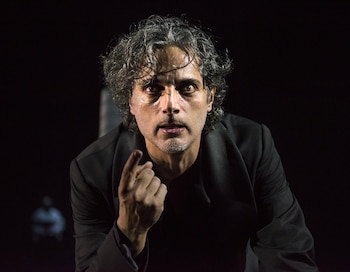
The Gripping Narrative of “The True Story of Richard III”
The Argentine production “The True Story of Richard III,” directed by Calixto Bieito, is set to make its debut in theaters on September 30. This evocative adaptation explores human evil, a theme inherent to our biological and psychological nature. The play has captivated audiences since its premiere last June, quickly becoming one of the most successful performances in the vibrant theater scene of Buenos Aires.
Emotional Depth and Historical Context
This rich adaptation of William Shakespeare’s “Richard III” will be showcased in Spain at venues under the Community of Madrid’s Hispanic channel. The production features Joaquín Furriel, one of Argentina’s leading actors, whose performance promises to bring new depth to this historical tyrant.
Shakespeare penned “Richard III” between 1591 and 1592, portraying the character as a manipulative and power-hungry king who ruled England for a mere two years before meeting his tragic downfall in battle at the age of 32. Shakespeare’s Richard is not merely a villain; he represents a complex integration of ambition, deceit, and self-destruction.
Thematic Resonance and Artistic Expression
In this portrayal, Richard becomes a symbol of the darker aspects of the human experience—cruelty, betrayal, and a relentless quest for dominion. Shakespeare’s work warns against the ramifications of unchecked ambition while probing the juxtaposition between destiny and free will.
Bieito’s adaptation also invites audiences to reflect on the nature of evil itself: “The story of Shakespeare’s kings encapsulates themes of violence, hatred, and corruption,” he shares. His reflections focus on the intersections of politics, culture, and technology, asserting that Shakespeare possessed a keen insight into the complexities of the human condition.
A Meeting of Artistic Minds
This collaboration marks a reunion between Calixto Bieito and Joaquín Furriel, who previously worked together on a 2010 adaptation of Calderón de la Barca’s “Life Is a Dream.” Their artistic synergy has led to a reinterpretation of Richard III, prompted by the 2012 discovery of the king’s remains in a Leicester parking lot, confirmed through modern DNA analysis.
The scenic design by Barbora enhances the play’s emotional depth, with a striking visual element that features a large car dominating the stage. Accompanied by Janiv Oron’s evocative soundscape and Omar San Cristóbal’s atmospheric lighting, the performance expertly draws the audience into Richard’s tumultuous world.
Visual and Aesthetic Innovation
Given today’s globalized world, Bieito’s adaptation skillfully employs modern visual effects alongside a reimagined script by Adrià Reixach, making the performance both fresh and relevant. Costume designer Paula Klein‘s work further contributes to the immersive experience, blending period authenticity with contemporary flair.
As the audience embarks on this journey through Richard’s manipulative psyche and the chaotic world he inhabits, Bieito’s intricate staging ensures that each element—sound, light, and visual design—coalesces to elevate the narrative’s emotional weight.
Conclusion
“The True Story of Richard III” not only promises a riveting theatrical experience but also compels us to interrogate the nature of power, the consequences of ambition, and the capacity for human evil that lies within us all. By engaging with Shakespeare’s timeless themes, Bieito and his talented cast facilitate a dialogue that transcends time and place, making this adaptation a vital exploration of the darker aspects of humanity that remain relevant today. As audiences bear witness to the rise and fall of Richard, they are left with profound questions about their own moral compass and the societal forces that shape their lives.