

The Increasing Importance of Transparency in Microsoft’s Compensation Structure
For Microsoft employees, one of the most anticipated times of the year has arrived: the moment when salary increases and adjustments are made public. This year, in a trend that has become common among major technology firms, transparency —whether sought after or not—has emerged as a focal point. Hundreds of employees from the Redmond-based giant have begun sharing their compensation information through a collaborative spreadsheet , which already boasts over 850 entries. Business Insider has conducted an analysis of this data, shedding light on Microsoft’s evolving salary landscape.
An Anonymous and Voluntary Initiative This ambitious initiative originates from the employees themselves, aiming to unveil the salary realities within the company and compare them with the substantial compensation packages found throughout Silicon Valley . By sharing this information anonymously, employees contribute to a collective understanding of compensation, including base salaries, bonuses, and stock options. This comes at a pivotal time for Microsoft, which is navigating a competitive landscape.
The War for Talent in the AI Era
These compensation figures serve a purpose beyond merely revealing salary structures; they are critical in the context of Microsoft’s battle to secure top talent in the burgeoning artificial intelligence (AI) sector. With its revenues soaring to record heights, Microsoft has embarked on an aggressive campaign to attract and retain the brightest minds in AI. The company is willing to go the extra mile when it comes to salary offers, even attempting to lure talent away from rivals like Meta with lucrative packages . Ironically, this is occurring amid a backdrop of layoffs, raising questions regarding the company’s employment strategy.
This year, Microsoft has introduced new salary guidelines that include specific exemptions to position itself more competitively in the AI marketplace . However, this occurs in a somewhat paradoxical situation: despite recently laying off thousands, Microsoft has committed to maintaining a stable global workforce , stating that hiring in crucial areas continues at an accelerated pace.
Key Salaries Revealed
While compensation in the tech industry relies heavily on stock options, the base salary remains a significant benchmark for gauging the strategic importance of different teams. Through the analysis of nearly 300 software engineers in the U.S., the collaborative spreadsheet highlights the average base salaries across several pivotal divisions at Microsoft:
- Cloud + AI: $204,135
- Commerce + Ecosystems: $191,597
- Security: $189,285
- Azure: $176,035
- Experiences and Devices (including Windows and Surface): $175,123
- Microsoft AI: $170,456
- Xbox: $168,831
- Koreai: $167,759
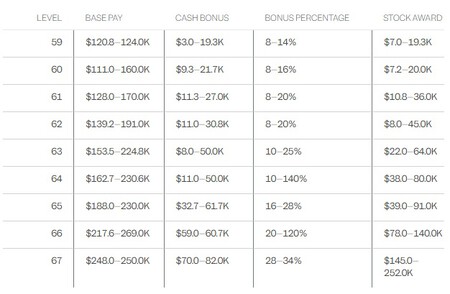
Record extract made by Microsoft employees with their salaries.
A Fascinating Insight, But with Nuances While this data is compelling, it is essential to approach it with caution. The information shared is neither official nor exhaustive and only a small sample of Microsoft’s approximately 219,000 employees . Additionally, the voluntary nature of this data means it could be subject to inaccuracies, as employees with higher salaries might be less likely to share their information.
Interestingly, analysis shows that the self-reported salary ranges from current employees tend to be lower than the figures presented in Microsoft’s official hiring guidelines. This disparity raises questions about bias or reflects the company’s aggressive policy to attract new talent through competitive initial offers.
Competitive Salaries in the Tech Landscape
It is widely acknowledged that skilled programmers and tech experts command high salaries. In some locations, such as Spain , salaries can reach as high as €170,000 . Across the globe, specialized engineers in AI are achieving new heights in earnings, marking a significant growth opportunity for those entering the field. Following this trend, professionals aspiring to work in interface design also have much to gain, particularly if they are willing to relocate to European markets where salaries are optimized.
As Microsoft navigates these tumultuous times in technology and finance, the transparency brought to the forefront by its employees adds a rich dimension to discussions about the compensation culture and the company’s strategic priorities.