

The United States’ Major Military Operation in the Caribbean
In a significant shift in military strategy, the United States has initiated an extensive operation in the Caribbean aimed at combating criminal organizations that pose a growing threat to regional stability. In an interview with NTN24, Brian Fonseca, director of the Jack D. Gordon Institute at the International University of Florida, emphasized the historical significance of this action.
“It is the first time in a long time that the United States brings together military instruments of power to address criminal organizations in Latin America,” Fonseca remarked. This operation marks a turning point in how the U.S. engages with narco-terrorist organizations , which have expanded their influence across the hemisphere.
The deployment consists of more than 4,500 sailors and 2,200 Marines aboard three amphibious ships: the USS San Antonio (LPD 17), USS Fort Lauderdale (LPD 28), and USS Iwo Jima (LHD 7). These forces set sail from the Naval Base of Norfolk in Virginia, tasked with patrolling and exerting pressure on transnational criminal networks, notably targeting the Los Soles cartel, led by Nicolás Maduro of Venezuela .
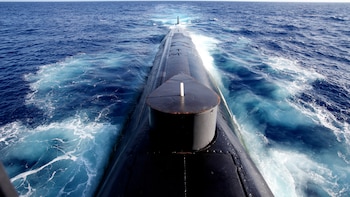
On Wednesday, officials confirmed the start of the military load aboard the USS Iwo Jima (LHD 7), which is designated as the flagship for this operation in the Caribbean Sea. This unprecedented deployment demonstrates not just the scale of resources mobilized but also underscores the explicit goal: to counteract criminal organizations that have firmly entrenched themselves in the Western Hemisphere .
In an analysis shared with The informative USA of NTN24, Fonseca highlighted how unique this operation is, as the United States has not previously gathered such a comprehensive range of military capabilities to combat non-state threats across the continent. The operation represents a significant shift in the U.S. approach to hemispheric security amidst increasing tensions.
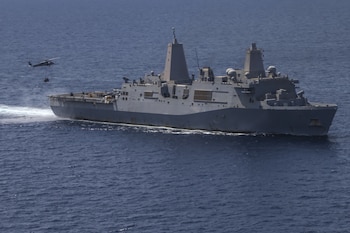
The mobilization of these three amphibious ships, along with thousands of troops, signifies an urgent response from Washington as concerns escalate regarding the proliferation of narco-terrorist networks. These networks are seen as a direct challenge to regional security and U.S. strategic interests.
The operational strategy being employed underscores not just a show of strength aimed at deterrence, but also the readiness for direct engagement against criminal structures. This formidable presence of more than 4,500 sailors and 2,200 Marines is intended to enhance the United States’ capacity to respond to potential crises and to send a clear message to those involved in illicit activities centered on drug trafficking and other transnational crimes.
This operation unfolds amid growing hostility from the Venezuelan regime and the strengthening influence of organizations like the Los Soles cartel. It clearly illustrates a shift in the U.S. military posture regarding hemispheric security, as noted by Brian Fonseca. The decision to mobilize military resources of this scale to confront criminal threats in Latin America and the Caribbean represents a notable change in U.S. defense policy.
In summary, the United States’ decision to undertake this extensive military operation represents a landmark effort to tackle criminal organizations destabilizing the regional landscape. The deployment denotes both a strategic evolution in U.S. policy and an imperative response to evolving security threats in the Americas.